
RIRS Success Rate in Complex Kidney Stones
Kidney stones are painful enough, but when they are large, multiple, or located in tricky areas, they’re classified as complex kidney stones. Naturally, many patients wonder: “How effective is RIRS in treating these complicated stones?” This is exactly what we’re going to explore in this blog.
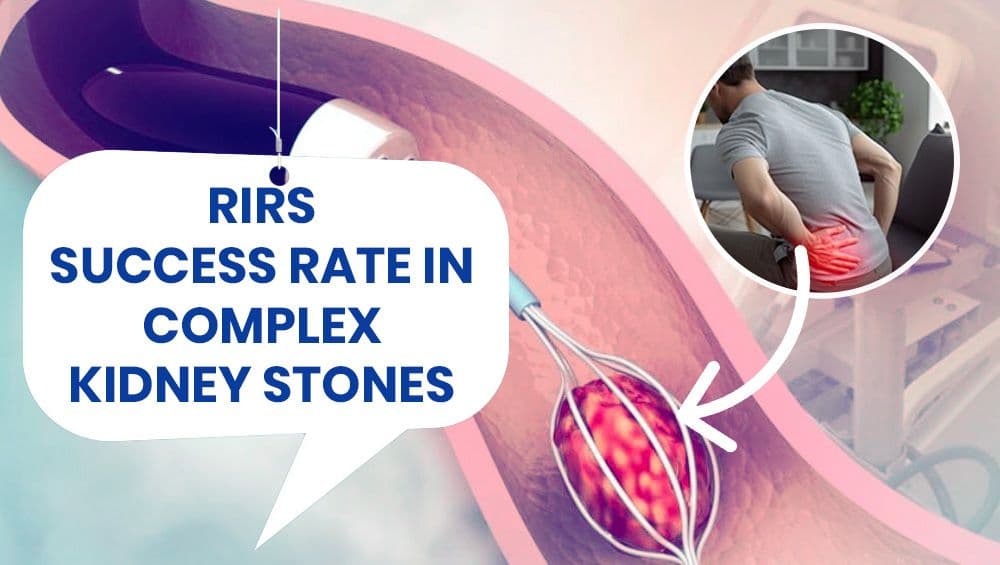
Kidney stones can cause severe pain and disruption, but when they are large, multiple, or located in hard-to-reach areas, they are classified as complex kidney stones. Naturally, many patients ask: "How effective is RIRS in treating these complicated stones?" Retrograde Intrarenal Surgery (RIRS) is a modern, minimally invasive procedure that has become a preferred choice for endourologists because it combines high stone-clearance rates with rapid physical recovery.
What Is RIRS?
Retrograde Intrarenal Surgery (RIRS) is a scarless laser technique used to eliminate kidney stones through the body's natural urinary path. Unlike traditional open or keyhole surgeries, no incisions are made. A thin, flexible scope (ureteroscope) is guided through the urethra and bladder directly into the kidney's collecting system. High-powered Holmium or Thulium lasers then pulverize the stone into fine, dust-like particles that pass out naturally in urine or are extracted using microscopic nitinol baskets. Discover why RIRS is best for kidney stones and how it compares to other procedures.
How Effective Is RIRS for Complex Kidney Stones?
RIRS demonstrates high efficacy when treating complex, multiple, or recurrent kidney stones. Clinical literature indicates an overall stone-free rate (SFR) ranging between 70% and 90% for complex stone cases.
- Stones Under 2 cm: The single-session success rate is typically 85% to 95%.
- Stones Over 2 cm or Multiple Stones: RIRS remains highly effective, though a staged approach (two planned sessions) may be recommended to clear the entire stone burden safely without overloading the renal pelvis with heat or pressure.
Key Factors That Influence RIRS Success
Several anatomical and stone-related variables determine the overall success of RIRS:
- Stone Size and Volume: Larger stone burdens take longer to fragment into fine dust and may require a planned second session.
- Stone Location: Stones situated in the acute-angled lower pole calyx are more challenging to reach, requiring maximum scope deflection.
- Stone Hardness: Harder stone compositions (such as calcium oxalate monohydrate or cystine, measured high in Hounsfield Units on CT scans) require specialized laser pulse settings. Read about the 4 different types of kidney stones.
- Patient Anatomy: Narrow ureters, ureteral strictures, or congenital kidney variations can affect scope navigation.
Why RIRS Is Ideal for Complex Stones
Compared to traditional open operations or keyhole procedures, RIRS offers distinct clinical benefits:
- Incision-Free and Scarless: Uses natural urinary pathways, eliminating external skin cuts, muscle trauma, and visible scars.
- Rapid Physical Recovery: Most patients return to light daily routines within 2 to 3 days. Read can I walk after RIRS surgery and post-surgery recovery.
- Flexible Precision: Modern digital flexible ureteroscopes can bend into tight renal calyces that rigid instruments cannot access.
- Low Complication Rates: Significantly lower risk of major intraoperative bleeding or severe tissue injury.
- Multi-Location Management: Multiple stones located across different calyces in the same kidney can be addressed in a single setting.
Read our full comparison on RIRS vs PCNL vs ESWL: which is the best treatment for kidney stones.
Potential Risks and Considerations
While RIRS is exceptionally safe, being aware of potential minor side effects helps ensure proper post-operative care:
- Temporary Urinary Discomfort: Mild burning during urination or urgency is common while a temporary double-J (DJ) stent remains in place.
- Minor Bleeding: Transient pinkish urine is normal for a few days after laser dusting.
- Residual Dust: Microscopic fragments may take a few weeks to pass completely, requiring high fluid intake. Learn why hydration is necessary for kidney health.
- Infection Risk: Post-procedure urinary tract infections are rare and typically managed with targeted oral antibiotics. Read about uti vs kidney infection.
Tips for Ensuring a Successful RIRS Outcome
- Maintain High Hydration: Drink 2.5 to 3 liters of water daily to help flush out residual stone dust and prevent crystal aggregation.
- Follow Prescribed Medications: Complete the full course of prescribed antibiotics and alpha-blocker medications to ease stent discomfort.
- Avoid Heavy Physical Strain: Rest adequately for the first few days and avoid strenuous exercise or heavy lifting until cleared by your surgeon.
- Attend Scheduled Follow-Ups: Complete post-operative ultrasound or X-ray imaging to verify complete stone clearance and schedule DJ stent removal.
- Adopt a Stone-Prevention Diet: Follow the right diet for kidney stones by reducing sodium and animal protein to stop new stones from forming.
Expert Endourological Care in Gurgaon
RIRS has revolutionized the management of complex kidney stones, providing a safe, scarless, and highly effective alternative to traditional open surgery. For specialized endourological evaluation and laser stone removal in Gurgaon and Delhi NCR, consult Dr. Deepanshu Gupta. With over 15 years of surgical experience and thousands of successful endourological procedures, Dr. Gupta provides tailored treatment plans designed for fast, complete recovery.
Frequently Asked Questions
Is RIRS better than PCNL for complex kidney stones?
RIRS is preferred for complex stones up to 2 cm because it is completely scarless and offers faster recovery. For massive stones larger than 2 cm or staghorn calculi, keyhole PCNL remains the gold standard for achieving complete single-setting clearance. Read if PCNL is a major surgery.
How long does a DJ stent stay in place after RIRS?
A temporary double-J (DJ) stent is typically kept in place for 1 to 2 weeks after RIRS to ensure the ureter heals smoothly and urine flows without obstruction.
Will I feel pain during RIRS surgery?
No. RIRS is performed under general or spinal anesthesia, ensuring you feel no pain during the procedure. Post-operative discomfort is generally mild and easily managed with prescribed analgesics.
Can RIRS clear multiple kidney stones in one session?
Yes. Digital flexible ureteroscopes allow surgeons to navigate to different calyces within the kidney to dust and extract multiple stones during the same session.
Have Questions About This Topic?
Get a personalized consultation at Cure Stone Hospital, Sector 52, Gurgaon.
Book Consultation