
Who’s Eligible For FANS RIRS- Kidney Stone Treatment?
Kidney stones can be difficult to handle and can lead to infection, kidney damage or even complete kidney failure if ignored. Modern medicine has developed an array of courses to treat such issues, including Flexible All-seeing Needle Retrograde Intrarenal Surgery(FANS RIRS), a less intensive FANS)RIRS.However, not every individual is a candidate for this procedure.
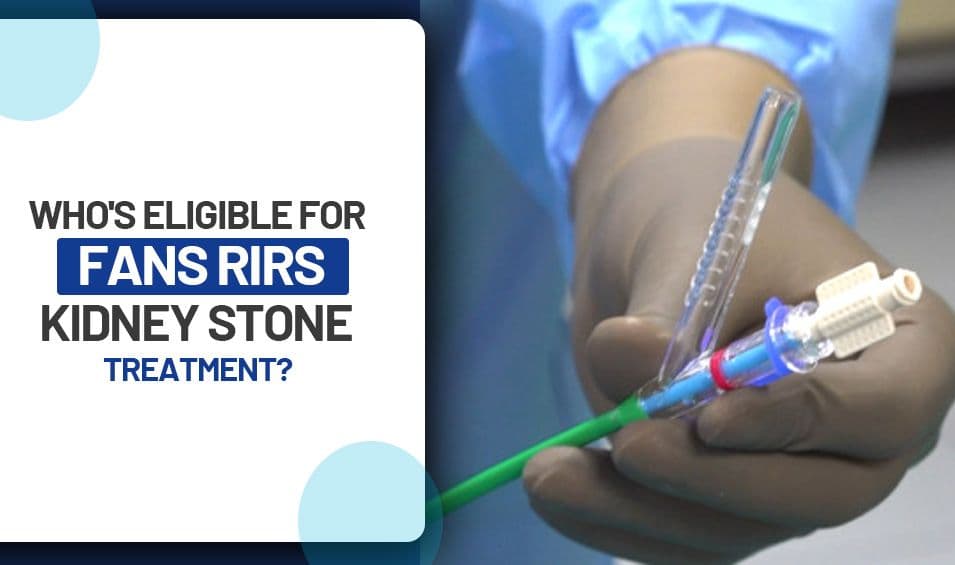
Kidney stones, if left untreated or improperly managed, can lead to severe pain, recurrent infections, and potentially permanent renal damage. While traditional options like keyhole surgery (PCNL) or open procedures require external incisions, modern endourology has introduced FANS-RIRS (Flexible and Navigable Suction Retrograde Intrarenal Surgery).
FANS-RIRS is a 100% incision-free, endoscopic procedure that combines ultra-thin flexible ureteroscopes with active vacuum suction technology to pulverize and continuously clear kidney stones through natural urinary pathways.
However, choosing the right treatment method depends heavily on stone size, location, density, and overall patient health. In this guide, we detail who is the ideal candidate for FANS-RIRS, how the procedure works, its clinical benefits, and recovery expectations.
What Is FANS-RIRS and How Does It Work?
FANS-RIRS is an advanced evolution of standard Retrograde Intrarenal Surgery (RIRS).
During the procedure, a flexible ureteroscope equipped with a high-definition digital camera is navigated through natural urinary passages (urethra, bladder, and ureter) directly into the kidney. A high-power Holmium or Thulium Fiber laser then breaks the stone into fine dust.
What sets FANS-RIRS apart is its integrated active suction sheath:
- Real-Time Evacuation: Continuously vacuums out stone dust, fluid, and microscopic fragments as the laser operates.
- Low Intrarenal Pressure: Maintains safe, low pressure inside the kidney, drastically reducing post-operative fever and infection risks.
- Complete Clearance: Minimizes residual stone fragments, ensuring higher single-session success rates.
Key Candidates for FANS-RIRS Surgery
FANS-RIRS is particularly well-suited for patients meeting specific clinical criteria:
1. Medium to Large Stone Burdens (10 mm to 25 mm)
While standard RIRS is typically restricted to stones up to 20 mm, the real-time suction capability of FANS-RIRS allows experienced endourologists to safely and effectively clear stone burdens up to 25 mm in a single sitting without keyhole cuts.
2. Complex or Hard-to-Reach Stones
Stones located in difficult anatomical regions, such as the lower pole calyx of the kidney, are often challenging to treat with Shockwave Lithotripsy (ESWL). FANS-RIRS provides 360-degree deflection and direct visual access to clear stones from any renal calyx.
3. Hard, High-Density Stones
Stones made of calcium oxalate monohydrate or uric acid can be extremely dense and resistant to shockwaves. High-frequency laser dusting paired with active suction ensures these dense stones are cleared completely.
4. Failed Previous Treatments
Patients who have undergone unsuccessful ESWL sessions or had incomplete stone passage after standard procedures are ideal candidates for FANS-RIRS to achieve total clearance.
5. High-Risk Patients Unsuitable for Keyhole Surgery (PCNL)
Keyhole surgery (PCNL) involves making a puncture through the back, which carries higher risks for certain patients. FANS-RIRS is a safer, 100% incision-free alternative for:
- Patients with bleeding disorders or those on continuous blood-thinning medications.
- Individuals with severe obesity or complex renal anatomy.
- Patients with solitary kidneys where parenchymal damage must be strictly avoided.
6. Multiple or Recurrent Stones
Patients with multiple stones scattered across different renal calyces benefit from FANS-RIRS because the scope can navigate between all chambers during a single session, vacuuming out debris from every location.
7. Pediatric and Elderly Patients
Both younger children and elderly individuals are more sensitive to surgical trauma and tissue damage. FANS-RIRS offers a gentle, incision-free route that preserves kidney tissue and minimizes physiological stress.
Step-by-Step Overview of FANS-RIRS
- Pre-Operative Assessment: A non-contrast CT scan (NCCT KUB) and routine urine tests map stone size, density, and location.
- Endoscopic Access: Under short general or spinal anesthesia, the flexible scope and suction sheath are navigated through natural urinary passages into the kidney.
- Laser Dusting & Vacuuming: High-energy laser fibers fragment the stone while active suction continuously clears fluid and dust.
- Temporary Stenting: A temporary internal DJ stent may be placed to maintain open drainage and allow the ureter to heal comfortably.
- Rapid Discharge: Most patients are discharged within 24 hours and resume normal light activity in a few days.
Advantages of FANS-RIRS Over Traditional Methods
- Zero Cuts or Scars: Done entirely through natural passages with no external incisions.
- Higher Clearance Rates: Real-time vacuum suction removes residual stone dust, preventing future regrowth.
- Lower Infection Risk: Active pressure control prevents high fluid pressure inside the kidney, protecting against post-op sepsis or urinary tract infections (UTIs).
- Minimal Pain and Blood Loss: Causes significantly less tissue trauma than keyhole PCNL or open surgery.
Recovery and Post-Operative Expectations
- Hydrate Continuously: Drink 2.5 to 3 liters of water daily to keep urine diluted and assist in flushing out residual micro-particles.
- Manage Temporary Symptoms: Mild burning during urination (dysuria) or light pink urine (hematuria) are expected during the first 48 to 72 hours and subside quickly.
- Long-Term Prevention: Follow targeted dietary protocols on how to avoid kidney stones recurrence to keep your kidneys healthy long after surgery.
Consult Top Kidney Stone Specialist Dr. Deepanshu Gupta
Selecting the right surgical method and determining candidate suitability requires comprehensive diagnostic evaluation by a specialized urologist.
Dr. Deepanshu Gupta at Cure Stone is a leading endourologist in Gurgaon and Delhi NCR with extensive clinical expertise, having successfully performed over 9,500 endoscopic procedures. Specializing in advanced, incision-free techniques including radiation-free (fluoroscopy-free) RIRS, high-efficiency FANS RIRS suction laser surgery, and Mini-PCNL, Dr. Gupta provides accurate candidate selection and individualized treatment plans.
Don't let kidney stone pain compromise your health. Book a consultation with Cure Stone today to evaluate your diagnostic scans!
Frequently Asked Questions (FAQs)
How is FANS-RIRS different from standard RIRS?
Standard RIRS relies on passive flushing or manual basket retrieval to remove stone fragments. FANS-RIRS incorporates active vacuum suction, which continuously evacuates stone dust, lowers intrarenal pressure, and drastically reduces post-op infection risks.
How long does recovery take after FANS-RIRS?
Most patients go home within 24 hours. Light walking is encouraged right away, and most patients return to normal office work within 2 to 3 days.
Can FANS-RIRS treat stones larger than 2 cm?
Yes. While standard RIRS is best for stones up to 2 cm, FANS-RIRS can safely treat stone burdens up to 2.5 cm due to its active suction and dust evacuation capabilities.
Have Questions About This Topic?
Get a personalized consultation at Cure Stone Hospital, Sector 52, Gurgaon.
Book Consultation