Best Treatment For 10mm Kidney Stones
Suffering from 10mm kidney stones can cause intense pain, urinary difficulties, and a high risk of complications. Large stones can block the urinary tract if left untreated, leading to infections, kidney damage, or other serious health issues.
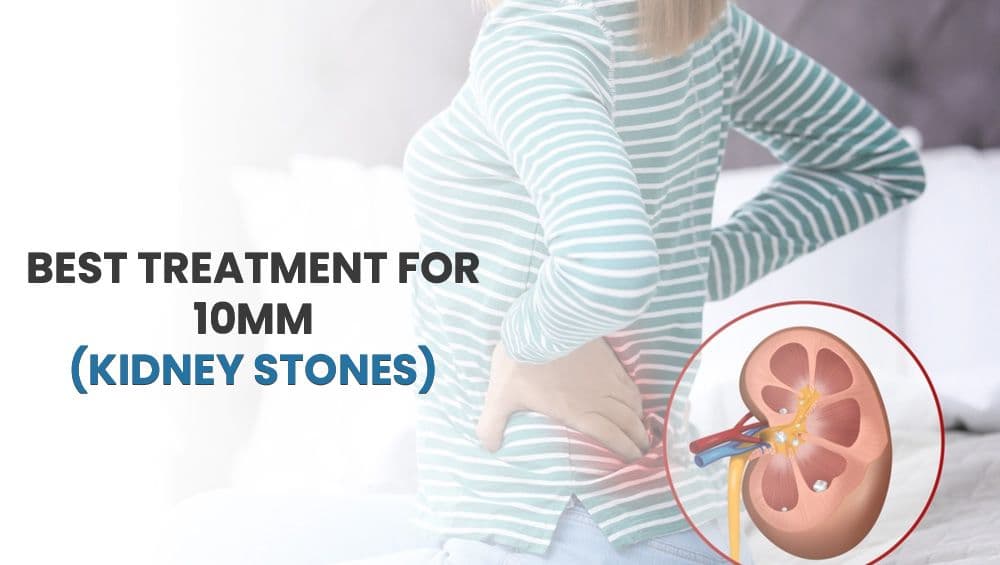
Suffering from 10mm kidney stones can cause intense pain, urinary difficulties, and a high risk of complications. Large stones can block the urinary tract if left untreated, leading to infections, kidney damage, or other serious health issues.
The pain and discomfort from such large kidney stones can disrupt your daily life, making it difficult to work, sleep, or perform normal activities. Relying on medications or hoping the stone will pass on its own may not be enough to avoid the risks or constant distress. Read on to get the best treatment for a 10mm kidney stone.
What are the Signs and Symptoms of 10mm Kidney Stones?
If you have a 10mm kidney stone, you might experience a range of signs and symptoms that can be quite uncomfortable. Here is what to look out for:
- Severe Pain: One of the most common symptoms is intense pain, often described as a sharp or stabbing sensation. This pain typically starts in the back or side, just below the ribs, and may move to the lower abdomen and groin as the stone shifts.
- Frequent Urination: You may feel the urge to urinate more often, even if only a small amount of urine comes out each time. This can be accompanied by a burning sensation.
- Nausea and Vomiting: The pain from kidney stones can sometimes cause nausea and even lead to vomiting, making you feel quite unwell.
- Blood in Urine: You might notice pink, red, or brown urine, known as hematuria, which can indicate that the stone is irritating the urinary tract.
- Cloudy or Foul Smelling Urine: If your urine looks cloudy or has an unusual odor, it could be a sign of an infection related to the kidney stone.
- Difficulty Sitting Still: The discomfort might make it hard to find a comfortable position. You might find yourself pacing or constantly shifting to alleviate the pain.
If you are experiencing any of these symptoms, especially severe pain or blood in your urine, it is important to seek medical attention. Early diagnosis and treatment can help manage the pain and prevent complications.
What are the Treatment Options for 10mm Kidney Stones?
For a 10mm kidney stone, there are several treatment options available to help you find relief and get back to feeling your best. Here is a rundown of the most common approaches:
- Retrograde Intrarenal Surgery (RIRS): Advanced RIRS procedures involve using a flexible ureteroscope that is inserted through the urinary tract, entering the bladder and reaching the kidney where the stone is located. The stone is then targeted with a laser, breaking it into smaller fragments. These fragments can either be removed or allowed to pass naturally.
- Shock Wave Lithotripsy (SWL): This non invasive ESWL procedure uses sound waves to break the kidney stone into smaller pieces, making it easier to pass through your urinary tract. It is usually performed on an outpatient basis, and while it can be effective, some patients may experience discomfort during the procedure.
- Ureteroscopy: If the stone is stuck in the ureter (the tube connecting the kidney to the bladder), a ureteroscopy might be necessary. In this procedure, a thin tube with a camera is inserted through the urethra and bladder to reach the ureter. The doctor can then either remove the stone or break it up with a laser.
- Percutaneous Nephrolithotomy (PCNL): For larger stones or if other methods have not worked, you might wonder if PCNL is a major surgery. It is a more invasive option that involves making a small incision in your back to directly remove the stone. This method is usually done under general anesthesia and requires a hospital stay.
- Medications: In some cases, medications may be prescribed to help manage pain or facilitate the passage of the stone. Additionally, your doctor may recommend certain medications to help prevent future stones from forming.
Choosing the right treatment depends on factors like the stone size, location, and your overall health. It is important to discuss all your options with your healthcare provider to determine the best approach for your situation. Remember, the goal is to relieve your pain and prevent future kidney stones from occurring.
Why RIRS is the Best Treatment for 10mm Kidney Stones?
Retrograde Intrarenal Surgery (RIRS) has emerged as one of the most effective treatments for 10mm kidney stones. Here is why it stands out:
- Minimally Invasive: RIRS is a minimally invasive procedure that does not require any large incisions. Instead, a thin and flexible tube is passed through the urethra and bladder to reach the kidney. This means less pain and a quicker recovery time compared to more invasive surgeries.
- Precision Targeting: Using advanced imaging techniques, RIRS allows doctors to precisely locate and target the stone. This precision helps ensure that the stone is effectively treated while minimizing damage to surrounding tissues.
- Effective for Larger Stones: While some methods may struggle with stones of this size, RIRS is particularly effective for 10mm stones. It combines the use of a laser to break down the stone into smaller fragments, which can then be easily passed or removed.
- Reduced Risk of Complications: Because RIRS is less invasive, it generally comes with a lower risk of complications such as bleeding or infection. Patients often experience fewer side effects and a smoother recovery process.
- Quick Recovery: Most patients can return home the same day after the procedure, with many resuming normal activities within a few days. This rapid recovery is a significant advantage for those looking to minimize downtime.
- Long Term Results: RIRS not only addresses the immediate issue of the kidney stone but also has a good track record of preventing future stones, thanks to its effectiveness in clearing the obstruction and ensuring kidney function is restored.
Overall, RIRS combines effectiveness, safety, and convenience, making it an excellent choice for treating 10mm kidney stones. If you are facing this challenge, discussing RIRS with your healthcare provider can help you understand if it is the right option for you.
Cure Stone: Redefining Urological Care and Comfort
When you are confronted with a large 10mm kidney stone, the urgency for relief cannot be overstated. At Cure Stone, we provide an unparalleled level of urological care to help you navigate this painful hurdle. Our distinguished medical team leverages state of the art equipment to perform highly precise and minimally invasive interventions. We focus entirely on your rapid recovery and overall comfort. Choosing Cure Stone means you are choosing a facility that values your well being and strives to deliver permanent solutions to your renal health challenges. Step into a brighter and healthier future by scheduling your appointment with Cure Stone today.
Frequently Asked Questions (FAQs)
Can a 10mm kidney stone pass on its own?
A 10mm stone is exceptionally large and has a very low chance of passing naturally. Since the average ureter is much narrower than 10mm, a stone of this size will likely get stuck, causing severe pain and a dangerous blockage that requires medical removal.
Is surgery mandatory for a 10mm stone?
Yes, in most cases, some form of surgical or medical intervention is required. Relying strictly on home remedies for a stone this large can lead to permanent kidney damage or severe urinary tract infections.
How long does it take to recover from RIRS for a 10mm stone?
Recovery from RIRS is incredibly fast. Most patients are discharged on the very same day of their procedure and can return to their normal light activities within two to three days.
Does a 10mm stone cause kidney damage?
If a 10mm stone blocks the ureter and stops the flow of urine, the trapped urine can cause the kidney to swell significantly. If this blockage is ignored for an extended period, the intense pressure can indeed cause irreversible kidney damage.
Have Questions About This Topic?
Get a personalized consultation at Cure Stone Hospital, Sector 52, Gurgaon.
Book Consultation