Are There Any Disadvantages of RIRS?
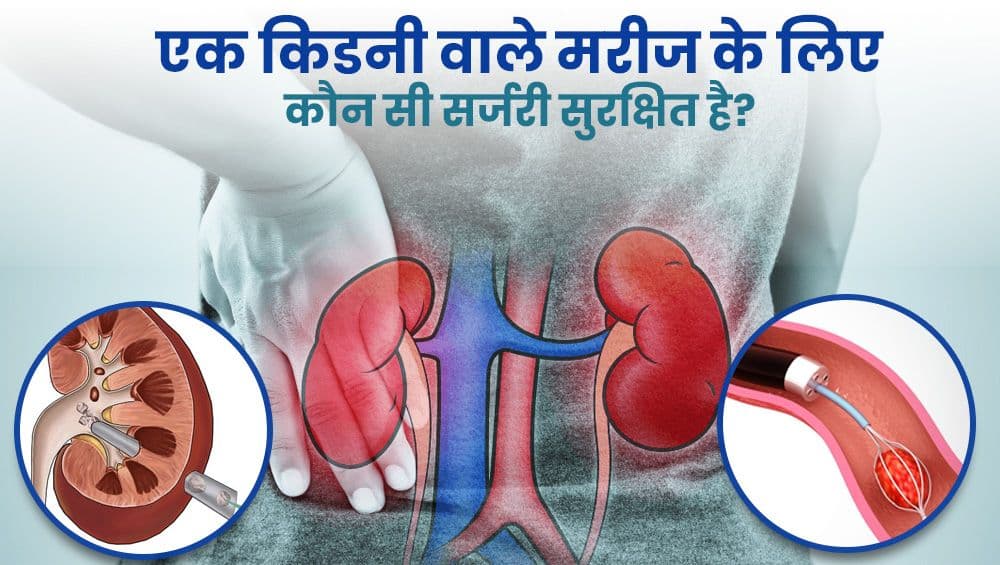
Retrograde Intrarenal Surgery (RIRS) is a surgical procedure commonly employed for treating kidney stones. This technique permits the extraction of stones using a flexible ureteroscope and does not require any incisions to be performed. While RIRS is indeed effective and safe, it does have some drawbacks.

Retrograde Intrarenal Surgery (RIRS) is widely recognized as one of the most advanced, 100% incision-free treatments for kidney stones. By accessing the kidney through natural urinary pathways using ultra-thin flexible endoscopes and precision lasers, RIRS eliminates external surgical cuts and enables rapid recovery.
However, like any medical procedure, RIRS has specific limitations and potential drawbacks. Understanding these disadvantages allows patients to weigh their treatment options and set realistic expectations for their recovery.
In this guide, we break down the potential limitations of RIRS, how modern innovations mitigate these risks, and when RIRS remains the gold standard treatment.
Disadvantages & Limitations of RIRS Kidney Stone Treatment
1. Limited Efficacy for Large Stone Burdens (> 2 cm)
RIRS is optimal for small-to-medium stones measuring up to 2 cm. For stones exceeding 2 cm or complex staghorn calculi, clearing the stone burden with standard RIRS may require multiple surgical sessions. In such cases, keyhole procedures like PCNL or Mini-PCNL offer higher single-session clearance.
2. Risk of Residual Stone Dust
During laser lithotripsy, stones are pulverized into fine particles. In traditional RIRS, some dust or micro-fragments may float inside the kidney's lower calyces rather than flushing out immediately. If not cleared, these fragments can occasionally act as a nidus for future stone recurrence.
3. Elevated Intrarenal Pressure & Infection Risk
Traditional RIRS relies on continuous fluid irrigation to maintain clear visual fields. Fluid accumulation can temporarily increase pressure inside the kidney, raising the risk of post-operative fever, localized discomfort, or urinary tract infections (UTIs).
4. Temporary Stent Discomfort
Following RIRS, a temporary internal DJ stent is usually placed in the ureter for 1 to 2 weeks to prevent ureteral swelling and facilitate smooth urine drainage. While necessary for safety, the stent can cause mild urinary urgency, frequency, or side discomfort during urination until it is removed.
5. Potential for Ureteral Irritation
Navigating flexible scopes through the ureter can cause transient lining edema, mild blood in the urine (hematuria), or, in rare instances, long-term ureteral narrowing (stricture).
6. Special Laser Equipment Requirements
Because RIRS utilizes high-precision Holmium or Thulium Fiber lasers, flexible video scopes, and single-use accessories, the procedural cost can be slightly higher than non-surgical shockwave therapy (ESWL).
How Modern Technology Overcomes RIRS Limitations: FANS-RIRS
Modern endourology has directly addressed the key drawbacks of traditional RIRS through technological innovation:
| TRADITIONAL RIRS LIMITATION | FANS-RIRS (SUCTION RIRS) SOLUTION |
|---|---|
| Floating residual dust | Active suction vacuums micro-dust out in real time |
| High intrarenal pressure | Continuous evacuation maintains safe, low renal pressure |
| Infection / Urosepsis risk | Low pressure prevents bacterial backflow into blood |
| Multi-session needs (>2 cm) | Higher clearance capacity treats stones up to 2.5 cm |
With FANS-RIRS (Flexible and Navigable Suction RIRS), an active vacuum sheath continuously evacuates fluid, stone dust, and fragments during laser fragmentation. This keeps intrarenal pressure low, eliminates residual dust, lowers infection risks, and allows endourologists to clear larger stone burdens (up to 2.5 cm) in a single setting.
Why RIRS Remains the Preferred Choice for Most Patients
Despite these limitations, RIRS remains the preferred treatment option for millions of patients worldwide due to its overwhelming advantages:
- 100% Incision-Free: Zero external cuts, surgical scars, or tissue trauma.
- Rapid Recovery: Most patients are discharged the same day and resume normal office work within 2 to 3 days.
- High Safety for High-Risk Patients: Safe for individuals with bleeding disorders, those taking blood thinners, elderly patients, or those with solitary kidneys.
- Access to Difficult Anatomy: Navigates deep into lower pole kidney calyces where external shockwaves (ESWL) often fail.
RIRS vs PCNL vs ESWL: Quick Decision Matrix
| FEATURE | RIRS / FANS-RIRS | PCNL / MINI-PCNL | ESWL |
|---|---|---|---|
| Best Stone Size | Up to 2 cm (2.5 cm with FANS) | > 2 cm / Staghorn | Up to 1.5 cm |
| Incision Type | None (Incision-Free) | Keyhole (~1 cm) | None (External) |
| Hospital Stay | Same Day / 24 Hours | 1 - 2 Days | Outpatient |
| Return to Work | 2 - 3 Days | 5 - 7 Days | 1 - 2 Days |
Consult Top Kidney Stone Specialist Dr. Deepanshu Gupta
Choosing the right procedure requires evaluating your NCCT scan findings, stone density, kidney anatomy, and personal recovery goals.
Dr. Deepanshu Gupta at Cure Stone is a leading endourologist in Gurgaon with extensive clinical expertise, having completed over 9,500 successful endoscopic surgeries. Specializing in advanced, minimally invasive techniques—including radiation-free (fluoroscopy-free) RIRS, high-efficiency FANS RIRS suction laser surgery, and Mini-PCNL—Dr. Gupta tailors every treatment plan to deliver maximum stone clearance with zero pain and minimal downtime.
Don't let kidney stone pain compromise your health. Book a consultation with Cure Stone today to evaluate your diagnostic reports!
Frequently Asked Questions (FAQs)
Is RIRS safer than PCNL?
Yes. Because RIRS involves no external incisions or punctures into kidney tissue, it carries a lower risk of bleeding and structural trauma compared to keyhole PCNL.
How long does stent discomfort last after RIRS?
Mild stent symptoms (such as urgency or a dull ache in the side during urination) are temporary and resolve completely once the DJ stent is removed during a short, 5-minute outpatient visit (usually 1 to 2 weeks post-surgery).
Can a 2 cm kidney stone be completely cleared in one RIRS session?
Yes. With advanced laser technology and active suction sheaths like FANS-RIRS, 2 cm stones can frequently be pulverized and completely evacuated in a single session without keyhole surgery.
Have Questions About This Topic?
Get a personalized consultation at Cure Stone Hospital, Sector 52, Gurgaon.
Book Consultation