Can A Stone In The Ureter Damage The Kidney?
Stones within the kidney’s pelvis or ureters can cause complications within the urological system and if left untreated can further deteriorate one’s health clause severe discomfort. The most problematic features arise when a stone becomes stuck in the ureter singular duct that links the kidney to the bladder.
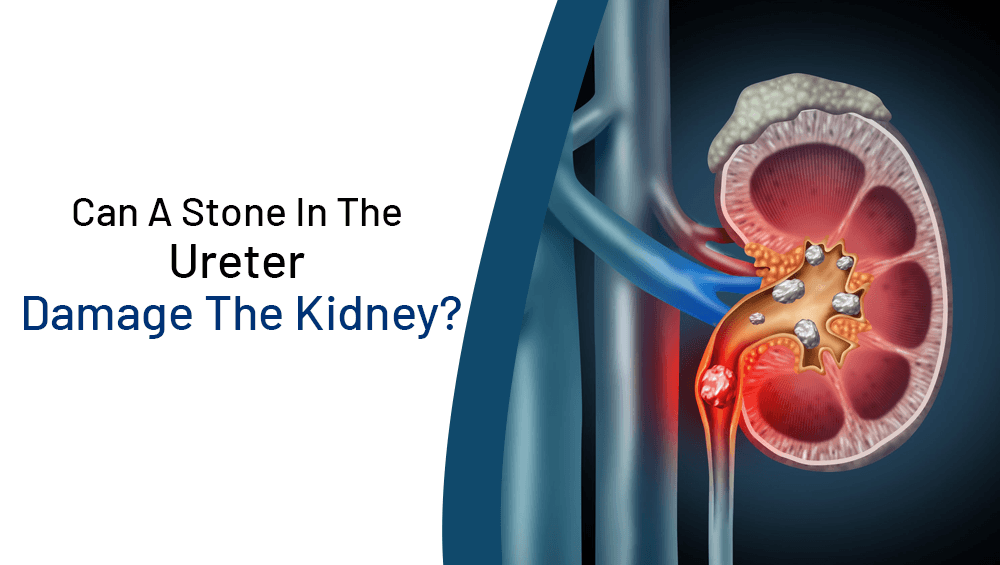
Kidney stones cause immense pain, but the risk becomes significantly higher when a stone leaves the kidney and becomes stuck in the ureter—the narrow tube that connects the kidney to the bladder.
When a stone blocks the ureter, it disrupts the flow of urine, leading to increased intrarenal pressure, severe abdominal or flank pain, and potential kidney damage if left untreated.
In this guide, we cover how ureteral stones affect your kidneys, warning signs to watch for, potential complications, and modern, incision-free treatment options.
How Does a Ureteral Stone Form?
Kidney stones form when salts and minerals in urine become overly concentrated and crystallize. As these deposits grow, they may travel out of the kidney and become trapped in the ureter.
The most common types of stones include:
- Calcium Oxalate Stones: The most common variety, often linked to high urinary sodium and oxalate levels.
- Uric Acid Stones: Associated with high-protein diets, metabolic conditions, or chronic dehydration.
- Struvite Stones: Fast-growing stones typically caused by recurrent urinary tract infections (UTIs).
- Cystine Stones: A rare stone type caused by an inherited metabolic disorder.
Can a Ureteral Stone Cause Permanent Kidney Damage?
Yes, a stone lodged in the ureter can damage the kidney if the blockage is prolonged. Here is how obstruction impacts renal function:
1. Urine Backup and Hydronephrosis
When a stone completely or partially blocks the ureter, urine cannot reach the bladder. The trapped urine backs up into the kidney, causing it to swell—a condition known as hydronephrosis. The continuous pressure inside the kidney compresses renal blood vessels and delicate tissues.
2. Increased Risk of Infection and Urosepsis
Stagnant urine trapped behind a blocking stone provides an ideal environment for bacterial growth. If a urinary infection develops behind an obstruction, it can quickly escalate into a kidney infection (pyelonephritis) or life-threatening urosepsis.
3. Loss of Renal Function
If severe ureteral obstruction is left untreated for more than 2 to 4 weeks, the affected kidney begins to lose its filtering capability. Over time, persistent pressure leads to tissue scarring and irreversible functional decline.
Warning Symptoms of a Ureteral Stone
Seek immediate medical evaluation if you experience any of these classic symptoms:
- Ureteric Colic: Severe, sharp, wave-like pain in the back, side, or lower abdomen that radiates toward the groin.
- Painful Urination: A burning sensation or discomfort during urination (dysuria).
- Visible Blood in Urine: Urine appearing pink, red, or brownish (hematuria).
- Nausea and Vomiting: Triggered by shared nerve pathways between the kidneys and the digestive system.
- Fever and Chills: A critical warning sign indicating a infected, obstructed kidney that requires emergency medical care.
How Are Ureteral Stones Diagnosed?
A urologist uses precise diagnostic tools to evaluate stone size and location:
- Non-Contrast Computed Tomography (NCCT KUB): The gold standard imaging scan to accurately measure stone size, density, and exact location.
- Ultrasound (USG KUB): Assesses the degree of kidney swelling (hydronephrosis) and detects larger kidney stones.
- Urinalysis: Checks for micro-blood, mineral crystals, or signs of underlying infection.
Modern Treatment Options for Ureteral Stones
Treatment depends on stone size, location, and severity of symptoms:
Conservative Management (Stones < 4 mm)
Small, non-blocking stones often pass with high fluid intake (2.5 to 3 liters daily), pain relievers, and alpha-blocker medications (like tamsulosin) that relax ureteral muscles.
Advanced Medical Procedures (Stones > 6 mm or Impacted Stones)
- Retrograde Intrarenal Surgery (RIRS): A 100% incision-free procedure where an ultra-thin, flexible camera is passed through natural pathways to pulverize stones using high-precision lasers.
- FANS RIRS (Suction RIRS): An upgraded laser technique featuring an integrated suction sheath that instantly vacuum-clears stone dust, reducing pressure and infection risk.
- Ureteroscopy (URS): Ideal for lower or mid-ureteral stones. A rigid scope accesses the ureter directly to fragment the stone with laser energy.
- Stent Placement: A thin DJ stent is placed in the ureter to bypass the obstruction, relieve swelling, and ensure smooth urine drainage.
Essential Tips to Prevent Kidney Stones
- Maintain High Hydration: Drink 2.5 to 3 liters of water daily to keep urine dilute.
- Limit Sodium: Reduce intake of processed, canned, and high-salt foods.
- Increase Citrus Intake: Lemons and limes contain natural citrate, which inhibits stone crystallization.
- Moderate Oxalates: Balance oxalate-rich foods (spinach, nuts, chocolate) with dietary calcium sources (milk, yogurt) during meals.
Consult Top Urologist Dr. Deepanshu Gupta
Timely treatment of ureteral stones is vital to prevent kidney damage and relieve pain.
Dr. Deepanshu Gupta at Cure Stone is a leading urologist in Gurgaon specializing in advanced endourology and laser stone removal. Utilizing state-of-the-art procedures like RIRS laser surgery and FANS RIRS suction techniques, Dr. Gupta provides prompt, compassionate care to ensure complete stone clearance and protect long-term kidney function.
Don't let ureteral stone pain risk your kidney health. Book a consultation with Cure Stone today for an expert evaluation!
Frequently Asked Questions (FAQs)
How long can a stone remain stuck in the ureter before causing permanent kidney damage?
Complete ureteral blockage can start causing permanent kidney damage within 2 to 4 weeks. Partial blockages can be monitored for slightly longer, but persistent pain or infection requires immediate treatment.
What is the difference between RIRS and URS for a ureteral stone?
URS uses a rigid scope designed for stones in the lower or mid-ureter. RIRS utilizes a flexible scope that can navigate higher up into the upper ureter and inside the kidney to clear complex or hard-to-reach stones.
Is a fever dangerous when you have a kidney stone?
Yes. A fever accompanied by kidney or back pain is a medical emergency indicating an infected, obstructed kidney (pyonephrosis). You should seek immediate care from a urologist.
Have Questions About This Topic?
Get a personalized consultation at Cure Stone Hospital, Sector 52, Gurgaon.
Book Consultation