Will Removing Kidney Stones Improve Kidney Function?
Every year, millions of people suffer the painful condition of kidney stones. Renal calculi, as it is medically termed, is one of the most common urological diseases. In most patients, the debilitating pain is not foreign to them.
Every year, millions of people experience the intense, debilitating pain caused by kidney stones (renal calculi). While managing immediate pain is usually a patient's primary concern, a crucial question often arises once treatment is discussed: Does removing kidney stones actually help restore or protect kidney function?
The short answer is yes. Timely removal of kidney stones is essential to relieve internal pressure, stop tissue scarring, and safeguard your long-term kidney health. However, the extent of recovery depends on several factors, including stone size, location, duration of blockage, and overall pre-treatment kidney health.
In this comprehensive guide, we explore how kidney stones impact renal performance, how removal helps kidneys recover, available modern treatment methods, and essential post-operative care steps.
A Quick Primer on Kidney Stones
Kidney stones form when minerals and liquid waste in the urine become imbalanced, causing tiny crystals to clump together and harden inside the kidneys.
The primary types of kidney stones include:
- Calcium Oxalate Stones: The most common type, often triggered by high dietary sodium, dehydration, or metabolic factors.
- Uric Acid Stones: Associated with high-protein diets, gout, or metabolic syndrome.
- Struvite Stones: Fast-growing, complex stones triggered by recurrent urinary tract infections (UTIs).
- Cystine Stones: A rare type caused by an inherited genetic disorder that affects amino acid transport.
Stones can range in size from a grain of sand to a golf ball. While smaller stones may drift through the urinary tract unnoticed, larger stones can lodge in narrow passages, creating painful blockages.
How Kidney Stones Affect Kidney Function
When a stone blocks the flow of urine, pressure builds up behind the obstruction, causing the kidney to swell—a condition known as hydronephrosis. Left unmanaged, prolonged obstruction can lead to serious complications:
- Increased Intrarenal Pressure: Urine backflow stretches delicate renal tissues, reducing blood flow to the filtering units (nephrons).
- Recurrent Infections: Stagnant urine creates a breeding ground for bacteria. Repeated infections—especially with struvite stones—cause tissue inflammation and scarring.
- Chronic Inflammation & Nephron Loss: Persistent irritation from lodged stones gradually damages nephrons. Once nephrons are destroyed, they cannot regenerate.
- Long-Term Kidney Damage: Neglecting obstructive kidney stones over weeks or months can lead to irreversible scarring, reduced split kidney function, or severe renal impairment.
Does Kidney Function Improve After Stone Removal?
Removing an obstructive kidney stone stops ongoing damage and creates optimal conditions for recovery. Key benefits of timely stone removal include:
- Relief from Obstruction: Clearing the blockage immediately reduces intrarenal pressure and relieves hydronephrosis, allowing kidney tissue to decompress.
- Restoration of Blood Flow: With internal pressure relieved, micro-circulation to filtering units improves, delivering oxygen and nutrients necessary for tissue healing.
- Infection Prevention: Eliminating the source of stagnant urine significantly lowers the risk of chronic UTIs and subsequent renal scarring.
- Preservation of Remaining Nephrons: Prompt removal prevents the further loss of healthy filtering units, preserving overall kidney capacity.
Note on Functional Recovery: The degree to which kidney function rebounds depends largely on how long the organ was obstructed and the baseline health of the kidney before surgery.
How Doctors Evaluate Kidney Function Before and After Treatment
Endourologists use several diagnostic tools to monitor kidney health before and after stone removal:
- Blood Creatinine & eGFR: Measures how effectively the kidneys filter waste products from the bloodstream.
- Urinalysis: Checks for microscopic blood (hematuria), infection markers, or crystal formation.
- Non-Contrast CT Scan or Ultrasound: Evaluates the degree of hydronephrosis, structural changes, and exact stone locations.
- Nuclear Renal Scan (DTPA/EC Scan): Measures precise "split function"—calculating the exact percentage of total work performed by each individual kidney.
Modern Treatment Options for Kidney Stone Removal
Today's endourological procedures are minimally invasive or completely incision-free, designed to maximize stone clearance while protecting surrounding kidney tissue:
1. Retrograde Intrarenal Surgery (RIRS / FANS-RIRS)
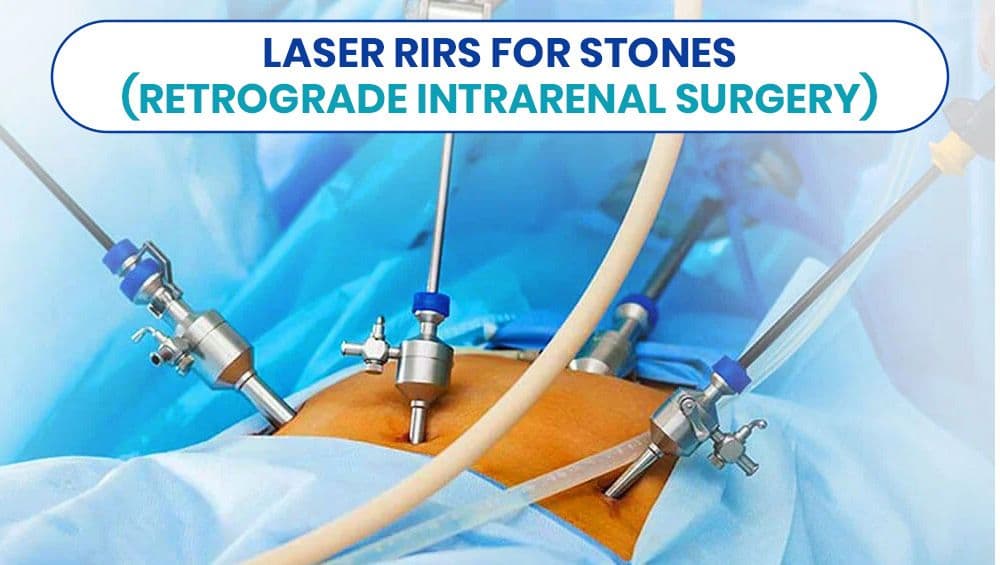
A 100% incision-free procedure where a flexible digital scope is guided through natural urinary pathways into the kidney. High-power lasers pulverize stones into dust, which is then evacuated. Learn more in our detailed guide on FANS RIRS suction laser surgery.
2. Ureteroscopy (URS) with Laser Lithotripsy
A thin scope is passed through the urethra into the ureter to break up lodged stones using laser energy for immediate extraction.
3. Percutaneous Nephrolithotomy (PCNL / Mini-PCNL)
A keyhole procedure used for large ($> 2\text{ cm}$) or complex staghorn stones. A tiny access point in the back allows the surgeon to fragment and vacuum out stone masses directly.
4. Extracorporeal Shock Wave Lithotripsy (ESWL)
A non-invasive treatment that uses focused acoustic shock waves from outside the body to break small-to-medium kidney stones into fine fragments that pass during urination.
Post-Operative Steps to Protect Your Kidney Function
After stone removal, adopting preventive habits is critical to maintain improved kidney function and prevent stone recurrence:
- Hydrate Consistently: Drink 2.5 to 3 liters of water daily to produce at least 2 liters of clear urine, flushing out residual mineral dust.
- Reduce Dietary Sodium: Limit sodium intake to under 2,300 mg per day to lower calcium excretion in urine.
- Balance Protein & Oxalates: Moderate intake of animal proteins and pair oxalate-rich foods with dietary calcium during meals.
- Follow Metabolic Guidance: Complete metabolic stone workups and take prescribed medications (such as potassium citrate) if recommended. Learn more in our dedicated article on how to avoid kidney stones recurrence.
Factors That May Limit Complete Recovery
While stone removal prevents further damage, full functional recovery may be limited in cases involving:
- Long-standing, severe obstruction lasting several months without intervention.
- Extensive pre-existing scarring from repeated kidney infections.
- Underlying chronic medical conditions like long-term diabetes or unmanaged hypertension.
Early diagnosis and prompt treatment remain the single best way to prevent permanent impairment.
Consult Top Kidney Stone Specialist Dr. Deepanshu Gupta in Gurgaon
Protecting your kidney function starts with accurate diagnosis and timely, precise surgical care.
Dr. Deepanshu Gupta at Cure Stone is a leading endourologist in Gurgaon and Delhi NCR with extensive clinical expertise, having successfully performed over 9,500 endoscopic procedures. Specializing in radiation-free flexible RIRS, high-efficiency FANS-RIRS suction laser surgery, Mini-PCNL, and non-invasive ESWL, Dr. Gupta focuses on maximum stone clearance while preserving optimal long-term renal health.
If you or a loved one are experiencing symptoms of a kidney stone, don't wait for complications to develop. Book a consultation with Cure Stone today for specialized, patient-focused care!
Frequently Asked Questions (FAQs)
Can a kidney fully recover after being blocked by a stone?
Yes, if the blockage is relieved promptly (typically within a few weeks), kidney pressure normalizes and function can recover significantly. However, chronic blockages lasting months may lead to permanent nephron loss.
Does kidney stone laser surgery cause permanent damage to the kidney?
Modern endoscopic laser procedures like RIRS and URS are non-invasive or minimally invasive. They are designed to fragment stones precisely with minimal impact on surrounding healthy kidney tissue.
How do I know if my kidney function has improved after surgery?
Your endourologist may order follow-up blood tests (creatinine/eGFR), a routine urinalysis, or follow-up imaging (ultrasound or nuclear scan) 4 to 12 weeks after surgery to verify stone clearance and monitor renal recovery.
Have Questions About This Topic?
Get a personalized consultation at Cure Stone Hospital, Sector 52, Gurgaon.
Book Consultation