The Best Treatment for 5mm Kidney Stones
Are you struggling with the unbearable pain of a 5mm stone? And wondering if you should go for surgery or which is the best treatment for 5mm Kidney Stones? If so, you’re in the right place. We’re here to help you find relief and get the care you need.
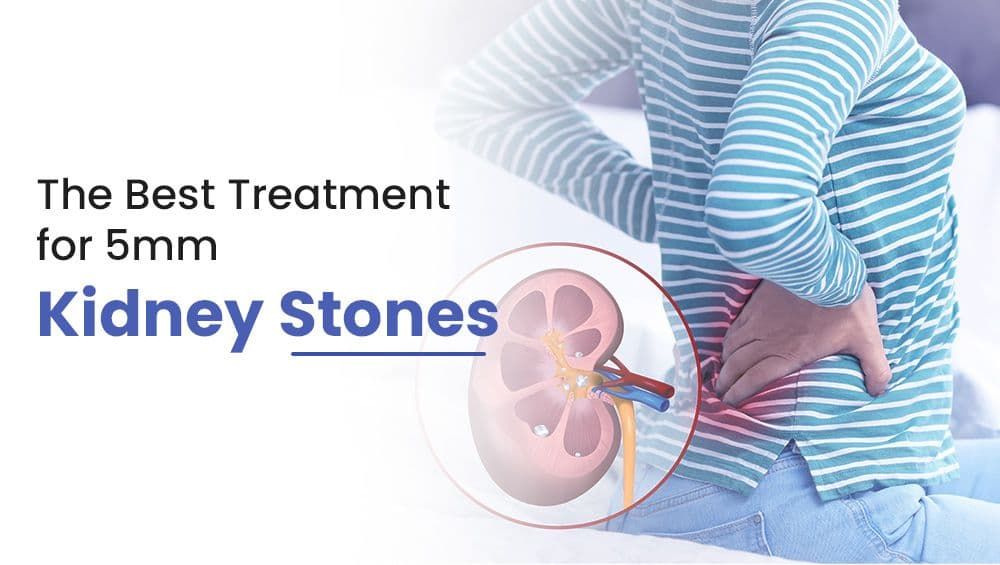
Are You Dealing With a 5mm Kidney Stone? Here Is the Best Treatment Options
Are you dealing with the unbearable pain of a 5mm kidney stone and wondering whether surgery is necessary or what the best treatment is?
You are in the right place.
Kidney stones can cause severe pain and disrupt daily life. The pain often starts in the back or side and may move to the lower abdomen and groin. It can also cause nausea, vomiting, frequent urination, and burning while urinating. For many people, this makes it hard to sleep, work, or carry out normal routines.
A common mistake is to ignore the problem and assume the stone will pass on its own. Some people also try home remedies or Ayurvedic treatments instead of getting proper medical care. That delay can lead to infection, blockage, or worsening pain. If you are looking for the best kidney stone treatment, the right step is to understand your options early.
For a broader overview of treatment options, read our guide on kidney stone treatment.
How Big Is a 5mm Kidney Stone?
A 5mm kidney stone is roughly the size of a grain of rice or a small pea. Even though it sounds small, it can still cause major pain as it moves through the urinary tract. Stones of this size may sometimes pass naturally, but not always. The chance of passing depends on the stone’s location, shape, and the patient’s overall condition.
If you want to understand how stone size affects treatment, see our related articles on the best treatment for 6mm kidney stones and the best treatment for 7mm kidney stones.
Why Treatment Matters
A 5mm stone sits at the borderline where some stones pass naturally and some do not. If it gets stuck, it can block urine flow and cause serious discomfort. In some cases, it may also lead to infection or kidney damage.
That is why timely treatment matters. Modern procedures are usually simple, effective, and far less painful than people expect. CureStone offers advanced options such as RIRS, ESWL, URSL, and Mini PCNL based on the stone’s size and location.
How Long Can It Take To Pass a 5mm Kidney Stone?
A 5mm stone may take anywhere from a few days to several weeks to pass. In many cases, it can take around 2 to 6 weeks with proper medical supervision. The timing depends on the stone’s position in the urinary tract, hydration, and whether medication is prescribed to relax the ureter and ease passage. If the stone does not pass or if the pain becomes severe, treatment should not be delayed.
What Is the Best Treatment for 5mm Kidney Stones?
The best treatment depends on whether the stone is moving, where it is located, and whether it is causing blockage or infection.
For some patients, medication and observation may be enough. For others, a minimally invasive procedure is the better choice. CureStone highlights RIRS as a modern option for kidney stone removal because it is performed through the urinary tract, without an abdominal incision. It uses a flexible scope and laser to break and remove the stone.
If you are comparing procedures, also read RIRS vs ESWL: which is the best treatment and RIRS vs PCNL: the best kidney stone treatment.
RIRS: A Minimally Invasive Option
RIRS stands for Retrograde Intrarenal Surgery. It is a minimally invasive procedure used to treat kidney stones by entering through the urethra and bladder rather than making an incision in the abdomen. This approach is designed to reduce tissue damage and speed up recovery. CureStone also describes RIRS as one of its key advanced treatments for kidney stones.
Is Kidney Stone Surgery Safe?
Yes, kidney stone surgery is generally considered safe when performed by an experienced urologist. Modern procedures such as ureteroscopy, shock wave lithotripsy, and PCNL are designed to reduce risk and improve recovery. CureStone also emphasizes that careful assessment, specialist care, and minimally invasive techniques contribute to better outcomes.
How Much Does 5mm Kidney Stone Surgery Cost?
The cost of treatment depends on the procedure, hospital type, surgeon’s expertise, and the tests or aftercare needed. CureStone’s RIRS cost page notes that pricing can vary significantly across cities and hospitals, and additional diagnostics or follow-up care can increase the total cost. For a detailed breakdown, see how much does RIRS cost and is kidney stone surgery expensive.
Pain-Free, Patient-Friendly Care at CureStone
At CureStone, the focus is on advanced, minimally invasive kidney stone care with less discomfort and faster recovery. Their treatment page highlights one-day discharge treatment options, while the RIRS page explains how the stone is accessed without an abdominal incision. If you are comparing options, the 4 methods of kidney stone removal guide is also useful.
Frequently Asked Questions
1) Can a 5mm kidney stone pass on its own?
Yes, sometimes it can pass on its own, but not always. The chance of passage depends on where the stone is, whether it is blocking urine flow, and whether symptoms are getting worse.
2) When should I choose surgery for a 5mm stone?
Surgery is usually considered when the stone is not passing, pain is severe, there is infection, or urine flow is blocked. A urologist will decide the safest option based on your scan and symptoms.
3) Is RIRS painful?
RIRS is a minimally invasive procedure designed to reduce discomfort. CureStone states that patients may have mild discomfort after the procedure, but symptoms usually settle within a few days.
4) How long does an RIRS procedure take?
CureStone’s FAQ page says RIRS usually takes one to three hours, depending on the complexity of the case and the number of stones.
5) What are the alternatives to RIRS?
Alternatives include ESWL, ureteroscopy, and PCNL. The right choice depends on stone size, location, and the patient’s health.
6) How can I prevent kidney stones from coming back?
Stay hydrated, reduce excess salt, follow a balanced diet, and keep regular follow-ups with your doctor. CureStone also recommends avoiding excessive calcium supplements unless advised by a doctor.
7) What are the long-tail symptoms of a 5mm kidney stone?
A 5mm kidney stone can cause flank pain, lower abdominal pain, groin pain, nausea, vomiting, burning urination, and frequent urination. If symptoms become severe, medical evaluation is important.
8) What is the best treatment for a 5mm kidney stone in the ureter?
The best treatment depends on the stone’s location and whether it is causing obstruction. In many cases, observation may work, but ureteroscopy, RIRS, or ESWL may be recommended when the stone is stuck or painful.
9) Can a 5mm kidney stone cause blockage?
Yes. Even a small stone can block urine flow if it gets stuck in the ureter. That is why pain, fever, or difficulty passing urine should never be ignored.
10) What is the fastest way to remove a 5mm kidney stone?
There is no single fastest option for everyone. The right treatment depends on symptoms, stone position, and whether there is infection or blockage. A specialist may recommend medication, ESWL, RIRS, URSL, or another procedure.
Final Takeaway
A 5mm kidney stone may seem small, but it can still cause serious pain and complications. Some stones pass naturally, but many need medical treatment. The safest approach is to get evaluated early and choose the right treatment based on the stone’s location and symptoms.
For expert care and advanced treatment options, explore kidney stone treatment or learn more about RIRS.
Have Questions About This Topic?
Get a personalized consultation at Cure Stone Hospital, Sector 52, Gurgaon.
Book Consultation