Best Treatment For 13mm Kidney Stones
Facing a 13mm kidney stone can be a deeply distressing experience, filled with moments of pain, uncertainty, and frustration. These stones can cause excruciating pain and discomfort, especially when they measure 13mm in size. This can lead to complications such as urinary tract infections, blockages, and potential damage to the kidneys.
Facing a 13mm kidney stone can be a deeply distressing experience, filled with moments of pain, uncertainty, and frustration. These stones can cause excruciating pain and discomfort, especially when they measure 13mm in size. This can lead to complications such as urinary tract infections, blockages, and potential damage to the kidneys.
Living with a kidney stone of this size can be both physically and emotionally draining. The fear of recurrent pain, the anxiety over possible surgical interventions, and the uncertainty about the best treatment options can overwhelm patients and their families.
Fortunately, there are effective treatment options available for managing 13mm kidney stones. From minimally invasive to advanced surgical techniques, understanding these solutions can empower you to make informed decisions about your health and pave the way for a smoother recovery.
How Big are 13mm Kidney Stones?
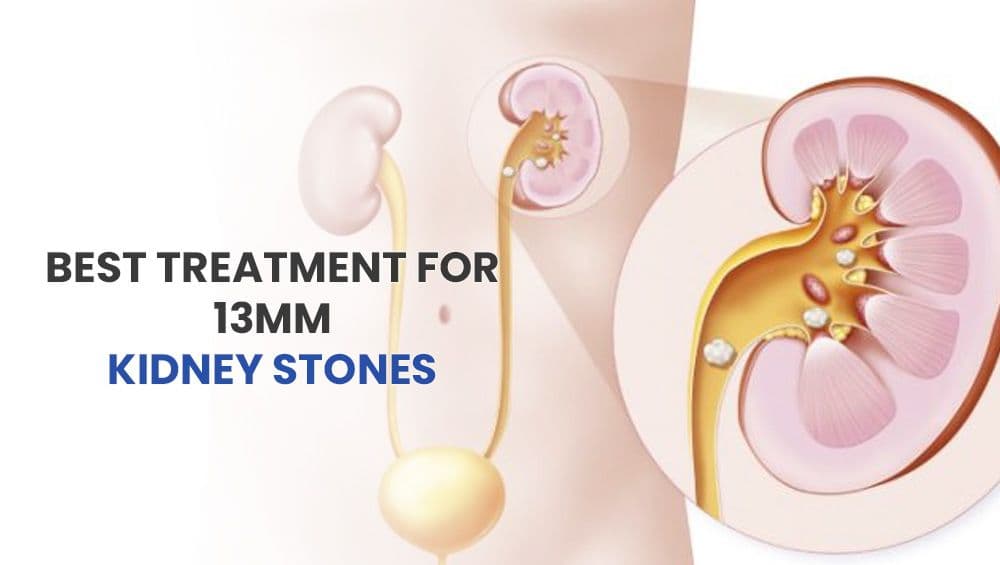
A 13mm kidney stone is considered relatively large, measuring approximately half an inch in diameter. To put it into perspective, it is roughly the size of a standard marble or a small grape. Understanding exactly how big kidney stones can get is important, as this size can significantly impact the urinary tract, potentially leading to various complications such as pain, blockage, and urinary infections.
Kidney stones are classified based on their size, and stones measuring over 5mm are often associated with an increased risk of obstruction. At 13mm, a stone can cause considerable discomfort as it travels through the urinary system, especially if it becomes lodged in the ureter, the tube connecting the kidney to the bladder.
The presence of a stone of this size can lead to intense pain, often described as some of the worst pain imaginable, typically felt in the back, side, or lower abdomen. Additionally, larger stones are less likely to pass naturally, making it crucial for individuals with a 13mm kidney stone to seek medical evaluation and treatment.
Complications in 13mm Kidney Stones
A 13mm kidney stone can lead to several complications, including:
- Severe Pain: As the stone moves or obstructs the urinary tract, it can cause intense, debilitating pain.
- Urinary Blockage: The stone may block urine flow, leading to swelling of the kidney known as hydronephrosis and increased pressure, which can damage kidney tissue.
- Infections: Blockages can create an environment conducive to urinary tract infections (UTIs), which may require additional treatment.
- Bleeding: Passing a large stone can sometimes cause bleeding within the urinary tract.
- Kidney Damage: Prolonged blockage can result in permanent kidney damage if not addressed promptly.
Seeking timely medical intervention is essential to manage these complications effectively.
What are the Treatment Options for 13mm Kidney Stones?
Managing a 13mm kidney stone often requires medical intervention, as stones of this size are less likely to pass naturally. The treatment options include:
- Extracorporeal Shock Wave Lithotripsy (ESWL): This non invasive ESWL procedure uses shock waves to break the kidney stone into smaller fragments, making it easier to pass through the urinary tract. It is typically effective for stones that are not too large or obstructing the urinary tract.
- Ureteroscopy: In this minimally invasive procedure, a small scope is inserted through the urethra and bladder to locate and remove the stone directly from the ureter or kidney. This method is particularly useful for stones that are blocking the flow of urine.
- Retrograde Intrarenal Surgery (RIRS): Advanced RIRS involves using a flexible ureteroscope to access the kidney through the urethra and bladder, allowing the surgeon to locate and fragment the stone with laser energy. This technique is effective for larger stones, like those measuring 13mm, and provides a less invasive option compared to open surgery.
- Percutaneous Nephrolithotomy (PCNL): For larger stones, such as a 13mm stone that cannot be treated effectively with ESWL or ureteroscopy, PCNL may be recommended. This procedure involves making a small incision in the back to access the kidney and remove the stone. It is often used for larger or more complex stones.
- Medical Management: In some cases, medications may be prescribed to help manage pain or facilitate the passage of smaller stone fragments. Additionally, alpha blockers may be used to relax the muscles in the ureter, aiding in stone passage.
- Surgery: In rare cases, open surgery may be necessary, especially if other treatments are ineffective or if complications arise.
Consultation with a healthcare professional is crucial to determine the most appropriate treatment based on the specific circumstances surrounding the kidney stone.
What "Without Cutting" Actually Means
Three approaches get described as minimally invasive, and they are genuinely different from one another.
No incision at all: RIRS. RIRS works entirely through the body's existing urinary passage. A flexible scope goes up through the urethra, bladder and ureter into the kidney, and a laser breaks the stone up. There is no cut and no external scar. For most 13mm stones, this is the answer.
No incision, but limited at this size: ESWL. Shock waves from outside the body break the stone, but the fragments then have to travel down the ureter on their own. At 13mm that often means weeks of colicky pain and sometimes a second procedure, so it is generally a poor choice at this size.
A small puncture, not an open cut: Mini PCNL. It creates a tract through the flank into the kidney, roughly a centimetre wide. The scar is small, but it is not incision-free. It is an effective operation, just not a scarless one.
Removing It Is Only Half the Job
A 13mm stone did not appear overnight. It grew over months or years, and the conditions that produced it are still present the day after surgery.
Roughly half of stone formers develop another stone within five to ten years when the underlying cause is never identified. Finding the cause means keeping the fragments for composition analysis and, for anyone with more than one episode, a 24-hour urine study.
Ask how the fragments will be removed, how you will be confirmed stone free afterwards, and when that scan will happen. Leftover fragments are one of the most common reasons a stone appears to return within two years.
Cure Stone: Your Partner in Advanced Kidney Care
When you are struggling with a 13mm kidney stone, you need a medical team that understands both the physical agony and the emotional stress you are experiencing. At Cure Stone, we specialize in advanced, minimally invasive urological procedures designed to eliminate large stones safely and efficiently. Our world class facility is equipped with cutting edge technology to provide treatments like RIRS and PCNL with the highest level of precision. We pride ourselves on crafting tailored care plans for every single patient. The experts at Cure Stone do not just stop at removing your current stone; we dive deep into your medical profile to implement proactive strategies that keep your kidneys healthy for the long term. Reach out to Cure Stone today, and let our dedicated specialists guide you smoothly toward a pain free life.
Frequently Asked Questions (FAQs)
Can a 13mm kidney stone dissolve with medication?
Unless the stone is purely composed of uric acid, a 13mm stone is generally too large to dissolve completely with oral medications. Most stones of this size are calcium based and will require a surgical intervention to be safely removed.
Is a 13mm kidney stone considered an emergency?
It can become a medical emergency if the stone completely blocks the ureter and stops the flow of urine. This situation can lead to a severe infection or permanent kidney damage. If you experience uncontrollable pain, a high fever, or an inability to urinate, you should seek immediate emergency care.
How long does surgery take for a 13mm kidney stone?
Minimally invasive procedures for a stone of this size usually take between 45 minutes to two hours. The exact time depends on the specific surgical method your urologist at Cure Stone selects and the exact location of the stone within your urinary tract.
Will I need a stent after surgery for a 13mm stone?
Yes, it is highly likely. Following procedures like RIRS or PCNL, urologists typically place a temporary DJ stent in the ureter. This helps reduce swelling, allows the urinary tract to heal properly, and ensures that urine and any remaining small stone dust can easily flow to the bladder.
Have Questions About This Topic?
Get a personalized consultation at Cure Stone Hospital, Sector 52, Gurgaon.
Book Consultation