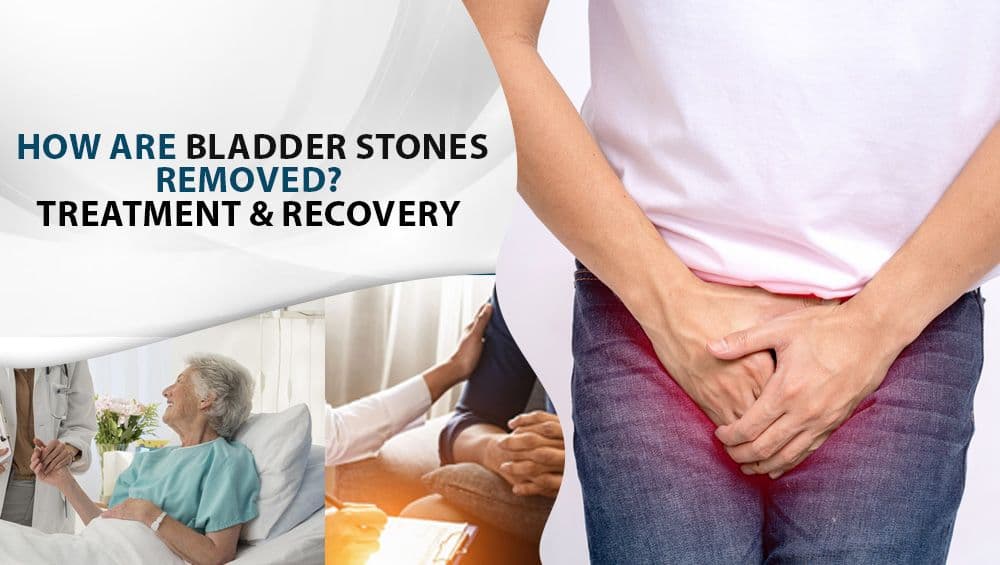
How Are Bladder Stones Removed? Treatment & Recovery
Bladder stones are small deposits of minerals, such as calcium or magnesium, that form in the bladder and are usually the result of other issues, such as infection, urinary retention, or an underlying urologic condition. They may be small, but bladder stones can be very painful, uncomfortable and if left untreated, quite harmful.
Bladder stones (vesical calculi) are solid mineral deposits that form inside the urinary bladder. Unlike kidney stones, which primarily crystallize due to metabolic imbalances in the kidneys, bladder stones typically develop as a secondary result of urinary stasis—a condition where the bladder is unable to empty completely.
When stagnant urine remains in the bladder, minerals like calcium, magnesium, and uric acid become hyper-concentrated, form crystals, and gradually solidify into hard masses. Left untreated, bladder stones can cause severe lower abdominal pain, recurrent infections, urethral blockage, and long-term bladder dysfunction.
What Causes Bladder Stones?
Bladder stones almost always stem from an underlying urological condition that prevents full bladder emptying:
- Benign Prostatic Hyperplasia (BPH): An enlarged prostate compresses the urethra in aging men, trapping urine in the bladder.
- Neurogenic Bladder: Nerve damage from spinal cord injuries, stroke, or diabetes impairs the bladder's ability to contract and empty.
- Bladder Diverticula: Pouches in the bladder wall trap urine and allow mineral crystallization.
- Bladder Inflammation & UTIs: Chronic bladder infections cause localized mucosal swelling and leave cellular debris that acts as a nucleus for stone growth.
- Descended Kidney Stones: Small renal calculi can travel down the ureter and lodge in the bladder, growing larger over time.
- Foreign Bodies: Catheter fragments, surgical sutures, or encrusted stents can serve as anchors for mineral buildup.
- Severe Dehydration: High urinary concentration accelerates crystal precipitation.
Common Symptoms of Bladder Stones
While very small stones may remain asymptomatic, larger or multiple calculi irritate the sensitive bladder lining and obstruct urinary flow, causing:
- Painful Urination (Dysuria): Sharp, burning pain or discomfort in the lower abdomen, pelvis, or groin during micturition.
- Extreme Urinary Frequency & Urgency: Feeling the need to urinate constantly, often more than 5 times a night (nocturia).
- Interrupted Urinary Stream: Sudden stopping and starting of the urine flow due to a stone shifting over the bladder neck.
- Hematuria (Blood in Urine): Pink, dark red, or tea-colored urine caused by physical irritation of the bladder mucosa.
- Cloudy or Foul-Smelling Urine: Indicates stagnant urine or a secondary bacterial bladder infection.
How Are Bladder Stones Diagnosed?
A urologist uses targeted diagnostic tests to confirm stone presence, measure exact dimensions, and evaluate underlying bladder outlet obstruction:
- Urinalysis: Detects microscopic blood, pus, bacterial infection, and urinary crystals as a quick initial screening tool.
- Bladder Ultrasound: Visualizes bladder wall thickness, stone size, and post-void residual (PVR) urine volume in a non-invasive, radiation-free manner.
- Non-Contrast CT / X-Ray: Provides high-precision 3D mapping of stone number, size, and density for exact surgical planning.
- Cystoscopy: Directly inspects the bladder interior using a camera-fitted scope to confirm stone presence and diagnose conditions like BPH or urethral strictures.
Modern Treatment Options for Bladder Stone Removal
Because bladder stones cannot be dissolved through medications or simple hydration, active removal is required. Modern urology prioritizes minimally invasive, incision-free procedures:
1. Laser Cystolitholapaxy (Endoscopic Stone Removal)
The standard of care for most bladder stones under 2 to 3 cm.
- How It Works: A fine cystoscope is passed through the urethra into the bladder. A high-power Holmium or Thulium laser pulses energy to pulverize the stone into fine dust, which is then suctioned out.
- Advantages: 100% incision-free, minimal post-op pain, rapid recovery, and same-day discharge.
2. Percutaneous Suprapubic Cystolithotomy
Utilized for larger stones or when transurethral endoscopic access is restricted by narrow urethral strictures.
- How It Works: A small keyhole incision is made in the lower abdomen directly into the bladder, allowing a larger scope and lithotripter to break and extract stone fragments safely.
- Advantages: Avoids urethral trauma while offering faster recovery than traditional open surgery.
3. Open Cystolithotomy
- When Needed: Reserved for exceptionally giant stones (over 5 cm), multiple dense calculi, or when simultaneous bladder repair (e.g., diverticulectomy) is required.
Post-Procedure Recovery & Recurrence Prevention
- Recovery Timeline: Endoscopic laser cystolitholapaxy patients typically recover within 24 to 48 hours. A temporary urinary catheter may remain for 1 to 2 days to permit bladder rest.
- Address the Root Cause: Removing the stone is only half the cure—treating the underlying driver (such as a BPH procedure for an enlarged prostate or nerve management) is essential to prevent stone recurrence.
- Hydration Protocol: Maintain a daily intake of 2.5 to 3 liters of fluid to ensure continuous urinary flushing.
Expert Bladder & Kidney Stone Care with Dr. Deepanshu Gupta in Gurgaon
For patients seeking world-class urological care in Gurgaon and Delhi NCR, Dr. Deepanshu Gupta at CureStone provides advanced, compassionate treatment.
Holding an MCh in Urology (Rank 1) with over 12 years of specialized clinical experience and 9,500+ successful endoscopic surgeries, Dr. Gupta specializes in:
- Incision-Free Laser Cystolitholapaxy: Complete stone clearance with minimal tissue impact.
- Holistic Outlet Management: Combined treatment of bladder stones and underlying prostate enlargement (BPH) or urinary retention.
- Advanced Laser RIRS & FANS-RIRS: High-precision suction laser techniques for simultaneous kidney and bladder stone clearing. Read our comprehensive guide on FANS RIRS suction laser surgery.
- Comprehensive Post-Op Protocols: Personalized nutritional plans and follow-ups to prevent stone recurrence. Read our guide on how to avoid kidney stone recurrence.
Get expert care for long-term urinary relief—book a consultation with Dr. Deepanshu Gupta today!
Frequently Asked Questions (FAQs)
What is the primary difference between kidney stones and bladder stones?
Kidney stones form in the kidneys due to metabolic mineral saturation in urine. Bladder stones form directly in the bladder, almost always secondary to urinary retention or incomplete emptying caused by conditions like BPH or neurogenic bladder.
Is laser bladder stone removal painful?
No. Laser cystolitholapaxy is performed under spinal or general anesthesia, making the surgical procedure completely painless. Mild dysuria or discomfort during urination for a few days after catheter removal is managed easily with oral medications.
Can bladder stones cause long-term kidney damage?
Yes. If left untreated, a large bladder stone can block urine flow from both kidneys, causing urinary backing (hydronephrosis), severe UTIs, and potential acute or chronic kidney injury.
Have Questions About This Topic?
Get a personalized consultation at Cure Stone Hospital, Sector 52, Gurgaon.
Book Consultation