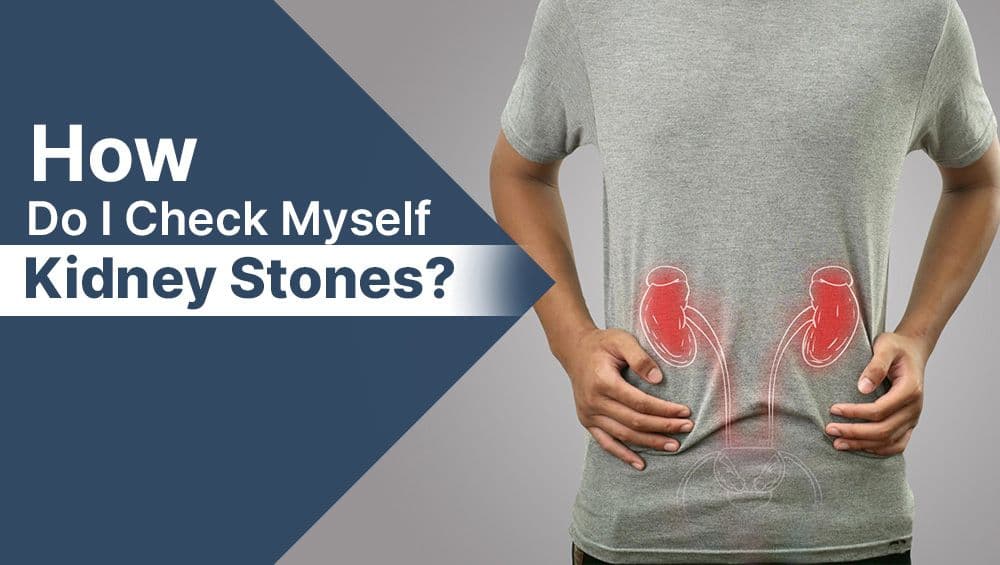
How Do I Check Myself for Kidney Stones?
It’s likely that kidney stones are more prevalent than you think, and if they are not caught in time, may result in extreme discomfort. During the early stages, many people seem to face acute pain, but there are many ways to check for the warning symptoms that don’t go to that level.
Kidney stones (renal calculi) are far more common than most people realize. When a stone begins moving through the narrow urinary tract, it can cause severe, sudden discomfort. However, early warning signs often appear long before the pain reaches an acute level.
If you have been experiencing lower back aches, discomfort during urination, or changes in the color of your urine, you might be asking: Do I have kidney stones? Is it possible to check for them at home?
While a definitive diagnosis requires medical imaging, recognizing subtle early warning signals can help you take action before a minor stone becomes a painful emergency. In this guide, we cover how kidney stones form, who is at highest risk, how to evaluate symptoms at home, and when to seek specialist care.
What Are Kidney Stones and How Do They Form?
Kidney stones develop when high concentrations of minerals and crystalline salts—such as calcium, oxalates, uric acid, and cystine—accumulate in the urine and form solid deposits within the kidneys.
Stones can range in size from tiny sand-like grains to pea-sized or even larger structures. Depending on their size and location, they may:
- Remain silently inside the kidney calyces without causing symptoms.
- Travel into the ureter (the narrow tube connecting the kidney to the bladder), causing obstruction and sharp pain.
- Pass naturally out of the body through the urethra during urination.
Who Is at Risk for Developing Kidney Stones?
While kidney stones can affect anyone, certain lifestyle, dietary, and biological factors significantly increase your risk:
- Dehydration: Consistently low fluid intake leads to concentrated urine, making crystallization far more likely.
- Dietary Factors: Diets high in sodium, animal protein, refined sugars, or oxalate-rich foods.
- Metabolic Conditions: A personal or family history of gout, hyperparathyroidism, or recurring urinary tract infections (UTIs).
- Body Weight: Higher body mass index (BMI) or obesity alters urine acidity and mineral excretion.
- Certain Medications: Prolonged use of specific diuretics, calcium-based antacids, or antiseizure medications.
6 Early Warning Symptoms to Check at Home
You cannot feel a kidney stone by touching or pressing on your abdomen, as the kidneys lie deep within the back retroperitoneal space. However, you can monitor these six key warning signs:
1. Flank or Lower Back Discomfort
Classic kidney stone pain (renal colic) typically originates in the flank (the side of the back just below the ribs). The pain often starts suddenly, comes in waves or spasms, and may radiate downward toward the lower abdomen or groin as the stone moves.
2. Pain or Burning During Urination (Dysuria)
If a stone moves near the junction where the ureter enters the bladder, it irritates sensitive mucosal linings, causing sharp burning or stinging during urination.
3. Blood in the Urine (Hematuria)
As stone edges scrape against delicate urinary tissues, minor internal bleeding occurs. Urine may appear pink, red, brownish, or unusually dark. Even subtle blood in the urine should never be ignored.
4. Cloudy or Foul-Smelling Urine
Stagnant urine behind a blocking stone creates an environment where bacteria thrive. If your urine appears cloudy, unusually dark, or has a strong, unpleasant odor, it may signal an underlying infection caused by an obstruction.
5. Increased Urgency and Frequency
A stone lodged near the bladder neck trickles false signals to the brain, producing a persistent urge to urinate—even if only small amounts of urine are voided each time.
6. Unexplained Nausea or Vomiting
The kidneys and stomach share common nerve pathways via the celiac plexus. Severe kidney swelling or ureteral irritation often triggers reflex nausea or vomiting.
Practical Home Care Measures
While self-diagnosis is not a substitute for clinical imaging, you can take these proactive steps at home:
- Urinate Through a Fine Strainer: If you suspect a stone is passing, strain your urine. Catching a stone fragment allows your urologist to perform a chemical analysis and tailor your preventive treatment.
- Increase Water Intake: Maintain a daily fluid intake of 2.5 to 3 liters to help flush out micro-particles before they aggregate into larger stones.
- Track Your Symptoms: Note the timing, intensity, and location of pain, along with urine color changes, to share with your urologist during consultation.
- Avoid Unverified Home Remedies: Do not rely on aggressive DIY remedies (such as unguided acid flushes or high-dose supplements) without medical advice, as they can aggravate gastric ulcers or kidney function.
When to Seek Immediate Medical Attention
Schedule an urgent evaluation with a specialist if you experience any of the following "red flag" symptoms:
- Severe, unmanaged pain that prevents you from finding a comfortable position.
- Visible blood or dark clots in your urine.
- High fever (> 100.4°F / 38°C) accompanied by chills, indicating a potential kidney infection (pyelonephritis).
- Total inability to pass urine or severe urinary retention.
How a Urologist Accurately Diagnoses Kidney Stones
Urologists rely on precise diagnostic tools rather than guesswork:
- Non-Contrast CT Scan (NCCT KUB): The gold standard for identifying stone size, exact location, and hardness (measured in Hounsfield Units).
- Renal Ultrasound: A safe, radiation-free imaging method to evaluate kidney swelling (hydronephrosis) and detect larger kidney stones.
- Urine Routine & Culture: Checks for microscopic blood, crystal types, and bacterial infection.
- Blood Tests: Measures serum calcium, uric acid, electrolytes, and renal function parameters.
Overview of Modern Stone Removal Options
If a stone is too large to pass naturally with hydration and Medical Expulsion Therapy (MET), advanced minimally invasive treatments are available:
- Retrograde Intrarenal Surgery (RIRS): A 100% incision-free endoscopic procedure using flexible scopes and laser precision to dust kidney stones. Learn more in our detailed guide to FANS-RIRS suction laser surgery.
- Extracorporeal Shock Wave Lithotripsy (ESWL): Uses external acoustic shock waves to shatter small-to-medium stones without surgical cuts.
- Percutaneous Nephrolithotomy (PCNL / Mini-PCNL): A keyhole procedure ($\le 1\text{ cm}$ access on the back) designed to remove large ($> 2\text{ cm}$) or complex staghorn stones in a single session.
Read more on long-term prevention principles in our guide on how to avoid kidney stones recurrence.
Consult Top Kidney Stone Specialist Dr. Deepanshu Gupta in Gurgaon
Early detection and precise diagnosis are essential to prevent severe kidney pain and protect renal function.
Dr. Deepanshu Gupta at Cure Stone is a leading endourologist in Gurgaon and Delhi NCR with extensive clinical experience, having successfully performed over 9,500 endoscopic procedures. Specializing in radiation-free (fluoroscopy-free) RIRS, high-efficiency FANS RIRS suction laser surgery, Mini-PCNL, and advanced diagnostic evaluation, Dr. Gupta delivers compassionate, individualized care focused on swift recovery and long-term stone prevention.
Don't ignore subtle warning signs. Book a consultation with Cure Stone today for a comprehensive evaluation!
Frequently Asked Questions (FAQs)
Can a kidney stone pass without causing pain?
Yes. Very small stones ($< 3\text{ mm}$) located inside the kidney calyces often pass out in the urine stream completely unnoticed and without causing pain.
How long does it take for a small kidney stone to pass naturally?
Stones smaller than 4 mm to 5 mm typically pass within 1 to 2 weeks with adequate hydration and medical support. Larger stones or those stuck in the upper ureter take longer and may require medical intervention.
What is the difference between a UTI and a kidney stone?
A UTI is a bacterial infection causing urinary urgency, burning, and cloudy urine. A kidney stone is a physical crystal mass that causes sharp, spasmodic flank pain and blood in the urine. However, a lodged kidney stone can lead to a secondary UTI, so professional evaluation is recommended.
Have Questions About This Topic?
Get a personalized consultation at Cure Stone Hospital, Sector 52, Gurgaon.
Book Consultation