In Which Kidney Stone Cases is the ESWL Method Helpful?
All of us know that kidney stones can be one of the most painful conditions people can go through. When it comes to treating kidney stones, there are alternative options out there.
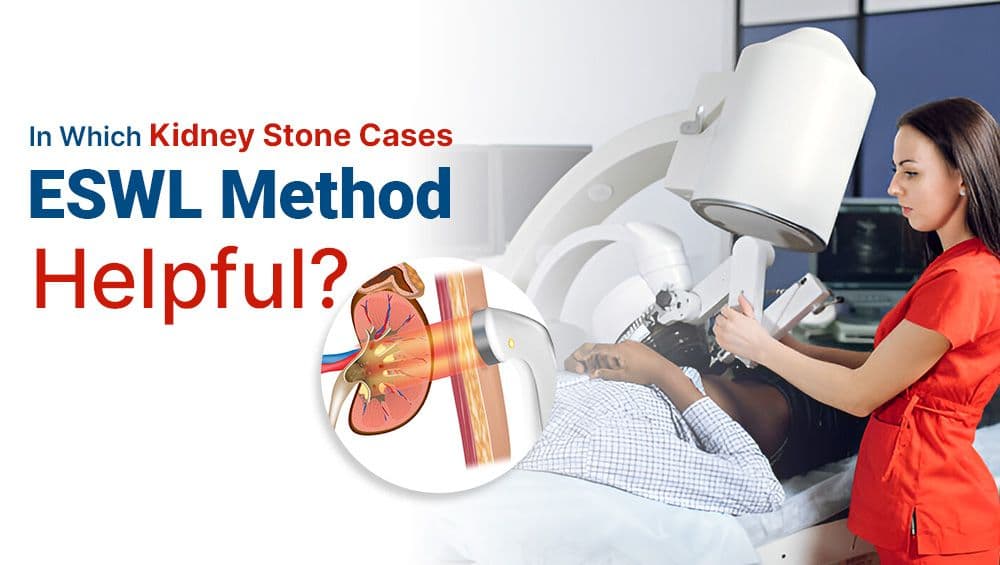
Dealing with a kidney stone (renal calculus) can be painful and disruptive. When evaluating treatment options with an endourologist, Extracorporeal Shock Wave Lithotripsy (ESWL) frequently comes up as a leading non-invasive option.
Unlike surgical methods that require endoscopic scopes or keyhole incisions, ESWL utilizes acoustic shock waves generated outside the body to shatter stones into fine, sand-like fragments that can be passed naturally during urination.
However, ESWL is not a one-size-fits-all procedure. Its success depends on specific clinical factors, including stone size, anatomical location, density, and patient profile.
In this guide, we break down when ESWL is most effective, when alternative treatments are preferred, and what to expect during recovery.
How Does ESWL Work?
ESWL is a non-invasive procedure designed to break up kidney and upper ureteral stones without making cuts or inserting internal scopes:
- Focused Acoustic Waves: High-intensity acoustic shock waves are directed from outside the body, focused precisely on the stone under live ultrasound or fluoroscopic guidance.
- Fragmentation: The repeated mechanical force shatters the solid stone matrix into tiny micro-fragments (stone dust or fine gravel).
- Natural Clearance: Over the following days to weeks, the patient passes these pulverized fragments through the urinary tract during normal urination.
Because the acoustic energy passes through skin and soft tissue, light sedation or mild anesthesia is used to keep the patient comfortable and still throughout the 30- to 45-minute procedure.
Ideal Candidates: When Is ESWL Most Helpful?
ESWL yields high success rates when applied to carefully selected candidates based on four primary criteria:
1. Stone Size (4 mm to 20 mm)
- Optimal Range: Stones measuring between 4 mm and 20 mm (0.4 cm to 2.0 cm) show the highest rate of complete fragmentation.
- Larger Stones (> 20 mm): Stones larger than 2 cm generally respond poorly to ESWL alone, often leaving large residual fragments that require repeat sessions or primary endoscopic removal.
2. Stone Location
- Upper and Middle Kidney Calyces: Stones situated in the upper or middle parts of the kidney are ideally positioned for shock wave focus and natural fragment clearance.
- Upper Ureteral Stones: Stones stuck in the upper section of the ureter close to the kidney also respond well.
- Lower Pole Stones: Stones located in the lower pole of the kidney have lower clearance rates because gravity works against the upward passage of fragments into the renal pelvis.
3. Stone Composition and Density (Hounsfield Units)
- Fragile Stones: Calcium oxalate monohydrate, calcium phosphate, and uric acid stones break down readily under shock waves.
- Hard/Resistant Stones: Stones composed of cystine, brushite, or dense calcium oxalate dihydrate are tough and resistant to acoustic shattering.
4. Patient Anatomical and Health Profile
ESWL is best suited for patients with normal urinary tract anatomy that allows unhindered passage of fragments.
Contraindications: When Is ESWL NOT Recommended?
Certain health factors make ESWL unsafe or ineffective:
- Pregnancy: Shock waves pose risks to fetal development and are absolute contraindications during pregnancy.
- Uncontrolled Bleeding Disorders or Anticoagulant Use: Patients taking blood thinners or with clotting disorders face a high risk of perirenal hematoma (internal bleeding around the kidney).
- Active Urinary Tract Infections (UTIs): Any active infection must be fully treated with antibiotics before ESWL to prevent bacteria from dispersing into the bloodstream ([sepsis]).
- Severe Obesity: Excessive body tissue between the skin and the stone can dampen acoustic energy, reducing fragmentation efficiency.
- Arterial Aneurysms: Aortic or renal artery aneurysms near the target zone increase the risk of vascular rupture.
Modern Surgical Alternatives to ESWL
When a stone is too large, too dense, or located where ESWL cannot easily reach, modern endourology offers highly effective, minimally invasive alternatives:
1. Retrograde Intrarenal Surgery (RIRS)
A 100% incision-free procedure where an ultra-thin flexible scope is passed through natural urinary channels into the kidney. A high-precision laser then pulverizes the stone into fine dust.
2. Advanced FANS-RIRS (Suction Laser Surgery)
An upgraded variant of RIRS that uses active vacuum suction to continuously evacuate fluid and stone dust in real time. This keeps intrarenal pressure low, drastically reducing post-operative infection risks and fever. Learn more in our detailed guide to FANS-RIRS suction laser surgery.
3. Percutaneous Nephrolithotomy (PCNL / Mini-PCNL)
The gold standard for large (> 2 cm), complex, or staghorn stones. Access is gained via a tiny keyhole (pinhole) on the back to directly fragment and remove large stone masses in a single session.
What to Expect During Recovery After ESWL
Recovery after ESWL is generally swift, but active management helps clear fragments comfortably:
- Hydrate Heavily: Drink 2.5 to 3 liters of water daily to flush out lingering gravel and stone dust.
- Filter Your Urine: Use a fine strainer when voiding to capture stone fragments for metabolic laboratory analysis.
- Expect Minor Discomfort or Temporary Hematuria: Light pink urine and mild flank soreness for 24 to 48 hours are normal.
- Follow Long-Term Prevention Principles: Learn how to avoid kidney stones recurrence through customized dietary adjustments.
Consult Top Kidney Stone Specialist Dr. Deepanshu Gupta in Gurgaon
Selecting the right procedure—whether ESWL, incision-free RIRS, or keyhole Mini-PCNL—requires thorough evaluation by an experienced endourologist.
Dr. Deepanshu Gupta at Cure Stone is a leading endourologist in Gurgaon and Delhi NCR with extensive clinical experience, having successfully performed over 9,500 endoscopic procedures. Specializing in radiation-free (fluoroscopy-free) RIRS, high-efficiency FANS RIRS suction laser surgery, Mini-PCNL, and non-invasive ESWL, Dr. Gupta provides tailored treatment plans focused on total stone clearance and patient comfort.
Don't let kidney stones disrupt your life. Book a consultation with Cure Stone today to evaluate your diagnostic scans!
Frequently Asked Questions (FAQs)
Is ESWL painful?
During the procedure, sedation or mild anesthesia keeps you comfortable. Afterward, passing small stone fragments through the ureter may cause mild, manageable cramping or dull flank aches.
How many sessions of ESWL are required?
Most small-to-medium stones (< 10 mm) clear in a single session. However, larger or denser stones may require a second session or a switch to RIRS for complete clearance.
What happens if stone fragments get stuck after ESWL?
If fragments clump together in the ureter (a condition called steinstrasse or "stone street"), temporary placement of a DJ stent or a brief URS procedure can safely clear the blockage.
Have Questions About This Topic?
Get a personalized consultation at Cure Stone Hospital, Sector 52, Gurgaon.
Book Consultation