Kidney Stones Pain Location: When to Seek Help?
Kidney stones are the cause for the severest of all pains; happen to people. Ever been stabbed in the back or lower abdomen by a pain sharp enough, you often ask yourself whether a kidney stone is the cause? But where exactly does the kidney stone pain hurt? Does the pain remain localized or transfer?
Kidney stone pain is widely recognized as one of the most intense and sharp forms of physical discomfort a person can experience. Because the pain often shifts and radiates as the stone travels through the urinary system, many patients struggle to identify whether their symptoms stem from a muscle strain, appendicitis, or a kidney stone (renal calculus).
Understanding where kidney stone pain originates, how it radiates, and how to distinguish it from other conditions is essential for seeking timely medical care.
In this guide, we break down the exact locations of kidney stone pain, key warning signs, diagnostic differences, and modern treatment options.
Where Does Kidney Stone Pain Hurt?
The location and character of kidney stone pain depend on where the stone is currently situated along the urinary tract.
1. Lower Back and Flank Pain
The pain most commonly begins in the lower back or side (flank area), just beneath the ribs. It often starts as a deep, dull ache before intensifying into severe, sharp, cramping waves known as renal colic. This pain typically affects one side of the body, corresponding to the kidney containing the stone.
2. Lower Abdomen and Groin Pain
As the kidney stone shifts down into the narrow ureter (the tube connecting the kidney to the bladder), the pain radiates forward into the lower abdomen and groin. The pain comes in distinct waves as the muscular ureter contracts and spasms to push the stone along.
3. Pain During Urination (Dysuria)
When the stone reaches the junction between the ureter and the bladder, or as it enters the urethra, patients experience intense burning or sharp pain during urination. This is often accompanied by a persistent, sudden urge to urinate.
4. Radiating Pain to Genitals
Due to shared nerve pathways in the lower pelvis, pain from lower ureteral stones often radiates directly into the testicles or tip of the penis in men, or into the labia and vaginal area in women.
Distinguishing Kidney Stone Pain from Other Conditions
It is easy to mistake renal colic for other common sources of abdominal or back pain. Here is how they compare:
- Muscle Strain vs. Kidney Stone: Muscle pain is usually a constant, dull ache that worsens with specific physical movements or body positions. Kidney stone pain comes in sharp, agonizing waves and cannot be relieved by changing positions or resting.
- Appendicitis vs. Kidney Stone: Appendicitis pain typically starts around the belly button and shifts to the lower right abdomen, accompanied by a low-grade fever. Kidney stone pain originates higher up in the back/flank and radiates downward into the groin.
- Urinary Tract Infection (UTI) vs. Kidney Stone: A urinary tract infection (UTI) causes burning urination and cloudy or foul-smelling urine. A kidney stone causes severe back/groin colic paired with visible or microscopic blood in urine (hematuria).
Additional Symptoms to Watch For
In addition to severe flank or abdominal pain, kidney stones frequently cause:
- Pink, red, or brownish urine (hematuria) due to internal scraping along the urinary tract.
- Nausea and vomiting triggered by shared nerve signals between the kidneys and gastrointestinal tract.
- Inability to pass urine or feeling unable to empty the bladder completely.
- High fever and chills, which indicate a potential obstruction combined with a serious kidney infection.
Management and Modern Treatment Options
Home Care for Small Stones (< 5 mm)
Small, smooth stones may pass on their own with conservative management:
- Aggressive Hydration: Drink 2.5 to 3 liters of water daily to help propel the stone out naturally.
- Heat Therapy: Apply a heating pad to the lower back to soothe muscle spasms.
- Medical Expulsive Therapy: Urologists may prescribe alpha-blockers to relax ureteral muscles and facilitate easier passage.
Advanced Medical Solutions for Larger or Trapped Stones
When stones are too large to pass or cause complete blockage, modern endourology offers safe, 100% incision-free procedures:
- Retrograde Intrarenal Surgery (RIRS): An endoscopic laser procedure performed through natural urinary passages to pulverize stones without external cuts.
- FANS-RIRS (Suction Laser Surgery): An advanced variant of RIRS that utilizes active vacuum suction to continuously clear stone dust and fluid in real time, keeping renal pressure low and preventing infection. Read more in our detailed guide to FANS-RIRS suction laser surgery.
- DJ Stent Placement: Temporary placement of a DJ stent ensures smooth urine drainage and allows the ureter to heal comfortably.
Essential Prevention Tips
To lower your risk of future stone formation:
- Maintain daily fluid intake to prevent concentrated urine.
- Limit excess dietary sodium to reduce urinary calcium excretion.
- Follow specific dietary protocols on how to avoid kidney stones recurrence.
Consult Top Kidney Stone Specialist Dr. Deepanshu Gupta
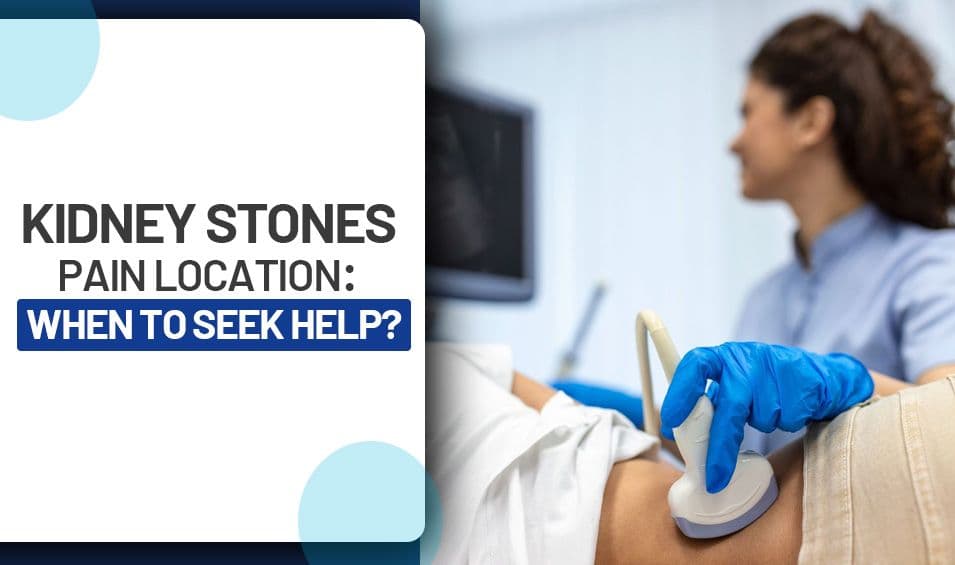
Accurate diagnosis through ultrasound or a non-contrast CT scan (NCCT KUB) is essential for locating the exact position of a stone and preventing permanent kidney complications.
Dr. Deepanshu Gupta at Cure Stone is a leading endourologist in Gurgaon and Delhi NCR with extensive clinical experience, having successfully performed over 9,500 endoscopic procedures. Specializing in radiation-free (fluoroscopy-free) RIRS, high-efficiency FANS RIRS suction laser surgery, and Mini-PCNL, Dr. Gupta provides rapid diagnostic evaluations and personalized treatment plans for complete stone relief.
Don't let unbearable kidney stone pain go unaddressed. Book a consultation with Cure Stone today to evaluate your symptoms!
Frequently Asked Questions (FAQs)
Can kidney stone pain come and go?
Yes. Kidney stone pain typically occurs in distinct waves lasting 20 to 60 minutes as the muscles of the ureter contract and spasm around the stone.
What does it feel like when a kidney stone enters the bladder?
Once a stone drops into the bladder, the sharp back and flank pain usually diminishes significantly. However, you may feel an urgent need to urinate, pelvic pressure, or burning at the tip of the urethra.
When is kidney stone pain considered an emergency?
You should seek emergency medical care immediately if your pain is accompanied by high fever, uncontrollable vomiting, complete inability to urinate, or heavy blood clots in your urine.
Have Questions About This Topic?
Get a personalized consultation at Cure Stone Hospital, Sector 52, Gurgaon.
Book Consultation