
Recurring Kidney Stones? Here’s What You Need to Know
Having kidney stones isn’t a unique issue. Research indicates that close to half of all individuals are likely to form another stone within five to seven years after having one.
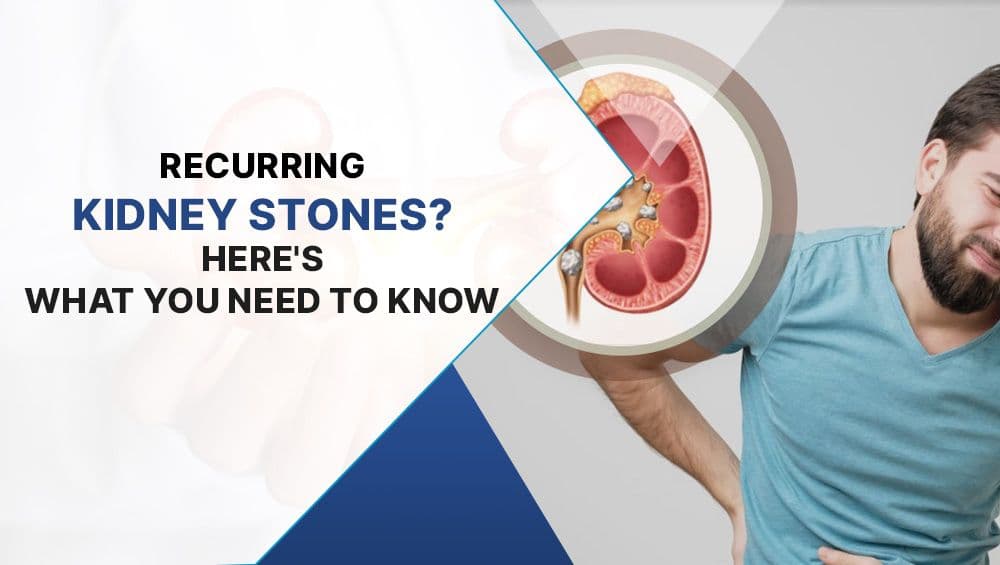
Kidney stones (renal calculi) are a common and painful condition. Research indicates that roughly 50% of individuals who form a kidney stone will experience a recurrence within 5 to 7 years without targeted intervention. While passing a single stone is difficult, recurring stone episodes increase the risk of chronic kidney damage, severe urinary tract infections (UTIs), and reduced quality of life.
Understanding the underlying triggers, metabolic risk factors, and prevention techniques allows patients to break the cycle of stone formation.
What Causes Recurrent Kidney Stones?
While single stone events can be triggered by short-term dehydration, recurrent kidney stones usually point to underlying metabolic, genetic, or anatomical factors that require detailed evaluation.
- Genetics and Family History: Individuals with a family history of kidney stones are significantly more susceptible to mineral supersaturation and reduced urinary inhibitors.
- Chronic Subclinical Dehydration: Inadequate fluid intake keeps urine in a constant state of supersaturation, accelerating mineral crystallization.
- High Sodium and Excessive Animal Protein Intake: Diets heavy in processed sodium increase urinary calcium excretion. High intake of red meat, poultry, and seafood increases uric acid levels while lowering protective urinary citrate.
- Metabolic Disorders: Conditions like hyperparathyroidism, gout, renal tubular acidosis, and chronic inflammatory bowel disease (IBD/Crohn's) disrupt mineral absorption and acid-base balance.
- Certain Medications: Prolonged use of calcium-containing antacids, loop diuretics, and certain antiviral medications can elevate stone risk.
The Primary Types of Kidney Stones
Determining your stone's exact mineral composition helps your urologist create an effective, long-term prevention plan.
- Calcium Oxalate Stones: The most prevalent type, occurring when excess calcium binds with dietary oxalate in concentrated urine.
- Calcium Phosphate Stones: Form in alkaline urine conditions, often linked to metabolic or renal tubular disorders.
- Uric Acid Stones: Develop when urine remains persistently acidic, commonly seen in patients with gout or high-purine diets.
- Struvite Stones: Fast-growing, complex stones triggered by upper urinary tract infections with urease-producing bacteria.
- Cystine Stones: A rare, hereditary form of urolithiasis caused by cystinuria, an inherited disorder affecting amino acid transport.
Recognizing Common Symptoms
Symptoms vary depending on stone size, location, and degree of urinary obstruction:
- Sharp, severe flank or lower back pain that radiates toward the groin (renal colic)
- Pink, red, or brown-tinged urine (hematuria)
- Persistent nausea, vomiting, or gastrointestinal upset
- Urgency, increased frequency, or pain during urination (dysuria)
- Cloudy, malodorous urine indicating potential infection
Note: Fever and chills accompanied by flank pain indicate an infected, obstructed kidney, which requires emergency medical attention.
Comprehensive Metabolic Workup for Recurrent Stones
To identify why stones keep forming, endourologists perform a targeted diagnostic evaluation:
- 24-Hour Urine Metabolic Profile: Measures total volume, pH, calcium, oxalate, uric acid, sodium, citrate, and creatinine levels over 24 hours.
- Stone Composition Analysis: Laboratory testing (FTIR spectroscopy) of passed or surgically retrieved stone fragments to identify mineral structure.
- Serum Blood Tests: Evaluates kidney function (creatinine, BUN), serum calcium, phosphate, uric acid, and parathyroid hormone (PTH) levels.
- Diagnostic Imaging: Non-Contrast CT KUB or high-resolution ultrasound to detect non-obstructing "silent" residual stones.
Treatment Options for Active Kidney Stones
Management depends on stone size, hardness, location, and symptoms.
1. Conservative Management
Small stones (< 5mm) without infection or complete blockages can pass with high hydration, pain relievers (NSAIDs), and medical expulsive therapy (such as alpha-blockers like tamsulosin).
2. Advanced Interventions
When stones are too large to pass, cause severe pain, or block urine flow, modern minimally invasive options include:
- Retrograde Intrarenal Surgery (RIRS / FANS-RIRS): A 100% incision-free procedure using a flexible digital scope passed through natural channels to laser-dust stones. Learn more in our detailed guide on FANS RIRS suction laser surgery.
- Ureteroscopy (URS): Scope-guided laser lithotripsy designed for stones lodged in the mid-to-lower ureter.
- Percutaneous Nephrolithotomy (PCNL / Mini-PCNL): Keyhole surgery (~1 cm back incision) used for large (> 2 cm) or complex staghorn stones.
- Extracorporeal Shock Wave Lithotripsy (ESWL): External acoustic shock waves used to shatter small-to-medium soft stones.
7 Proven Strategies to Stop Recurrent Kidney Stones
Preventing new stone formation requires targeted dietary adjustments, lifestyle changes, and personalized medical therapy based on metabolic results.
- Maintain Target Hydration: Drink 2.5 to 3 liters of fluids daily to produce at least 2.5 liters of pale urine. Increase intake during warm weather or vigorous exercise.
- Reduce Dietary Sodium: Lower sodium intake to under 2,000 mg daily. High sodium forces the kidneys to excrete more calcium into the urine, increasing crystal formation.
- Do Not Avoid Dietary Calcium: Cutting out dietary calcium can backfire. Consuming normal amounts of dietary calcium (1,000–1,200 mg daily) with meals allows calcium to bind to oxalates in the intestine, preventing oxalates from entering the bloodstream and kidneys.
- Moderate Oxalate-Rich Foods: If you form calcium oxalate stones, moderate high-oxalate foods like spinach, beets, almonds, rhubarb, and dark chocolate rather than eliminating them entirely. Pair them with calcium-rich foods.
- Limit Animal Proteins: Restrict excess red meat, poultry, and seafood. High animal protein increases urinary acid and uric acid levels while decreasing protective urinary citrate.
- Increase Natural Citrate: Citrate is a natural stone inhibitor that binds to urinary calcium, preventing it from forming crystals. Add fresh lemon or lime juice to your daily drinking water.
- Take Targeted Preventive Medications: Depending on metabolic workup results, your endourologist may prescribe:
- Thiazide Diuretics: To lower urinary calcium excretion.
- Potassium Citrate: To alkalinize urine and boost citrate levels.
- Allopurinol: To reduce uric acid production in patients with gout or high uric acid levels.
Read our full guide on how to avoid kidney stones recurrence for deeper insights.
Consult Top Kidney Stone Specialist Dr. Deepanshu Gupta in Gurgaon
Breaking the cycle of recurrent kidney stones requires an accurate diagnosis, customized treatment, and long-term metabolic monitoring.
Dr. Deepanshu Gupta at CureStone is a leading endourologist in Gurgaon and Delhi NCR. With an MCh in Urology (Rank 1) and over 9,500 successful endoscopic procedures, Dr. Gupta specializes in radiation-free flexible RIRS, suction-assisted FANS-RIRS laser surgery, Mini-PCNL, and comprehensive 24-hour urine metabolic profiling to prevent future stone episodes.
Don't wait for another painful episode—book a consultation with CureStone today to start your personalized prevention plan!
Frequently Asked Questions (FAQs)
How long after passing a kidney stone should I get a metabolic evaluation?
A 24-hour urine metabolic evaluation should be performed 4 to 6 weeks after complete stone clearance, once you have resumed your normal daily diet and activity levels, to ensure accurate baseline measurements.
Why do I keep getting kidney stones even though I drink a lot of water?
While hydration is essential, high fluid intake alone may not overcome unaddressed metabolic drivers like severe hypercalciuria, high dietary sodium, genetic cystinuria, or low urinary citrate. A metabolic workup identifies these hidden triggers.
Can lemon water really prevent kidney stones?
Yes. Lemons and limes are high in natural citrate, which binds to calcium in the urine and stops it from combining with oxalate or phosphate to form crystals. Adding fresh lemon juice to your water is an easy, effective way to boost urinary citrate.
Have Questions About This Topic?
Get a personalized consultation at Cure Stone Hospital, Sector 52, Gurgaon.
Book Consultation