Types of Kidney Stones & How They’re Treated Differently
Did you ever think a kidney stone is a simple rock? Think again. The kidney stones can be quite identical in their external appearance, however, the inside speaks quite differently. Similar to a pair of fingerprints that are neither identical nor similar, kidney stones are different as well.
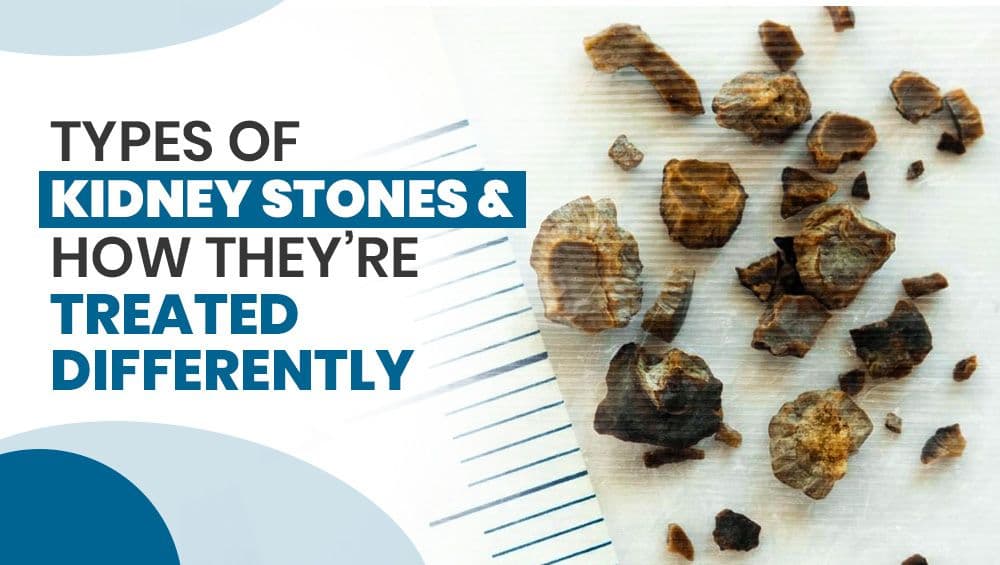
Did you ever think a kidney stone was just a simple rock? Think again. While many kidney stones may look similar on the outside, their internal chemical compositions tell a completely different story.
Much like fingerprints, no two kidney stones are exactly alike. Every stone type has its own distinct root causes, chemical triggers, risk factors, and ideal treatment pathways. Identifying your specific stone type is essential—not only does it determine how your urologist will treat it, but it also dictates how you can prevent it from returning.
1. Calcium Oxalate Stones: The Most Common Offender
Calcium oxalate stones are the most frequently diagnosed kidney stones, accounting for roughly 70% to 80% of all cases. They form when excess calcium binds with oxalate in hyper-concentrated urine.
Key Causes
- Chronic fluid loss or inadequate daily water intake.
- Diets high in sodium, animal proteins, or oxalates (such as spinach, nuts, beets, and chocolate).
- Intestinal malabsorption conditions like Inflammatory Bowel Disease (IBD) or Crohn's disease, which lead to enteric hyperoxaluria.
Targeted Management & Prevention
- Hydration: Maintaining high daily urine volume to keep minerals diluted.
- Thiazide Diuretics: Prescribed to reduce the amount of calcium excreted by the kidneys into urine.
- Citrate Supplements: Potassium citrate therapy to inhibit crystal binding.
- Dietary Balancing: Eating calcium-rich foods alongside oxalate-containing foods during meals so calcium and oxalate bind in the gut rather than in the kidneys.
2. Uric Acid Stones: The Acidic Offender
Uric acid stones develop when urine becomes overly acidic (pH below 5.5). Unlike calcium-based stones, uric acid stones are radiolucent, meaning they are invisible on standard X-rays and require non-contrast CT scans or ultrasound for precise detection.
Key Causes
- Diets heavy in high-purine foods such as red meat, organ meats, and shellfish.
- Chronic dehydration or fluid loss.
- Metabolic disorders including gout, metabolic syndrome, and type 2 diabetes.
Targeted Management & Prevention
- Medical Dissolution Therapy: Alkalinizing the urine using potassium citrate or sodium bicarbonate to raise urine pH above 6.5, which can sometimes completely dissolve uric acid stones without surgery.
- Uric Acid Lowering Agents: Medications like allopurinol to decrease systemic uric acid production.
- Purine Reduction: Shifting toward a plant-forward, low-purine dietary pattern.
3. Struvite Stones: The Infection-Linked Stones
Also known as infection stones, struvite calculi are composed of magnesium, ammonium, and phosphate. They grow rapidly, can become exceptionally large, and often form branching "staghorn" shapes that fill the kidney's collecting system.
Key Causes
- Chronic or recurrent urinary tract infections (UTIs) caused by urease-producing bacteria (such as Proteus or Klebsiella species).
- Urease splits urea in urine, raising urine pH and creating an alkaline environment where struvite crystals precipitate quickly.
- Considerably more common in women due to a higher baseline risk of UTIs.
Targeted Management & Prevention
- Complete Surgical Removal: Struvite stones rarely pass spontaneously and typically require active intervention like Percutaneous Nephrolithotomy (PCNL) or flexible laser surgery (RIRS) to clear all stone material.
- Targeted Antibiotic Coverage: Eradicating the underlying bacterial infection to prevent immediate stone regrowth.
4. Cystine Stones: The Rare Genetic Type
Cystine stones stem from a rare hereditary metabolic disorder called cystinuria. This condition impairs how the renal tubules reabsorb the amino acid cystine, causing high amounts to spill into the urine and form hard crystals.
Key Causes
- Genetic inheritance of autosomal recessive cystinuria traits.
- Poor cystine solubility, particularly in concentrated or acidic urine.
Targeted Management & Prevention
- High-Volume Fluid Intake: Drinking enough fluids to produce at least 3 to 4 liters of urine daily.
- Urine Alkalinization: Raising urine pH above 7.5 to improve cystine solubility.
- Cystine-Binding Medications: Utilizing specialized drugs like tiopronin or penicillamine when fluid and alkalinization protocols are insufficient.
5. Calcium Phosphate Stones: Alkaline Trouble
Calcium phosphate stones are less common than calcium oxalate stones and form specifically in neutral-to-alkaline urine (pH above 6.5).
Key Causes
- Underlying metabolic or endocrine conditions such as Primary Hyperparathyroidism or Renal Tubular Acidosis (RTA).
- High urinary calcium and alkaline urine combination.
Targeted Management & Prevention
- Addressing the Root Cause: Treating parathyroid dysfunction or systemic acid-base imbalances.
- Metabolic Adjustment: Utilizing thiazide diuretics while carefully monitoring urine pH levels.
Tailored Treatment Pathways for Kidney Stones
Because every stone type behaves differently, modern endourology rejects a one-size-fits-all approach:
- Conservative Medical Therapy: Small, non-obstructive stones may pass with hydration and alpha-blockers.
- Retrograde Intrarenal Surgery (RIRS): An incision-free laser procedure using a flexible digital scope passed through natural channels to dust stones into fine particles. Read our guide on FANS-RIRS suction laser surgery.
- Ureteroscopy (URS): Ideal for clearing mid-to-lower ureteral stones cleanly.
- Percutaneous Nephrolithotomy (PCNL): The gold standard for large, complex, or staghorn struvite stones via a tiny keyhole incision in the back.
- 24-Hour Urine Metabolic Evaluation: Essential for analyzing your specific urine chemistry and preventing future stones. Read our guide on how to avoid kidney stone recurrence.
Expert Kidney Stone Care with Dr. Deepanshu Gupta in Gurgaon
Accurate diagnosis through stone strain analysis and metabolic testing is the foundation of long-term kidney health.
For comprehensive care in Gurgaon and Delhi NCR, Dr. Deepanshu Gupta at CureStone provides specialized, patient-focused urological management. Holding an MCh in Urology (Rank 1) with over 12 years of clinical experience across 9,500+ successful endoscopic procedures, Dr. Gupta excels in:
- Incision-Free Laser Lithotripsy: High-precision RIRS and vacuum-assisted FANS-RIRS techniques.
- Metabolic Diagnostics: Comprehensive 24-hour urine profiling to identify exact chemical risk factors.
- Individualized Prevention Plans: Targeted dietary and medical strategies to prevent recurrence based on stone type.
Take control of your kidney health—book a consultation with Dr. Deepanshu Gupta today!
Frequently Asked Questions (FAQs)
How do I find out what type of kidney stone I have?
Your urologist can determine your stone type by sending a passed or surgically retrieved stone fragment to a laboratory for strain analysis. If no stone fragment is available, a 24-hour urine metabolic profile combined with blood tests helps deduce your risk profile.
Can all types of kidney stones be dissolved with medication?
No. Only pure uric acid stones can typically be dissolved using urine-alkalinizing medications like potassium citrate. Calcium-based, struvite, and cystine stones cannot be dissolved with medicine and require hydration, dietary management, or surgical removal if obstructive.
Why is a 24-hour urine test necessary after stone removal?
A 24-hour urine metabolic test measures total volume, calcium, oxalate, uric acid, citrate, sodium, and pH levels. This reveals the exact chemical imbalance driving stone formation so your doctor can prescribe targeted preventive measures.
Have Questions About This Topic?
Get a personalized consultation at Cure Stone Hospital, Sector 52, Gurgaon.
Book Consultation