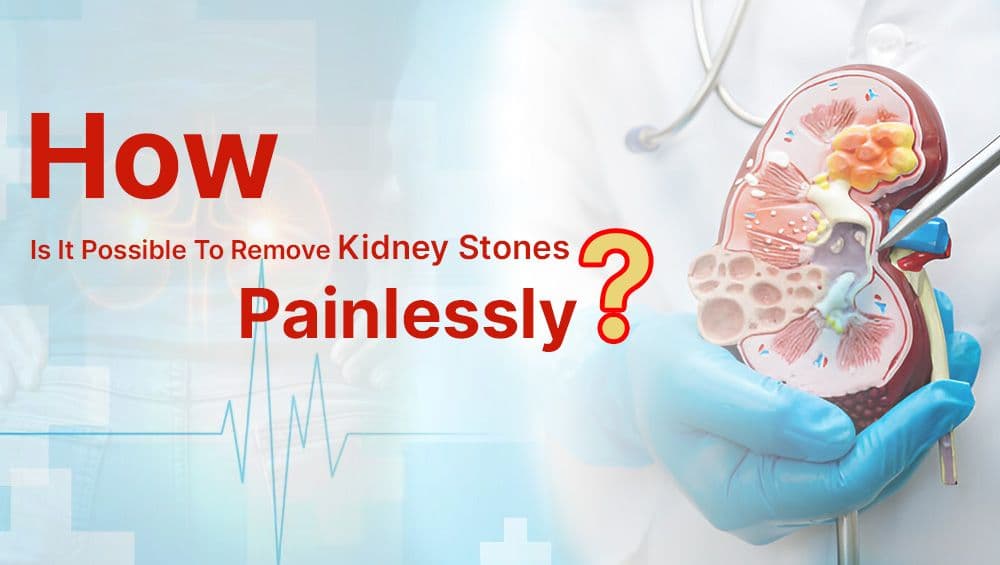
How Is It Possible To Remove Kidney Stones Painlessly?
Kidney stones usually develop as a result of the accumulation of minerals and salts that kidneys filter. Most people experience extreme discomfort when the stone is being passed through the urinary tract. Nowadays, medicine has an array of techniques that aid painless non-invasive or minimally invasive kidney stones removal.
Kidney stones (renal calculi) develop when minerals and crystalline salts—such as calcium, oxalates, and uric acid—concentrate in the urine. While small stones may pass unnoticed, larger stones can cause excruciating flank pain, urinary blockages, hematuria (blood in urine), and severe infection risks.
Fortunately, open surgery for kidney stones is virtually obsolete. Modern endourology offers a spectrum of non-invasive and minimally invasive procedures tailored to stone size, location, and density.
In this guide, we break down the leading modern treatment options, compare their clinical advantages, and highlight key factors in choosing the right procedure.
1. Retrograde Intrarenal Surgery (RIRS)
Retrograde Intrarenal Surgery (RIRS) is one of the most advanced, 100% incision-free surgical options available for kidney stones.
- The Procedure: A flexible digital ureteroscope is passed through the body's natural urinary opening (urethra and bladder) directly up into the kidney calyces. A high-precision holmium or thulium laser fiber is used to pulverize the stone into fine dust or small fragments.
- Key Advantages:
- Incision-Free and Scarless: Uses natural urinary pathways with zero cuts on the body.
- Access to Hard-to-Reach Stones: Highly effective for lower pole stones or complex kidney anatomy.
- Fast Recovery: Most patients are discharged within 24 hours and resume light activity within 1 to 2 days.
- Advanced Variant (FANS-RIRS): Incorporates active suction during laser lithotripsy to maintain low intrarenal pressure and continuously evacuate stone dust. Learn more in our detailed guide to FANS-RIRS suction laser surgery.
- Considerations: A temporary DJ stent is often placed in the ureter to facilitate swelling reduction and promote smooth drainage for a few days post-procedure.
2. Extracorporeal Shock Wave Lithotripsy (ESWL)
ESWL is a completely non-invasive option that treats kidney stones from outside the body.
- The Procedure: Focused acoustic shock waves are directed externally through the skin at the exact coordinates of the stone, guided by real-time fluoroscopy or ultrasound. The shock waves shatter the stone matrix into tiny gravel.
- Key Advantages:
- No surgical incisions or internal endoscopic insertions required.
- Performed on an outpatient basis under mild sedation.
- Considerations: Best suited for soft or moderately hard stones smaller than 2 cm (20 mm) located in the upper or middle kidney calyces. Hard stones (such as cystine or dense calcium oxalate monohydrate) may require multiple sessions or alternative laser techniques.
3. Ureteroscopy (URS) with Laser Lithotripsy
When stones are stuck further down in the ureter or lower urinary tract, standard Ureteroscopy (URS) is the primary line of treatment.
- The Procedure: A rigid or semi-rigid scope is advanced into the ureter directly to the stone location. A laser breaks the stone into fragments, which are then extracted using micro-baskets.
- Key Advantages:
- High immediate stone clearance rate for ureteral blockages.
- Direct visualization allows immediate relief from acute obstruction.
- Considerations: Temporary mild burning during urination (dysuria) or minor blood in the urine for 24 to 48 hours is normal as tissue heals.
4. Percutaneous Nephrolithotomy (PCNL / Mini-PCNL)
For large, dense, or complex stones, Percutaneous Nephrolithotomy (PCNL) remains the gold standard treatment.
- The Procedure: A keyhole access tract (approx. 1 cm or smaller in Mini-PCNL) is created through the skin on the back into the kidney collecting system. A nephroscope is inserted, and ultrasonic or laser lithotripters break and vacuum out stone fragments in a single session.
- Key Advantages:
- Exceptionally high stone clearance rate for stones larger than 2 cm or staghorn calculi.
- Clears large stone burdens in a single operation.
- Considerations: Requires general anesthesia and a short hospital stay (24 to 48 hours).
5. Medical Expulsion Therapy (MET)
For very small stones, surgical intervention is often unnecessary.
- The Approach: Oral medications—primarily alpha-blockers such as tamsulosin—relax the smooth muscle walls of the lower ureter, allowing small stones to pass naturally with less pain.
- Best Candidates: Smooth stones smaller than 5 mm to 7 mm located in the distal ureter without signs of active severe infection or complete kidney blockage.
How to Choose the Right Procedure
The optimal procedure depends on an individualized evaluation by an experienced urologist considering:
- Stone Characteristics: Size, hardiness (measured in Hounsfield Units via non-contrast CT scan), and anatomical location within the renal pelvis or calyces.
- Anatomical Factors: Narrow ureters, solitary kidneys, or physical variations.
- Medical History: Ongoing use of blood thinners, pregnancy, or active urinary tract infections (UTIs).
Steps to Prevent Stone Recurrence
Clearing the stone is only the first step; preventing recurrence protects long-term renal health:
- Hydrate Consistently: Drink 2.5 to 3 liters of water daily to maintain pale, diluted urine.
- Balance Sodium & Dietary Oxalates: Limit daily sodium to under 2,300 mg and pair oxalate-rich foods with dietary calcium during meals. Read detailed advice on how to avoid kidney stones recurrence.
- Routine Clinical Monitoring: Schedule periodic metabolic urine profiles and ultrasound scans.
Consult Top Kidney Stone Specialist Dr. Deepanshu Gupta in Gurgaon
Choosing the safest, most effective procedure requires expert clinical judgment and advanced surgical technology.
Dr. Deepanshu Gupta at Cure Stone is a leading endourologist in Gurgaon and Delhi NCR with extensive clinical experience, having successfully performed over 9,500 endoscopic procedures. Specializing in radiation-free (fluoroscopy-free) RIRS, high-efficiency FANS RIRS suction laser surgery, Mini-PCNL, and non-invasive lithotripsy, Dr. Gupta delivers compassionate, patient-first care focused on complete stone removal and swift, painless recovery.
Don't let kidney stone pain compromise your well-being. Book a consultation with Cure Stone today to determine the best treatment plan for your condition!
Frequently Asked Questions (FAQs)
Is RIRS better than ESWL for kidney stones?
RIRS offers higher single-session stone clearance rates, especially for stones in the lower calyx or hard-to-shatter stones. However, ESWL is completely external and non-surgical. Your urologist will recommend the best option based on your CT scan findings.
How long does it take to recover from RIRS laser surgery?
Because RIRS is incision-free, most patients experience minimal discomfort and return to normal daily routines within 24 to 48 hours after procedure completion.
What is the maximum stone size that can be treated without surgery?
Stones under 5 mm frequently pass with hydration and Medical Expulsion Therapy (MET). Stones between 5 mm and 20 mm can often be managed with non-invasive ESWL or incision-free RIRS depending on their density and location.
Have Questions About This Topic?
Get a personalized consultation at Cure Stone Hospital, Sector 52, Gurgaon.
Book Consultation