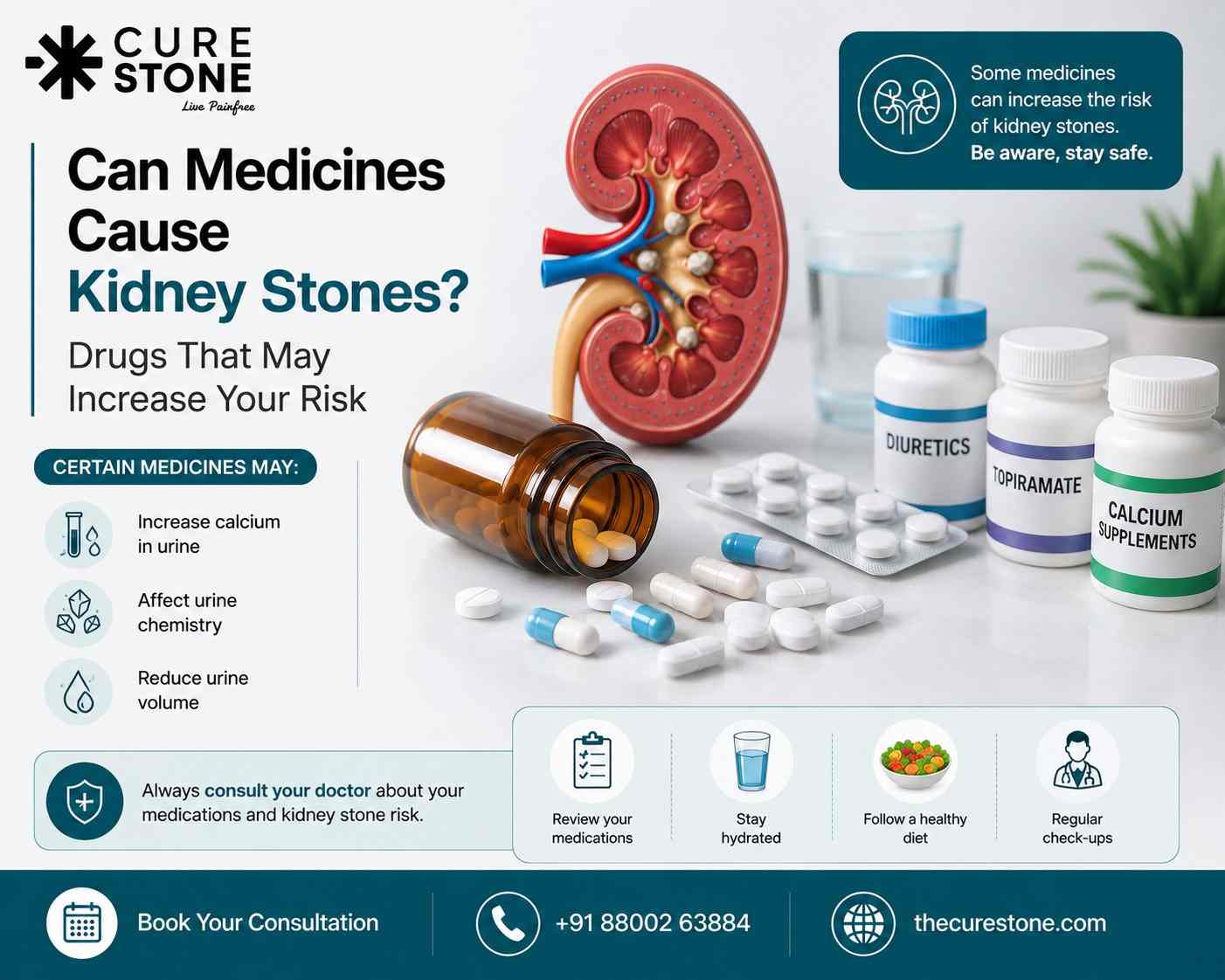
Can Medicines Cause Kidney Stones? Drugs That May Increase Your Risk
Some medicines may increase the risk of kidney stones in certain people. Learn which drugs can contribute to stone formation and what factors may affect your risk.
Most patients who form stones repeatedly go through the same checklist. They drink more water, cut oxalate rich foods, reduce salt, and still the stones come back. What almost nobody checks is the strip of tablets sitting in their bedside drawer.
Medication is a genuinely underrecognised cause of kidney stones. It accounts for a small but meaningful share of cases, and it is one of the few causes that can be corrected quickly once identified. The problem is that neither the patient nor the prescribing doctor usually connects a tablet taken for migraines, epilepsy, or acidity with a stone forming in the kidney two years later.
Before going further, one point matters more than anything else in this article. Do not stop or change any prescribed medicine on your own after reading this. Several of the drugs below treat serious conditions where stopping is far more dangerous than a stone. The right action is to take this information to your doctor, not to your dustbin.
Two Different Ways Medicines Cause Stones
The distinction matters because the solution is different for each.
Drug induced stones are made of the drug itself. The medicine, or its breakdown product, is poorly soluble in urine and crystallises directly into a stone. These stones are often invisible on standard CT scans because they have low density, which means they get missed and patients get told there is nothing there.
Drug related metabolic stones are ordinary calcium, uric acid, or phosphate stones. The medicine does not form the stone. It changes your urine chemistry, raising calcium or uric acid, lowering citrate, or shifting pH, and your body does the rest. Our guide to the 4 different types of kidney stones explains those types.
Knowing which category you are in decides whether the fix is stopping the drug or adjusting the surrounding chemistry.
Medicines That Form Stones Directly
Certain HIV medicines. Protease inhibitors, particularly indinavir and atazanavir, are the classic examples. The drug crystallises in urine and forms stones that barely show on imaging. Patients on these medicines need high fluid intake as standard practice.
Sulfadiazine and older sulfonamide antibiotics. These can crystallise in acidic urine, especially at high doses or with poor hydration.
Ceftriaxone. A very widely used injectable antibiotic in India. It can precipitate as calcium ceftriaxone, most commonly in the gallbladder but also in the urinary tract, and it is seen more often in children given repeated courses.
Triamterene. A potassium sparing diuretic that appears in some combination blood pressure tablets and can form stones directly.
High dose methotrexate. Used in cancer treatment and given with specific hydration and urine alkalinisation protocols precisely because of this risk.
Guaifenesin and ephedrine in high or chronic doses. Cough preparations misused over long periods have produced stones, which is a real risk in a market where these are bought without prescription.
Medicines That Change Urine Chemistry
Carbonic Anhydrase Inhibitors
This group deserves the most attention because the drugs are common and the link is poorly known.
Topiramate is prescribed for migraine prevention, epilepsy, and increasingly for weight management. Zonisamide is used in epilepsy. Acetazolamide is used for glaucoma and altitude sickness.
All three make urine more alkaline while simultaneously lowering urinary citrate, your body's natural stone inhibitor. That combination strongly favours calcium phosphate stones. The risk builds over months to years, which is exactly why the connection gets missed.
If you take topiramate long term and have formed a stone, that is a conversation worth having with your neurologist. Often the answer is not stopping the drug but adding potassium citrate and raising fluid intake.
Loop Diuretics
Furosemide and similar drugs increase calcium excretion in the urine. They are widely used in heart failure and fluid overload, and prolonged use, particularly in premature infants and in adults on long term therapy, raises calcium stone risk. See calcium stones, symptoms and treatments.
Worth noting the contrast: thiazide diuretics do the opposite and reduce urinary calcium, which is why they are sometimes prescribed to prevent stones.
Calcium and Vitamin D Supplements
This is the most common culprit in Indian practice, and almost always taken without supervision.
Dietary calcium from food is protective, because it binds oxalate in the gut before it reaches the kidney. Calcium supplements taken between meals, on an empty stomach, do not get that chance and can instead raise urinary calcium. Excess vitamin D increases calcium absorption and adds to the same problem.
Calcium supplements are handed out routinely for bone health, often at doses nobody reviews and continued for years. Read can kidney stone patients consume milk for why food calcium and supplement calcium behave differently.
High Dose Vitamin C
Vitamin C is metabolised into oxalate. Normal dietary amounts are not a concern, but daily megadoses of 1000mg or more, which became very common in recent years, can measurably increase urinary oxalate and calcium oxalate stone risk. Our article on the 10 foods that cause kidney stones covers the dietary oxalate side.
Not all vitamins carry this risk. Our piece on vitamin B3 and kidney stone risk looks at a supplement that may work in the opposite direction.
Antacids and Acidity Medicines
Calcium containing antacids add a calcium load. Sodium heavy effervescent antacid powders add a sodium load, and sodium drives calcium into the urine. Both are bought freely and consumed daily by many people for years without anyone counting the dose.
Laxatives Taken Long Term
Chronic laxative use causes fluid loss and bicarbonate loss, producing low urine volume and low urinary citrate. That is a direct route to stone formation and it is common in people managing chronic constipation or using laxatives for weight control. The gut connection is covered in kidney stones and digestive issues.
Antibiotics and the Gut Bacteria Link
This one is newer and genuinely interesting. Your gut contains bacteria, notably Oxalobacter formigenes, that break down dietary oxalate before your body absorbs it. Repeated antibiotic courses can wipe out that population, and once it is gone more oxalate reaches the kidney from the same diet.
This may partly explain why some people start forming stones after a period of frequent antibiotic use with no other change in habits. It is also an argument against casual antibiotic use for minor infections, which remains widespread in India. If you get frequent urinary infections, read UTI versus kidney infection.
Drugs Raising Uric Acid
Some chemotherapy agents cause rapid cell breakdown and a surge in uric acid. Probenecid, used in gout, increases uric acid excretion into the urine. Both can precipitate uric acid stones, especially in acidic urine. See uric acid stones, complications and treatment.
Long Term Steroids
Corticosteroids increase calcium loss from bone and into the urine. The risk is meaningful with prolonged use rather than short courses.
Why This Gets Missed So Often
Three reasons.
The lag is long. A drug started in 2023 producing a stone in 2026 does not feel connected to anyone involved.
The specialties are separate. Your neurologist prescribes topiramate. Your urologist treats the stone. Neither is looking at the other's chart unless you bring it up.
And several of these products are not prescribed at all. Calcium supplements, vitamin C, antacids, and cough syrups are bought over the counter, so they never appear on a medication list when a doctor asks what you take. When your urologist asks, mention everything, including supplements and anything a chemist recommended.
What to Do If You Suspect Your Medicine
Take these steps in order, and do not skip the first one.
- Do not stop the medicine yourself. Stopping an antiepileptic, an HIV medicine, or a heart failure drug can cause immediate harm far greater than a stone.
- Write a complete list of everything you take, including supplements, protein powders, ayurvedic preparations, antacids, and anything bought without a prescription, with doses and how long you have taken each.
- Get the stone analysed if you pass or have one removed. Drug induced stones have a distinctive composition and the lab will identify it. This is the single most direct way to confirm the link.
- Ask for a 24 hour urine study. It shows exactly which parameter has been pushed off balance, whether that is citrate, calcium, oxalate, or pH. See what to expect during your kidney stone tests.
- Raise it with the prescribing doctor. Often the answer is a dose adjustment, a switch within the same drug class, or adding protection such as potassium citrate rather than stopping treatment.
- Increase fluid intake regardless. Almost every mechanism above is worsened by concentrated urine. See how much water you should drink to prevent kidney stones.
Our guides on how to avoid kidney stone recurrence and which factors mainly cause kidney stones cover the wider prevention picture, and recurring kidney stones explains why chasing the underlying cause matters more than treating each episode in isolation.
When the Stone Still Needs Removing
Identifying the drug prevents the next stone. It does not remove the one already there. If you have an existing stone causing pain, blockage, or infection, it needs treatment on its own merits, and repeated obstruction carries a real long term cost as covered in kidney stones and the risk of chronic kidney disease.
Our kidney stone checker gives a quick indication of what your size and location usually require, and our kidney stone treatment page sets out the options. RIRS removes stones through the natural urinary passage with no cut and no scar, which matters particularly for patients on long term medication who cannot tolerate a major procedure.
If you keep forming stones and nobody has reviewed your medication list, book a consultation with Dr. Deepanshu Gupta and bring every tablet and supplement you take.
Frequently Asked Questions
Which medicines are most likely to cause kidney stones?
The most commonly implicated are topiramate and other carbonic anhydrase inhibitors, loop diuretics such as furosemide, calcium and vitamin D supplements taken in excess, high dose vitamin C, certain HIV protease inhibitors, triamterene, and some sulfonamide antibiotics.
Should I stop my medicine if I get a kidney stone?
No, not on your own. Several of these drugs treat conditions where stopping causes immediate harm. Bring the issue to your prescribing doctor, who can usually adjust the dose, switch the drug, or add protection rather than stopping treatment.
Can calcium tablets cause kidney stones?
They can, particularly when taken between meals rather than with food, or at doses higher than needed. Calcium from food is protective because it binds oxalate in the gut. The timing and the dose matter more than the calcium itself.
Does vitamin C cause kidney stones?
Normal dietary amounts do not. Regular high dose supplementation of 1000mg or more per day converts to oxalate in the body and can raise calcium oxalate stone risk, particularly in people who already form stones.
Can topiramate cause kidney stones?
Yes. It makes urine more alkaline and lowers urinary citrate, which favours calcium phosphate stones. The risk rises with duration of use. Speak to your neurologist rather than stopping it, since options such as potassium citrate and higher fluid intake often allow you to continue.
Do antibiotics increase kidney stone risk?
Some evidence suggests repeated courses can reduce the gut bacteria that break down dietary oxalate, allowing more oxalate to be absorbed. This is one more reason to avoid unnecessary antibiotic use.
How do I know if my stone was caused by a medicine?
The most direct way is laboratory analysis of the stone, since drug induced stones have a distinctive composition. A 24 hour urine test can also reveal the specific chemical shift a drug has caused.
Are drug induced stones visible on a CT scan?
Not always. Several drug induced stones have low density and can be missed or underestimated on standard imaging, which is one reason they are diagnosed late.
Have Questions About This Topic?
Get a personalized consultation at Cure Stone Hospital, Sector 52, Gurgaon.
Book Consultation