How to Relieve Kidney Stone Pain Safely at Home
Learn safe ways to manage kidney stone pain at home, including hydration, heat therapy, rest, and appropriate pain relief, plus warning signs that require medical care.
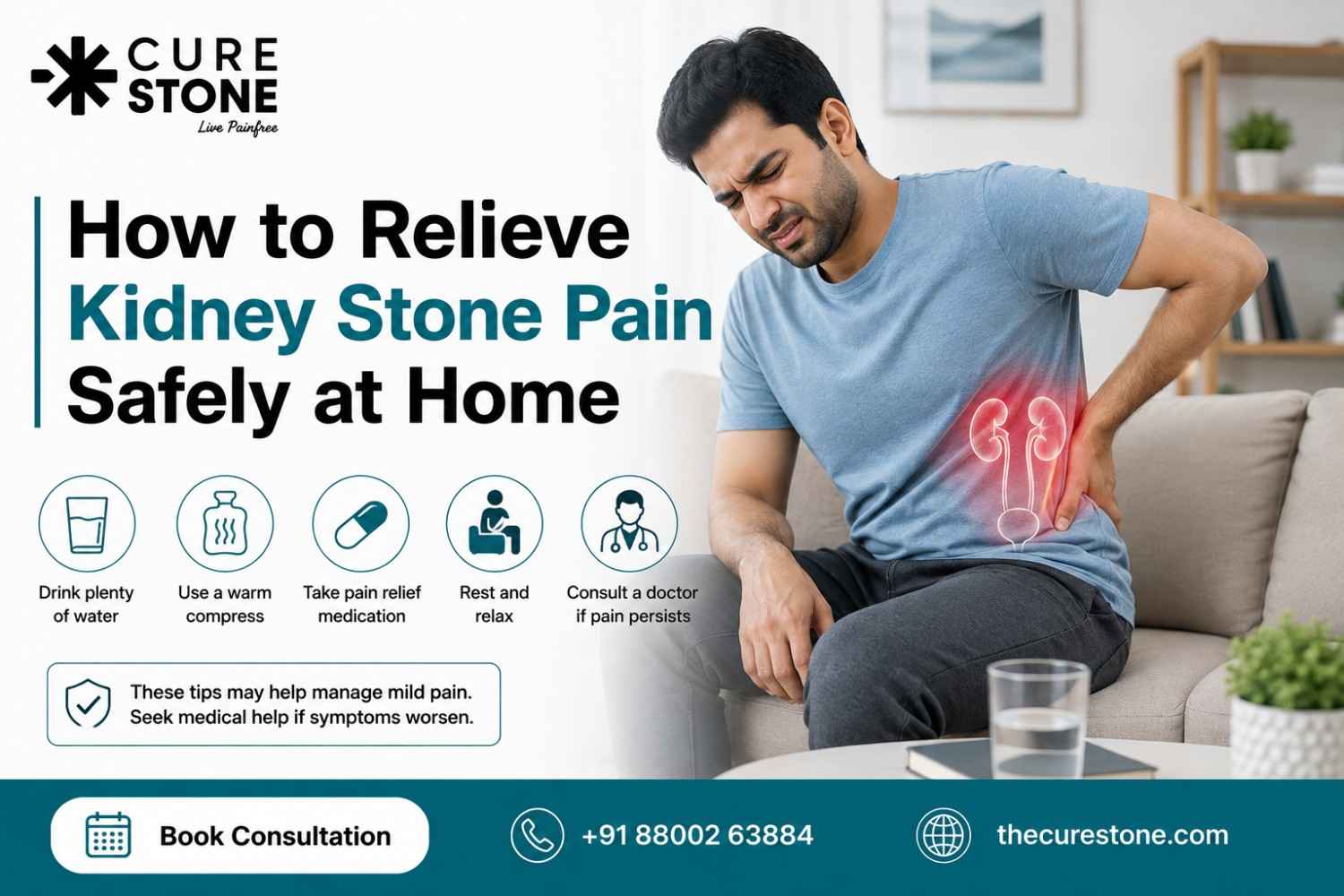
Kidney stone pain does not build up slowly. It arrives suddenly, usually in the side or lower back, and within minutes it can become the worst pain a person has ever felt. Most patients describe it as sharp, gripping, and impossible to sit still through. This happens because the stone has moved into the ureter and blocked the flow of urine, causing pressure to build up inside the kidney.
The good news is that a large number of stones, especially those under 5mm, pass on their own with time and the right supportive care at home. The important part is knowing which measures genuinely help, which ones are useless, and which symptoms mean you must stop treating yourself and see a urologist immediately.
This guide covers all three.
First, Confirm It Is Actually a Kidney Stone
Not every pain in the flank or lower back is a stone. Muscle strain, a slipped disc, gastric pain, gallbladder disease, and urinary infections can all imitate it. If you have never had a stone diagnosed before, treating the pain blindly at home is a gamble.
Two signs point strongly toward a stone. The pain comes in waves rather than staying steady, and it travels from the back or side down toward the groin as the stone moves. Blood in the urine, nausea, and a burning sensation while passing urine are also common.
If you are unsure, read more about what can mimic kidney stone pain and whether your back pain is actually a kidney stone before assuming. Understanding where kidney stone pain is felt also helps you describe it accurately to your doctor.
Stop and Seek Emergency Care If You Have Any of These
Home care is only appropriate for a stone that is not causing danger. Go to a hospital straight away if you notice any of the following:
- Fever or chills along with the pain. This can mean an infected, blocked kidney, which is a surgical emergency and can become life threatening within hours.
- Continuous vomiting that stops you from keeping down water or medicine.
- Little or no urine passing at all.
- Pain that does not settle even after taking your prescribed painkiller.
- Only one working kidney, a transplanted kidney, or known chronic kidney disease.
- Pregnancy, where both the diagnosis and the treatment need specialist handling. See our guide on kidney stones in pregnancy.
- Heavy blood in the urine with clots.
If you are trying to judge severity for yourself, this article on how to know when a kidney stone is serious sets out the warning signs in more detail.
7 Safe Ways to Relieve Kidney Stone Pain at Home
1. Apply Heat to the Painful Side
A hot water bottle, heating pad, or warm shower directed at the flank and lower back relaxes the muscle spasm around the ureter and reduces the intensity of the pain. It will not move the stone, but it takes the edge off while your medicine starts working. Use a cloth barrier so the skin does not burn, and limit each session to about 20 minutes.
2. Take an Anti Inflammatory Painkiller, Correctly
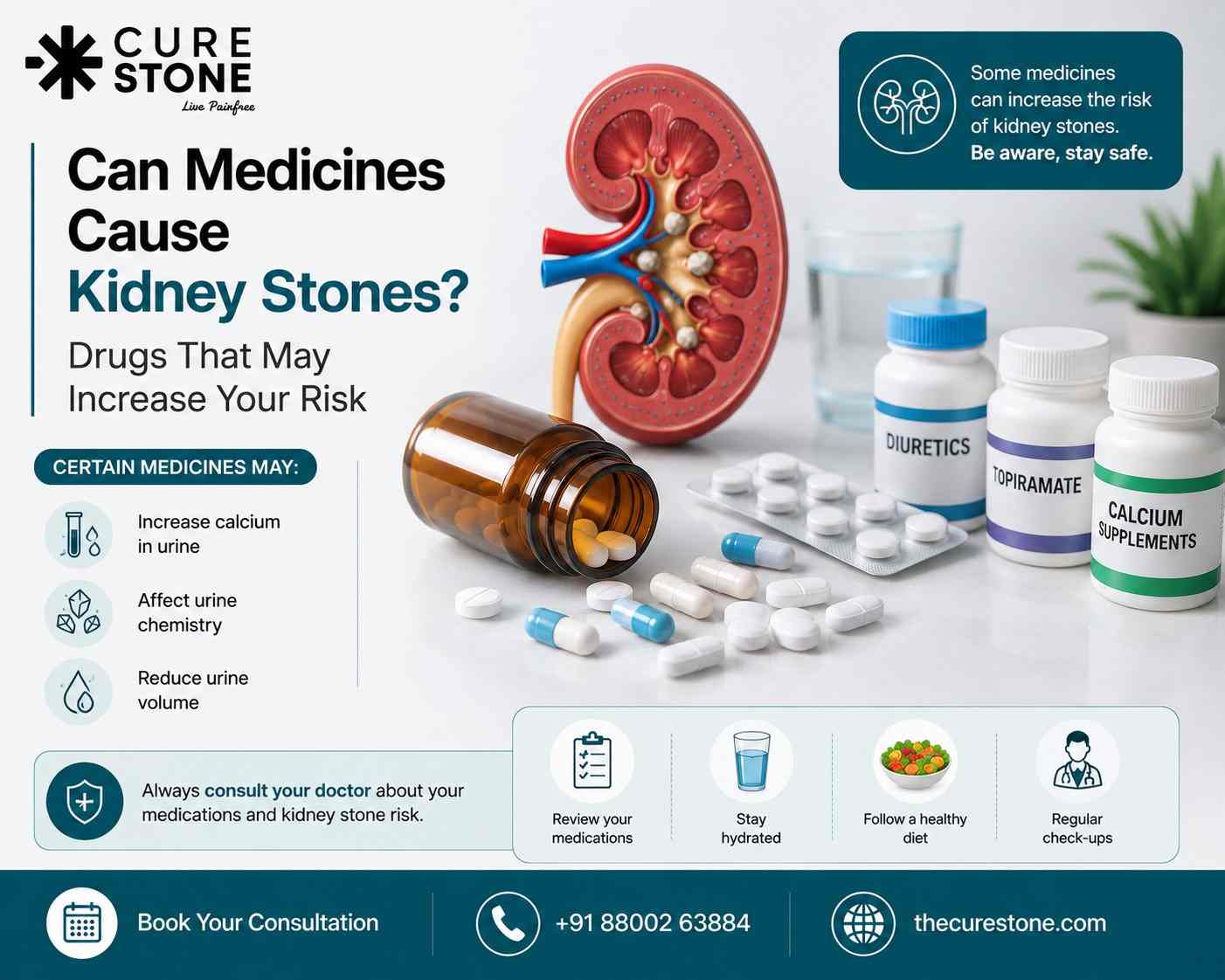
For renal colic, anti inflammatory medicines such as ibuprofen or diclofenac generally work better than plain paracetamol because they reduce the swelling and pressure inside the kidney, not just the pain signal. Take the standard dose printed on the packet, after food, and never exceed the label limit.
This is not safe for everyone. Avoid anti inflammatory medicines if you have kidney disease, a single functioning kidney, a history of stomach ulcers or gastritis, uncontrolled blood pressure, or if you are pregnant or taking blood thinners. In those cases paracetamol is the safer starting point and you should call your doctor the same day.
If you are already under treatment, follow the prescription you were given rather than adding tablets on your own. More on this in our guide to managing pain during a kidney stone attack.
3. Drink Water Steadily, Not in Huge Bursts
Hydration is the single most useful long term measure, but the way you do it matters during an attack. Sipping water consistently through the day keeps urine dilute and supports stone movement. Forcing down two litres in one sitting while the ureter is blocked can increase pressure inside the kidney and make the pain sharply worse.
Aim for pale yellow urine as your target. Our article on how much water you should drink to prevent kidney stones explains the practical numbers, and why hydration is necessary for kidney health covers the reasoning behind it.
4. Keep Moving Gently Between Episodes
Lying completely still for days does not help a stone travel. Light walking around the house, once the acute wave of pain has settled, uses gravity and normal body movement to encourage the stone downward. Do not attempt jogging, jumping, or heavy gym work, and never exercise while the pain is at its peak or while you are dizzy from medication. We cover this in does more walking help pass kidney stones and what exercise is good for kidney stones.
5. Change Position to Find Relief
There is no single correct posture, but many patients find that lying on the unaffected side, or curling forward slightly, reduces the intensity. Pain often feels worse at night because there is less distraction and lying flat changes pressure in the kidney. If that pattern sounds familiar, read why kidney stones hurt more at night.
6. Strain Your Urine and Save the Stone
Pass urine through a fine strainer or a clean cloth each time. Catching the stone tells you the episode is over, and sending it for analysis tells your urologist exactly what type it is, which decides your prevention plan. Read what to do after you pass a stone and the signs that a kidney stone is about to pass so you know what to expect.
7. Take Prescribed Medical Expulsive Therapy If Advised
For stones sitting in the lower ureter, urologists often prescribe an alpha blocker such as tamsulosin to relax the ureter and improve the chance of spontaneous passage. This is a prescription decision, not a self medication one, and it is usually paired with a defined review date. More detail is available in non surgical treatment options for small kidney stones.
What Does Not Work, No Matter What You Have Been Told
- Beer. It does not flush stones out. It dehydrates you and raises uric acid. The full explanation is here: does beer help with kidney stones.
- Cranberry juice. Popular for urinary health, but it is not a stone dissolver and can increase oxalate load. See is cranberry juice good for kidney stones.
- Apple cider vinegar, lemon and olive oil mixtures, and herbal stone dissolving powders. Calcium oxalate stones, which are the most common type, do not dissolve with any drink. Read what is the fastest way to dissolve a kidney stone for what the evidence actually shows.
- Waiting it out indefinitely. A blocked kidney that is ignored can lose function silently. What happens if you do not remove kidney stones explains the risk.
How Long Is It Safe to Manage at Home?
Size is the deciding factor. Stones under 5mm often pass within one to three weeks. Stones between 5mm and 7mm pass less reliably and need monitoring. Stones above 7mm rarely pass on their own and usually need intervention.
As a practical rule, a stone that has not passed in four to six weeks, or one causing repeated episodes of severe pain, should not be managed at home any longer. Prolonged obstruction, even without dramatic pain, can quietly damage the kidney. Read how long it takes to pass kidney stones and can I delay kidney stone removal for the fuller picture.
Not sure where your stone falls? Our kidney stone size checker gives you a quick indication of what your size and location typically require.
When Home Care Is No Longer Enough
If the stone is too large, sitting in a difficult position, or causing infection or blockage, treatment is the safer route and modern options are far less invasive than most patients expect.
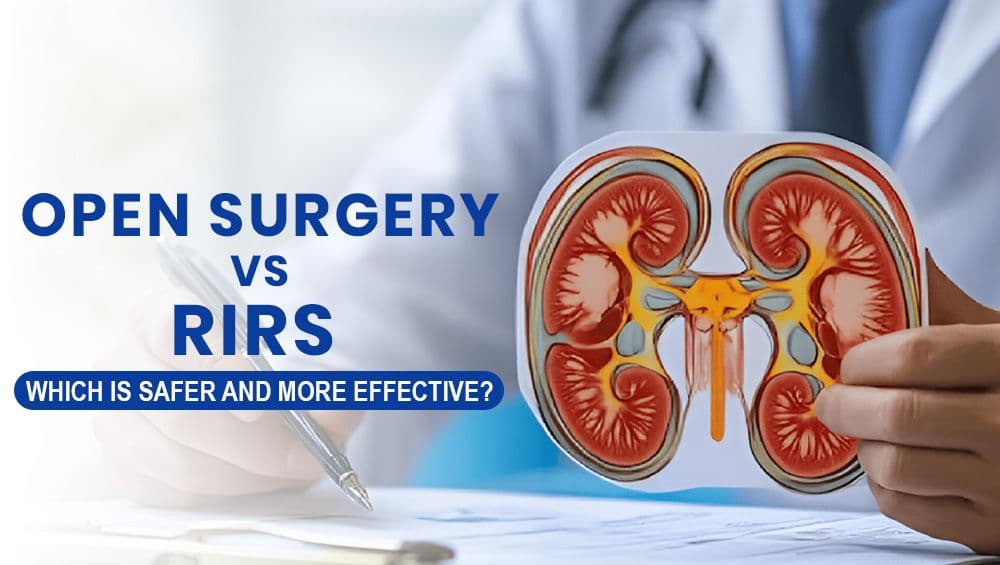
RIRS, or retrograde intrarenal surgery, removes the stone through the body's natural urinary passage using a flexible scope and laser, with no cut and no scar. ESWL uses shock waves from outside the body for suitable smaller stones. Mini PCNL is used for large or staghorn stones, and URSL targets stones lodged in the ureter. Our guide on when kidney stones need surgery explains how the decision is made.
Once the pain is settled, prevention is the real goal. Around half of stone formers develop another stone within five to ten years unless the underlying cause is corrected, so a proper kidney stone diet and a plan to avoid recurrence matter as much as the treatment itself.
If your pain keeps coming back, book a consultation with Dr. Deepanshu Gupta for a proper assessment rather than another cycle of painkillers.
Frequently Asked Questions
What is the fastest way to relieve kidney stone pain at home?
A combination of an anti inflammatory painkiller taken as directed and heat applied to the affected side gives the quickest relief for most people. Heat works within minutes, while the medicine takes about 30 to 45 minutes to reduce the pressure and swelling causing the pain.
Does drinking a lot of water flush out a kidney stone faster?
Steady hydration helps small stones move and prevents new ones from forming, but drinking large volumes rapidly during an acute attack can worsen the pain by increasing pressure behind the blockage. Sip consistently rather than flooding your system.
Can I take painkillers for a kidney stone without seeing a doctor?
A standard over the counter dose for a day or two is reasonable for a previously diagnosed, small stone. If you need painkillers for more than two days, if the pain breaks through, or if you have kidney disease, ulcers, or are pregnant, you need a medical review rather than more tablets.
Is heat or ice better for kidney stone pain?
Heat is better. Kidney stone pain is driven by muscle spasm in the ureter and pressure inside the kidney, and warmth relaxes that spasm. Ice tends to do very little for pain originating this deep in the body.
How do I know the stone has passed?
The pain usually stops abruptly rather than fading gradually, and you may see or hear the stone in the strainer or toilet. If the pain disappears but the stone was never found, get a scan, because pain can also stop when the kidney becomes completely obstructed and stretched.
When should I go to the emergency room for a kidney stone?
Go immediately if you have fever or chills with the pain, cannot keep fluids down, are passing very little or no urine, have only one kidney, are pregnant, or the pain is not controlled by your prescribed medication.
Can a 7mm stone pass at home?
It is possible but uncommon, and it usually takes weeks with significant pain along the way. Most 7mm stones are treated rather than watched. See our detailed article on the best treatment for 7mm kidney stones.
Do home remedies like lemon water or beer dissolve stones?
No. Lemon juice provides citrate, which can modestly reduce the chance of new stones forming over time, but nothing you drink dissolves an existing calcium oxalate stone. Beer offers no benefit and worsens dehydration.
Have Questions About This Topic?
Get a personalized consultation at Cure Stone Hospital, Sector 52, Gurgaon.
Book Consultation