Kidney Stone Treatment in Gurgaon: Eligibility, Procedure & Recovery
From the medical definition of nephrolithiasis, kidney stones are among the top health concerns for millions of people including many in Gurgaon. With the increase of technology, the treatment offered for kidney stones is becoming less invasive which allows for faster recovery and reduced pain to the patients.
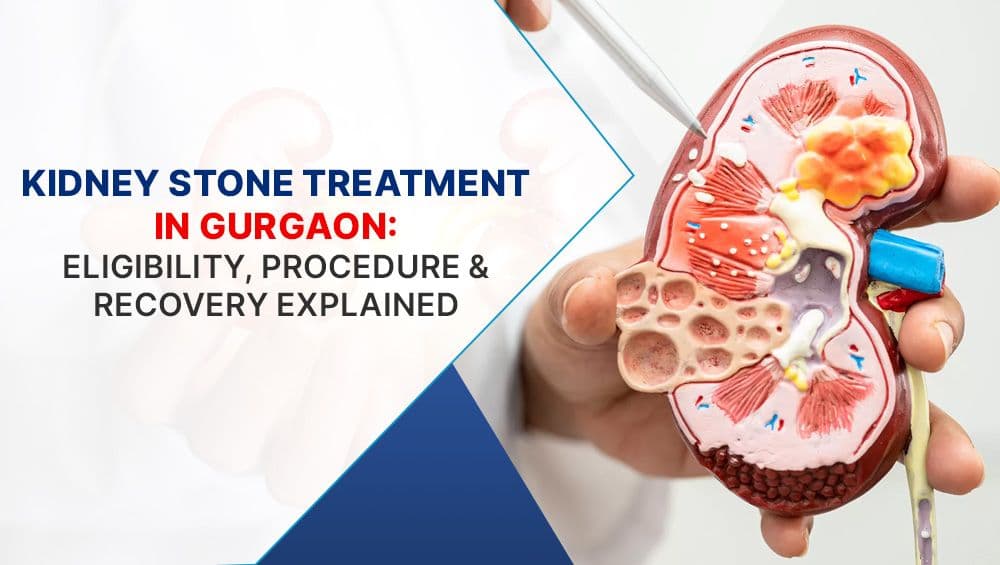
Kidney stones (nephrolithiasis) are among the most common and painful urological conditions affecting millions of people. Formed from hard, crystallized deposits of salts and minerals inside the kidneys, these stones can obstruct urine flow, cause severe flank pain (renal colic), and lead to recurrent urinary infections if left unmanaged.
Fortunately, modern endourology has transformed kidney stone management. Advanced, minimally invasive procedures allow patients in Gurgaon and Delhi NCR to undergo safe, precision-based stone removal with minimal discomfort and rapid recovery times.
What Causes Kidney Stones?
Kidney stones develop when urine becomes supersaturated with stone-forming substances—such as calcium, oxalate, uric acid, or cystine—causing them to precipitate, crystallize, and bind together.
- Chronic Dehydration: Inadequate daily fluid intake leads to concentrated urine, making it easier for dissolved minerals to crystallize into solid deposits.
- Dietary Risk Factors: High consumption of sodium, animal protein, and oxalate-rich foods accelerates mineral precipitation in the urinary tract.
- Obesity and Metabolic Factors: Excess weight alters urinary pH and elevates the excretion of calcium, oxalate, and uric acid.
- Genetic Predisposition: A family history of urolithiasis increases individual susceptibility, requiring proactive monitoring and metabolic evaluations.
- Underlying Medical Conditions: Gout, hyperparathyroidism, inflammatory bowel disease (IBD), and recurrent urinary tract infections (UTIs) significantly heighten stone risk.
- Certain Medications: Prolonged use of specific diuretics, calcium-based antacids, or specialized therapeutic drugs can alter urinary mineral concentrations.
The 4 Primary Types of Kidney Stones
Identifying the exact chemical composition of a stone helps determine the most effective removal method and long-term prevention strategy.
- Calcium Oxalate Stones: The most common variety, accounting for roughly 80% of cases. They form when excess calcium combines with oxalate in concentrated urine.
- Uric Acid Stones: Triggered by acidic urine (low pH), frequently seen in high-protein diets, gout, or metabolic syndrome.
- Struvite Stones: Fast-growing, complex stones triggered by chronic upper UTIs caused by urease-producing bacteria.
- Cystine Stones: A rare, hard stone type resulting from cystinuria, a genetic disorder affecting amino acid transport.
Recognizing the Key Symptoms
- Severe Flank or Back Pain: Sharp, excruciating renal colic that originates below the ribs and radiates toward the lower abdomen and groin.
- Blood in the Urine (Hematuria): Urine appearing pink, red, or brownish due to mucosal irritation from stone movement. Read our detailed guide on blood in urine (hematuria).
- Urinary Urgency and Frequency: Constant, sudden urges to urinate as a stone moves closer to the bladder.
- Nausea and Vomiting: Intense renal pain triggering shared nerve pathways in the gastrointestinal tract.
- Fever, Chills, or Cloudy Urine: Critical warning signs of a urinary tract infection or blocked, infected kidney (pyonephrosis), requiring immediate emergency care.
Modern, Minimally Invasive Stone Removal Methods
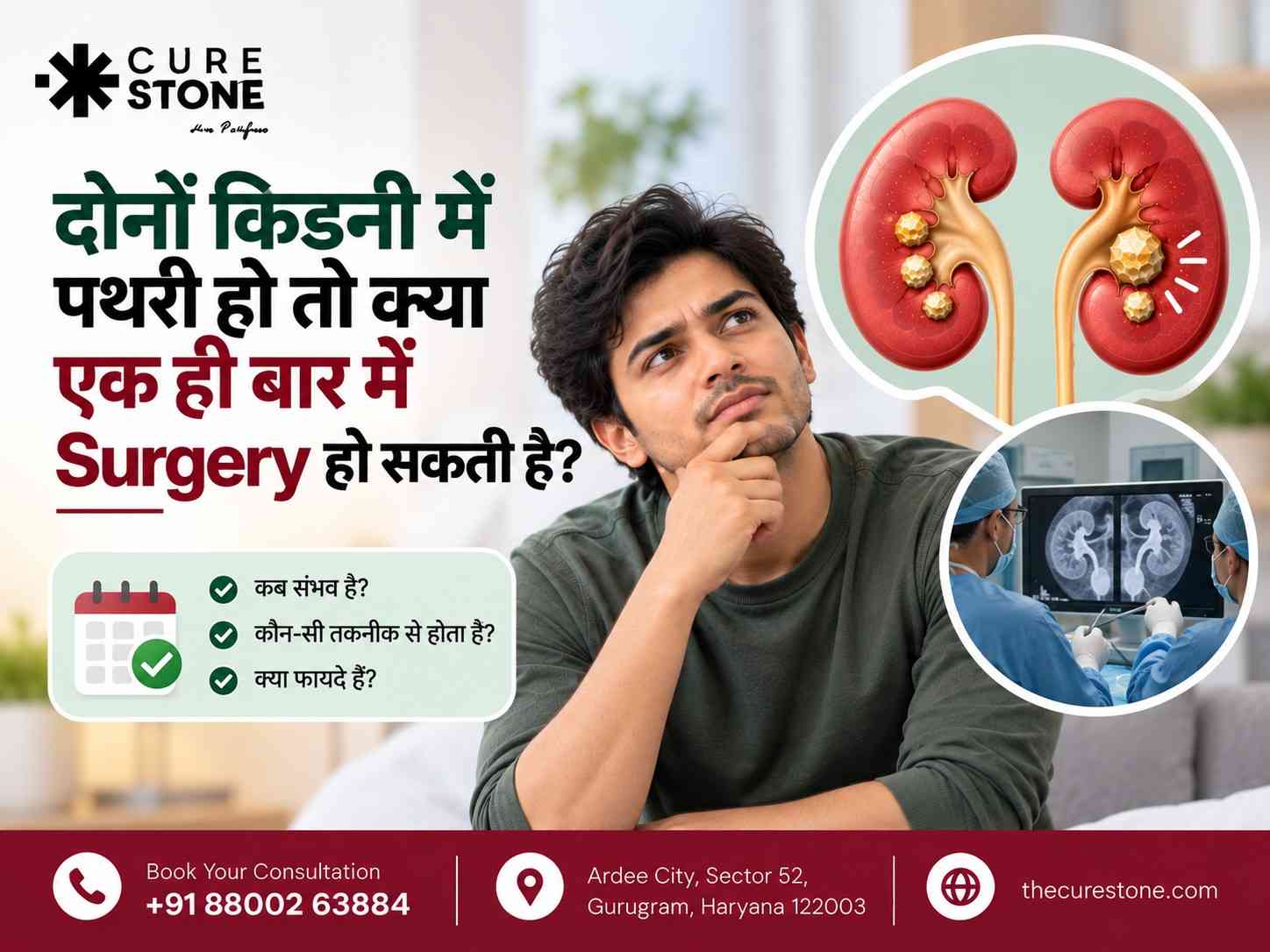
When stones exceed 5 to 6 mm, cause complete blockage, or produce unmanageable pain, surgical intervention is required. Modern urology prioritizes 100% incision-free or keyhole techniques over open surgery.
1. Retrograde Intrarenal Surgery (RIRS)
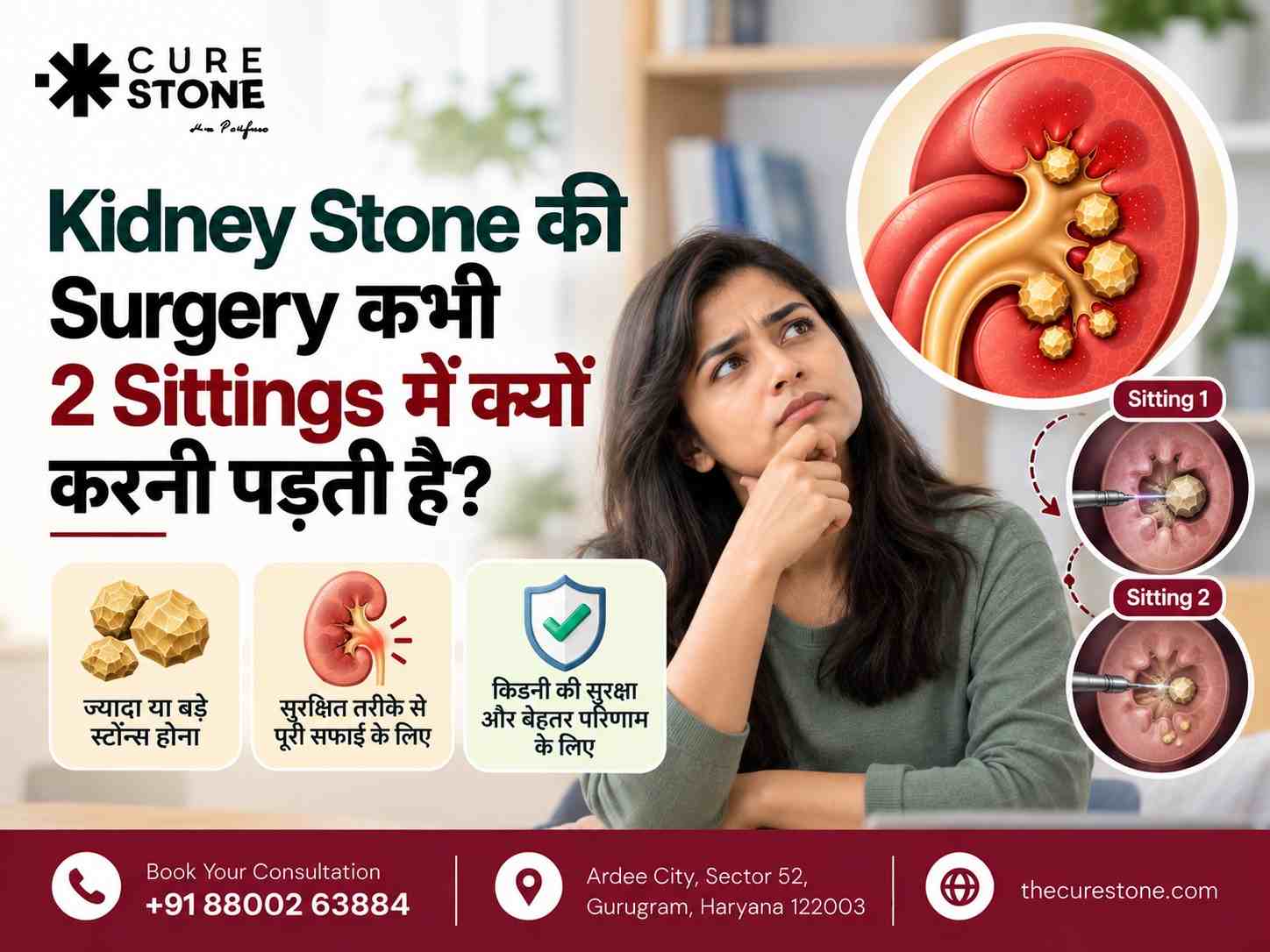
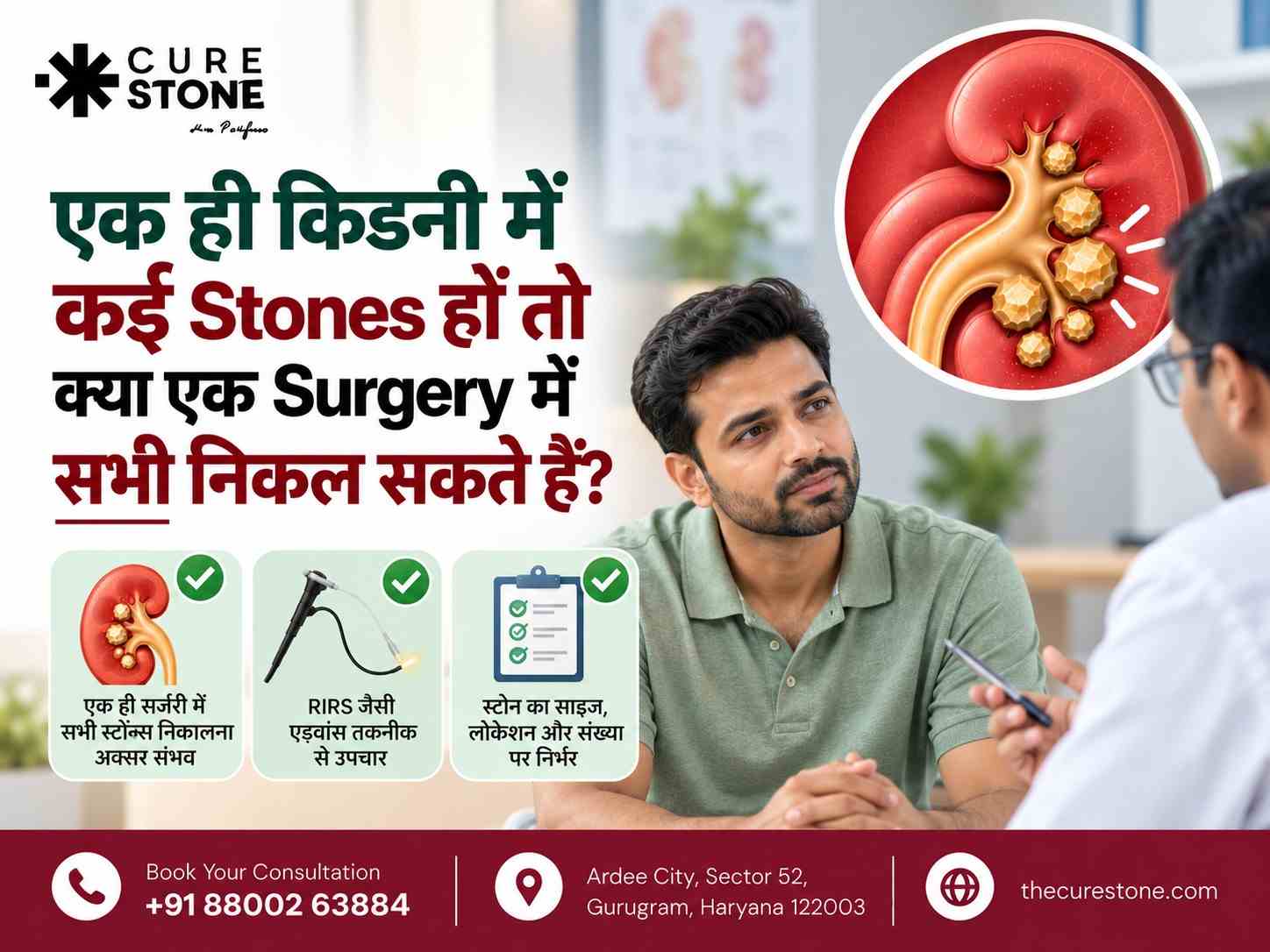
RIRS is a 100% incision-free procedure using a flexible digital scope inserted through natural urinary passages (urethra and bladder) directly into the kidney. A high-power holmium or thulium laser is used to dust the stone into fine, passably small particles.
- Best For: Complex, soft-to-medium stones located in hard-to-reach kidney calyces.
- Recovery: Same-day discharge or 1-day hospital stay, with patients resuming normal routine in 2 to 3 days.
2. Ureteroscopic Lithotripsy (URSL)
A thin, rigid or semi-rigid scope is passed into the ureter to locate stones lodged in the mid-to-lower urinary tract. Laser energy fragments the stone, and tiny baskets retrieve the remaining pieces.
- Best For: Ureteral stones causing acute blockage.
- Recovery: Minimal downtime; most patients resume light activities within 24 to 48 hours.
3. Extracorporeal Shock Wave Lithotripsy (ESWL)
A non-invasive procedure that uses focused external acoustic shock waves to break small-to-medium soft kidney stones into tiny fragments that pass naturally in urine.
- Best For: Small, soft renal or upper ureteral stones (< 1cm).
- Recovery: No surgical incisions or internal scope placement required; quick return to daily activities.
4. Percutaneous Nephrolithotomy (PCNL / Mini-PCNL)
A keyhole procedure where a tiny incision (less than 1 cm) is made in the back to insert a nephroscope directly into the kidney. Ultrasonic or pneumatic lithotripters break up large or staghorn stones for immediate extraction.
- Best For: Large (> 2cm), hard, or complex kidney stones.
- Recovery: Short hospital stay of 1 to 2 days, with full recovery within 1 to 2 weeks.
Consult Leading Urologist Dr. Deepanshu Gupta in Gurgaon
Choosing an experienced endourologist ensures a precise diagnosis, minimal surgical risk, and a high stone-free rate.
Dr. Deepanshu Gupta at CureStone is one of Gurgaon’s most trusted urologists, holding an MCh in Urology (Rank 1) and possessing over 12 years of clinical experience. Having successfully performed more than 9,500 endoscopic surgeries, Dr. Gupta specializes in:
- Fluoroscopy-Free RIRS: Advanced flexible laser stone removal that eliminates unnecessary X-ray radiation exposure during surgery.
- FANS-RIRS Suction Laser Surgery: Vacuum-assisted suction technology that extracts stone dust in real time, maintaining low intrarenal pressure and ensuring maximum stone clearance. Learn more in our guide on FANS RIRS suction laser surgery.
- Targeted Recurrence Prevention: Comprehensive 24-hour urine metabolic evaluations and dietary planning. Read our guide on how to avoid kidney stone recurrence.
Prioritize your renal health—book a consultation with CureStone today!
Frequently Asked Questions (FAQs)
How long does recovery take after laser kidney stone surgery (RIRS)?
Because RIRS involves zero surgical incisions, most patients experience minimal post-operative discomfort. Patients are typically discharged within 24 hours and can return to light work and routine daily activities within 2 to 3 days.
Is hospitalization required for all kidney stone treatments?
No. Non-invasive treatments like ESWL or straightforward URS procedures are often performed as day-care operations. Advanced procedures like RIRS or Mini-PCNL usually require an overnight stay for observation and post-procedure care.
Can kidney stones return after surgical removal?
Yes. Surgical intervention removes existing stones but does not alter the underlying metabolic drivers. Without preventive hydration, dietary adjustments, and metabolic management, recurrence rates reach roughly 50% within 5 to 7 years.
Have Questions About This Topic?
Get a personalized consultation at Cure Stone Hospital, Sector 52, Gurgaon.
Book Consultation