What Is Cystoscopy Surgery? (Purpose & process)
Cystoscopy is the procedure employed by doctors to inspect and sometimes to treat conditions affecting the urinary system. You may need cystoscopy if you have blood in your urine, painful urination, leaking urine or if you cannot urinate.
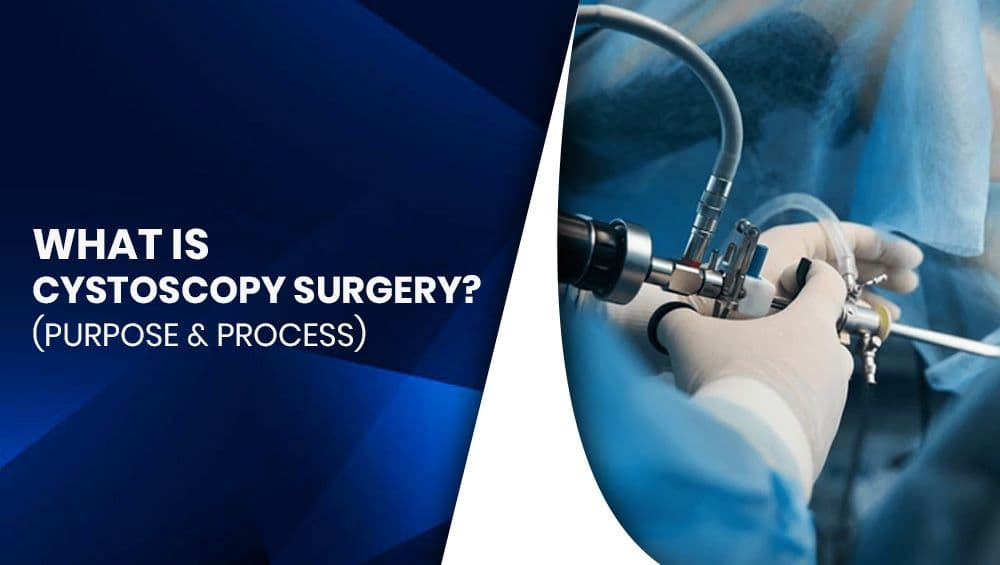
Cystoscopy is a specialized procedure employed by doctors to inspect and sometimes treat conditions affecting the urinary system. You may need a cystoscopy if you are experiencing blood in your urine, painful urination, leaking urine, or if you cannot urinate at all. During a cystoscopy, a urologist examines the inside of your bladder as well as the urethra through a specialized optical scope.
If your doctor has advised you to undergo a cystoscopy, you are probably feeling somewhat concerned and want to know exactly what it entails.
Cystoscopy refers to a medical procedure in which a surgeon gains an up-close, real-time view of the bladder and urethra. It is commonly prescribed to investigate ongoing urinary symptoms or a particular disease. This procedure is crucial for effectively diagnosing and managing most complications affecting the urinary tract system, allowing different bladder and urinary tract disorders to be treated accurately.
In this blog, you will find information about what a cystoscopy is and what sort of things you can expect from the procedure. We want you to be as informed and comfortable as possible. Cystoscopy is a term many have not come across in their day-to-day lives, so let us make it easy and stress-free to comprehend.
When Is Cystoscopy Surgery Done?
A cystoscopy is typically performed to diagnose, evaluate, or treat issues affecting the bladder and urinary tract. Your doctor may recommend this procedure in the following situations:
- Unexplained Urinary Symptoms: If you’re experiencing frequent urinary tract infections (UTIs), blood in the urine (hematuria), or persistent pelvic pain, a cystoscopy helps identify the underlying causes.
- Bladder Problems: This is an essential procedure for diagnosing conditions such as bladder stones, tumors, or inflammation (cystitis). It also assists in the assessment of problems with bladder control, such as an overactive bladder or incontinence.
- Urethral Concerns: In case there is a suspected blockage or narrowing (stricture) of the urethra, a cystoscopy provides a clear view to pinpoint the precise issue.
- Follow-Up for Cancer: A cystoscopy is routinely used to monitor a patient for any recurrence if they have a history of bladder cancer.
- Guided Treatments: Cystoscopy is not only diagnostic; it is also therapeutic. Doctors can perform immediate treatments during the procedure, such as removing bladder stones, taking biopsies, or treating small tumors.
The physician will recommend a cystoscopy if it is the most effective way to gain insight into your urinary health and provide necessary treatment.
How is Cystoscopy Surgery Done?
A cystoscopy typically takes approximately 15 to 30 minutes, depending on what is intended to be done during the procedure. Here is how it is performed:
- Pre-Procedure: Before starting, you will be required to empty your bladder. A local anesthetic gel is the most commonly used numbing agent; however, general or spinal anesthesia may be used depending on the complexity of the procedure.
- Insertion of the Cystoscope: A thin, tube-like instrument known as a cystoscope is passed gently through the urethra into the bladder. The cystoscope has a high-definition camera and light for an unobstructed view of the urinary tract.
- Examination of the Urinary Tract: The doctor examines the walls of the urethra and bladder for inflammation, stones, tumors, or other abnormalities while slowly advancing the cystoscope. The bladder may be expanded by introducing sterile water or saline for better visualization.
- Additional Procedures (If Needed): If required, tiny tools can be passed through the cystoscope to perform treatments, such as removing small tumors, taking tissue biopsies, or addressing blockages.
- Completion: Once the examination or treatment is done, the cystoscope is withdrawn with extreme care.
Post-Procedure Care
Following the procedure, patients may have mild pain, a feeling of slight burning during urination, or a pinkish tinge in their urine due to minor irritation. These symptoms usually take a day or two to resolve. Cystoscopy is an excellent means of diagnosing and treating urinary tract conditions in real-time, offering highly effective treatment options in the least invasive manner possible.
What are the Types of Cystoscopes?
Cystoscopes are specific endoscopy instruments designed for the observation of the bladder and the urethra, coming in two generally accepted types:
- Flexible Cystoscope: This tool features a bendable, soft tube designed to smoothly follow the natural curves of the urethra. Its most common usage is for diagnostic or routine examinations. Flexible cystoscopes tend to be much more comfortable for the patient and are typically performed under local anesthesia in an outpatient setting.
- Rigid Cystoscope: The rigid version has inflexible, straight tubing. It provides a far clearer and steadier picture and allows for the passage of larger surgical tools, making it the preferred choice for delicate procedures like taking a biopsy, breaking down bladder stones, or removing tumors. Because of its rigidity, it is typically applied with sedation, spinal anesthesia, or general anesthesia to keep the patient completely comfortable.
How Long Is the Recovery Time?
The amount of time it takes to fully recover depends on the kind of procedure performed and your general health. Recovery for most diagnostic cystoscopies is quick and uneventful, given the minimally invasive nature of the procedure.
- Immediate Recovery (Within Hours): Most patients are able to resume their daily activities on the exact same day. Patients may experience mild discomfort, such as a burning sensation during urination or slightly pink urine, but this should resolve quickly. Drinking plenty of fluids will help flush out the bladder and alleviate these symptoms.
- Short-Term Recovery (1–2 Days): Mild cramping or light bleeding can last for a day or two after procedures involving biopsies or minor treatments. These symptoms fade as the bladder and urethra heal.
- Extended Recovery (Up to a Week): Recovery may take up to a week if a more extensive cystoscopy has been performed, such as tumor removal or stone extraction. Your doctor may advise you to rest, take medications to prevent infection, and avoid strenuous physical activities.
When to Call Your Doctor
Recovery is usually smooth. However, contact your healthcare provider immediately if you experience any of the following:
- Persistent pain or burning after a couple of days.
- Bright red blood or heavy clots in your urine.
- Fever or chills, which may indicate an infection.
- Difficulty or inability to urinate.
CureStone: Complete Care for Kidney Health
Kidney and urological problems can be tricky, but at CureStone, we are dedicated to assisting you in finding relief and solutions that last. Led by specialists like Dr. Deepanshu Gupta, we are committed to ensuring you receive individualized care tailored exactly to your needs.
At CureStone, we don't just treat conditions like kidney stones—we actively work to prevent them. We identify and treat the root causes of urinary issues using advanced techniques and preventive strategies. Our treatment approach includes detailed evaluations, personalized treatment plans, and constant support to significantly reduce recurrence chances.
Don’t let urological issues disrupt your life. Book a consultation with CureStone today for expert guidance and care. Together, we will work toward a healthier, pain-free future.
Frequently Asked Questions (FAQs)
Is a cystoscopy painful?
A cystoscopy should not be painful. When performed using a flexible cystoscope for diagnostic purposes, a local anesthetic gel is applied to heavily numb the urethra, resulting in only mild pressure or a brief urge to urinate. For more complex treatments using a rigid cystoscope, you will be given sedation or general anesthesia so you will not feel anything at all.
Can I drive myself home after the procedure?
If you have a routine diagnostic cystoscopy under local anesthesia, you are usually perfectly fine to drive yourself home immediately afterward. However, if you received sedation, general anesthesia, or spinal anesthesia, you must have someone else drive you home, as the medications impair your reflexes and judgment.
Will a cystoscopy detect kidney stones?
A cystoscopy specifically looks at the lower urinary tract (the urethra and the bladder). While it can easily detect bladder stones, it cannot see up into the kidneys. If your doctor suspects stones higher up in your urinary tract, they may use the cystoscope to insert a dye for X-rays or place a stent to relieve kidney stone pain.
How soon after a cystoscopy can I have sex?
Generally, if you only had a diagnostic cystoscopy, you can resume sexual activity as soon as you feel comfortable, which is often within 1 to 2 days. If you had a biopsy or tumor removal, your doctor will likely advise you to wait 1 to 2 weeks to allow the internal tissues to heal completely and prevent infection.
Have Questions About This Topic?
Get a personalized consultation at Cure Stone Hospital, Sector 52, Gurgaon.
Book Consultation