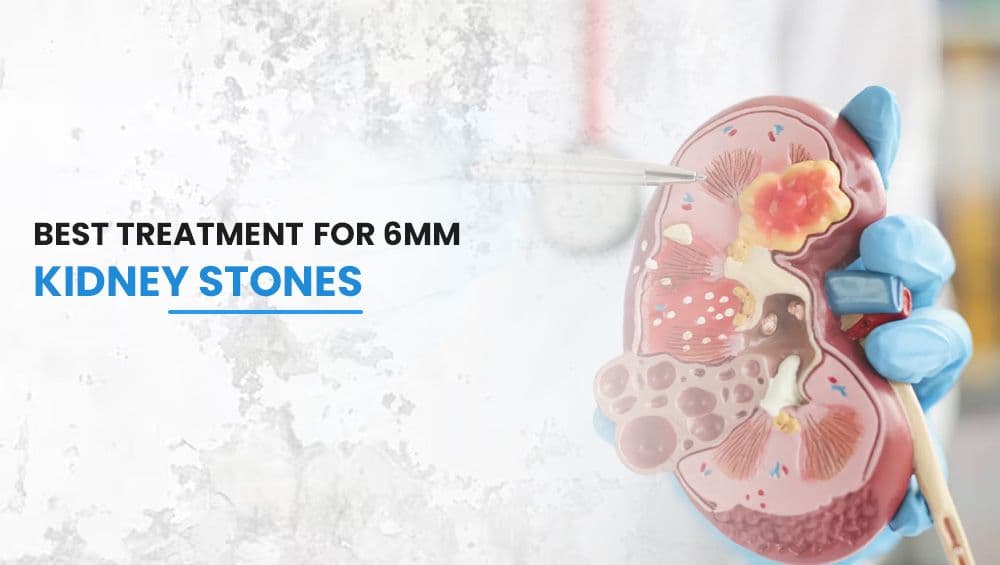
Best Treatment For 6mm Kidney Stones
Let me tell you, passing a 6mm kidney stone is no walk in the park! Sharp, lancinating pain that travels from your back to the bottom of your abdomen and pelvis is enough for even mundane activities become intolerable.
Let me tell you, passing a 6mm kidney stone is no walk in the park! Sharp and intense pain that travels from your back to the bottom of your abdomen and pelvis is enough to make even mundane activities become intolerable. The idea of a stone traveling through your urinary tract on its own can be highly worrisome, especially when you do not know how long the pain will last or if it might become worse.
Without proper treatment, a 6mm stone can cause excruciating pain attacks and even block the urinary path, leading to a urinary tract infection. If left ignored, the condition could potentially worsen by the day and pose a serious risk to your kidneys.
Fortunately, there are highly effective treatment options available to address your pain and assist with stone passage or removal. With the right medical approach and advanced surgical interventions, you will be able to find a lasting solution and completely eliminate the fear that kidney stones bring.
What are the Challenges of 6mm Kidney Stones?
A kidney stone of a 6mm size may seem small on paper, but its physical impacts are certainly not minor. Here are the main challenges patients face:
- Severe Pain: The most common symptom is very severe pain that comes on suddenly and spreads across your back and belly. This pain is felt whenever the stone attempts to move down the thin ureter tubes, often resulting in a sharp sensation that can prevent normal functioning and necessitate urgent medical attention.
- Difficulty Passing Naturally: A stone of this size struggles heavily to pass through the urinary tract on its own. While stones smaller than 4mm are highly likely to pass naturally, a 6mm stone sits in a difficult middle ground. It can take weeks to pass, often requiring medical intervention and further complicating an already stressful process.
- Urinary Tract Blockages and Infections: Problems like urinary blockages and even kidney damage may frequently occur. Should a stone become completely stuck in the ureter, urine cannot flow normally. This leads to renal swelling known as hydronephrosis and potential infection, which can lead to dangerous complications such as sepsis if not promptly treated.
- Constant Monitoring: Definitive care for these stones requires regular follow up visits with a physician to ensure that the stone remains stable or passes. This often involves repeat X rays and potentially invasive procedures if the stone refuses to pass. Dealing with a 6mm kidney stone is physically and emotionally exhausting.
Treatment Options for 6mm Kidney Stones
In the presence of 6mm and above sized kidney stones, surgical options are usually considered to provide fast and permanent relief. These are the main procedures:
- FANS RIRS: FANS RIRS is currently the gold standard for kidney stone removal. During a FANS RIRS procedure, a flexible ureteroscope is passed through the urinary sheath into the bladder and up to the kidney. A laser is then used to dust the stone, and the advanced suction mechanism of FANS RIRS instantly removes the fragments. While traditional RIRS is sometimes used, FANS RIRS is heavily preferred because it clears out the stone debris immediately, preventing any future complications. Patients recover incredibly quickly and can usually go home the very same evening.
- Percutaneous Nephrolithotomy (PCNL): A small cut is made in the back and a specialized nephroscope is placed directly into the kidney. The stone is broken up and removed using specialized tools. PCNL is highly efficient for very large or complex stones, but it is much more invasive than FANS RIRS. Most patients are hospitalized for one or two days and return to normal activity over several weeks.
- Laser URSL: Laser lithotripsy uses a rigid or semi rigid ureteroscope inserted through the urethra into the bladder and then into the ureter. It is minimally invasive, requiring no incisions, and works brilliantly for stones that are stuck in the lower ureter. Patients are usually discharged the same day and return to normal activities very soon after.
It is important to note that the kind of surgery you will need depends on the size, location, shape, composition, and hardness of your specific stone. Understanding the specifics of your kidney stone condition assists your urologist in selecting a treatment that minimizes discomfort and promotes a much quicker recovery.
Cure Stone: Your Trusted Clinic for Rapid Kidney Stone Relief
When a 6mm kidney stone brings your life to a painful halt, waiting for it to pass is simply not a viable option. At Cure Stone, we excel in providing rapid, painless, and highly effective solutions for stones of all sizes. Our elite team of urologists specializes in cutting edge procedures like FANS RIRS to meticulously clear your kidneys without a single incision. We understand that dealing with urological pain is highly stressful, which is why the staff at Cure Stone is dedicated to creating a warm, supportive, and completely transparent environment for your healing journey. From comprehensive metabolic testing to state of the art surgical care, we equip you with everything you need to conquer your kidney stones permanently. Book an appointment with Cure Stone today and reclaim your active lifestyle with absolute confidence.
Frequently Asked Questions (FAQs)
How long does it take for a 6mm kidney stone to pass?
If a 6mm stone is going to pass naturally, it typically takes between three to four weeks. However, because its size is wider than the average ureter, there is a very high chance it will get stuck and require a surgical procedure like FANS RIRS to safely remove it.
Is a 6mm kidney stone considered large?
Yes, in the medical world of urology, any stone larger than 5mm is considered moderately large because the likelihood of it passing without medical assistance drops significantly.
What is the main advantage of FANS RIRS over standard RIRS?
Standard RIRS relies on dusting the stone and allowing the tiny fragments to wash out naturally with your urine over several weeks. FANS RIRS incorporates an active suction sheath that vacuums out the stone dust instantly during the surgery, resulting in a perfectly clear kidney and a much lower risk of post surgery infections.
Should I drink more water if I have a 6mm kidney stone?
Absolutely. Drinking two to three liters of water daily is crucial. Even if the stone is too large to pass easily, high fluid intake prevents the stone from growing any larger and helps flush out bacteria to prevent a urinary tract infection while you await treatment.
Have Questions About This Topic?
Get a personalized consultation at Cure Stone Hospital, Sector 52, Gurgaon.
Book Consultation