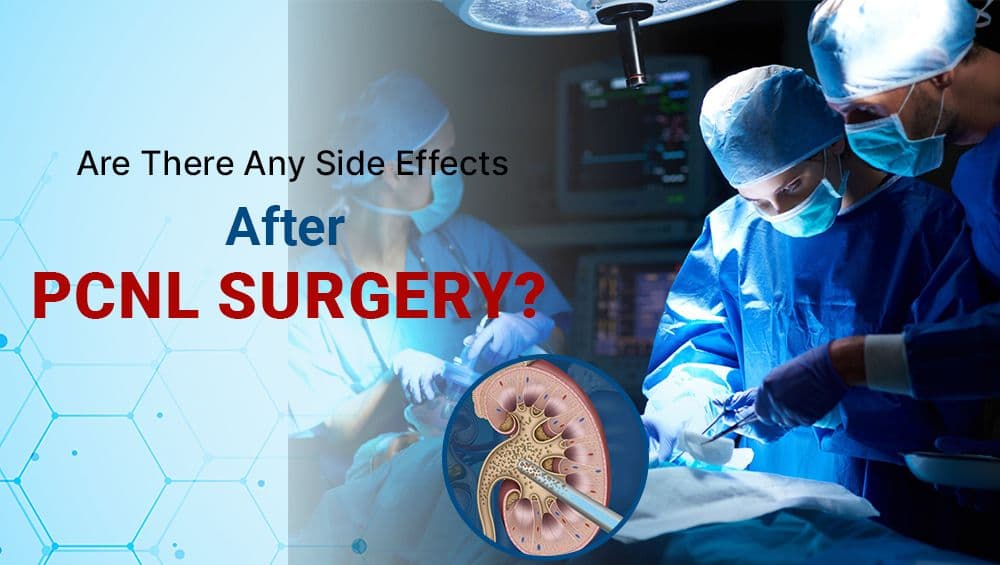
Are There Any Side Effects After PCNL Surgery?
Hearing the words “you need surgery” and “kidney stones” in the same sentence can be nerve-wracking. It can cause anxiety for patients, especially when they have to undergo a procedure such as PCNL (Percutaneous Nephrolithotomy).
Hearing that you need surgery for a kidney stone can feel overwhelming. However, when a stone is too large, dense, or complex to pass naturally or respond to external shock waves, Percutaneous Nephrolithotomy (PCNL) stands out as one of the most effective, reliable, and advanced surgical solutions available in modern endourology.
Whether you or a loved one are preparing for PCNL or recovering from it, knowing what to expect during each step of the journey—and understanding post-operative care—can help ease anxiety and ensure a smooth recovery.
In this comprehensive guide, we simplify the PCNL procedure step-by-step, review common post-operative side effects, and share practical recovery guidelines.
What Is PCNL Surgery?
Percutaneous Nephrolithotomy (PCNL) is a keyhole surgical technique designed to break down and remove large, complex, or stubborn kidney stones directly from the kidney collecting system.
Unlike older open surgeries that required large flank incisions, PCNL is performed through a tiny keyhole or pinhole access point (typically 1 cm or less) on the back. It offers high single-session stone clearance rates for stones larger than 2 cm or complex staghorn calculi.
Step-by-Step Overview of the PCNL Procedure
Understanding the operational steps involved helps demystify the surgical process:
1. Anesthesia and Surgical Preparation
The procedure is conducted under general anesthesia (or regional anesthesia in specific cases) to ensure complete comfort. The patient is carefully positioned, and the surgical site on the back is prepped and sterilized.
2. Creating Keyhole Access
The urologist creates a small incision (less than 1 cm) on the back directly over the target kidney. Guided by live ultrasound or fluoroscopic X-ray imaging, a fine needle is guided into the exact renal calyx containing the stone.
3. Establishing the Access Tract
A soft guide wire is passed through the needle, allowing the surgeon to dilate a narrow, safe working channel into the kidney. A protective sheath is placed over this tract, through which a nephroscope (a specialized digital camera) is inserted.
4. Stone Fragmentation and Extraction
Using a high-definition screen, the surgeon locates the stone. Advanced energy sources—such as holmium/thulium lasers or ultrasonic lithotripters—break large stones into small fragments. These fragments are then gently extracted using specialized mini-forceps or suction instruments.
5. Temporary Drainage Tubes (Stents / Nephrostomy)
Depending on the stone burden and tissue response, a temporary DJ stent or a small nephrostomy drainage tube may be placed to facilitate urine flow and promote healing. Modern tubeless PCNL or Mini-PCNL techniques often bypass external tubes entirely for faster recovery.
6. Closure and Recovery Monitoring
The small keyhole entry site is closed with a tiny suture or sterile bandage. The patient is moved to the recovery area and monitored as the anesthesia wears off.
Expected Side Effects and Post-Operative Considerations
Experiencing mild symptoms after keyhole surgery is a normal part of the body's natural healing process. Most side effects are temporary and easily managed:
- Mild Back or Flank Discomfort: Expect mild soreness or a dull ache near the keyhole site for 3 to 5 days. This is well-managed with prescribed oral pain relievers.
- Pink-Tinged Urine (Hematuria): Blood in the urine is very common in the first 24 to 48 hours following internal stone removal and gradually clears as you hydrate.
- Temporary Urination Changes: If an internal DJ stent is placed, you may feel mild bladder urgency, frequency, or a slight burning sensation during urination (dysuria).
- Minor Fluid Leakage: A small amount of clear or pink fluid may seep from the back entry site for a day or two after tube removal.
- General Fatigue: Feeling tired for a few days after general anesthesia and surgery is normal as your body conserves energy to heal.
How to Enhance Recovery After PCNL
Following these evidence-based guidelines ensures a faster, complication-free return to daily life:
- Hydrate Adequately: Drink 2.5 to 3 liters of water daily (unless restricted by a doctor) to flush out lingering dust or micro-fragments and keep urine pale and clear.
- Prioritize Rest and Avoid Strenuous Activity: Rest well for the first 3 to 5 days. Avoid lifting heavy objects (> 5 kg) or strenuous exercise for 2 weeks to prevent delayed bleeding.
- Complete Your Antibiotic Course: Take all prescribed antibiotics to prevent post-operative urinary tract infections (UTIs).
- Follow Up for Stent Removal: If a temporary internal stent was placed, schedule your follow-up appointment for seamless, painless removal.
- Adopt Long-Term Prevention: Follow customized dietary and lifestyle recommendations on how to avoid kidney stones recurrence.
Comparing Modern Surgical Alternatives
Depending on stone size, density, and patient anatomy, other advanced minimally invasive stone treatments include:
- Mini-PCNL: Uses ultra-thin access tracts to reduce tissue impact and recovery time even further.
- Retrograde Intrarenal Surgery (RIRS): A 100% incision-free endoscopic laser procedure performed entirely through natural urinary channels. Ideal for small-to-medium stones (< 2 cm).
- FANS-RIRS (Suction Laser Surgery): Incorporates active vacuum suction during laser stone fragmentation to maintain low intrarenal pressure and continuously evacuate stone dust. Learn more in our detailed guide to FANS-RIRS suction laser surgery.
Consult Top Kidney Stone Specialist Dr. Deepanshu Gupta in Gurgaon
Undergoing surgical stone removal requires complete confidence in your medical team.
Dr. Deepanshu Gupta at Cure Stone is a leading endourologist in Gurgaon and Delhi NCR with extensive clinical experience, having successfully performed over 9,500 endoscopic procedures. Specializing in advanced keyhole Mini-PCNL, radiation-free (fluoroscopy-free) RIRS, and high-efficiency FANS RIRS suction laser surgery, Dr. Gupta provides compassionate, patient-centered care designed for maximal stone clearance, minimal discomfort, and swift recovery.
Don't let kidney stone pain compromise your quality of life. Book a consultation with Cure Stone today to plan your personalized treatment!
Frequently Asked Questions (FAQs)
How long does hospital stay usually last after PCNL?
Most patients undergoing PCNL or Mini-PCNL are discharged within 24 to 48 hours once they are comfortably walking, eating, and passing clear urine.
When can I return to work after PCNL surgery?
Desk workers and those with light daily routines can usually return to work within 5 to 7 days. Jobs involving heavy physical labor or heavy lifting should be avoided for 2 weeks.
What warning signs require immediate medical attention post-PCNL?
You should contact your doctor immediately if you experience a high fever (> 100.4°F/38°C) with chills, severe unmanaged pain, passing heavy dark red blood clots, or an inability to pass urine.
Have Questions About This Topic?
Get a personalized consultation at Cure Stone Hospital, Sector 52, Gurgaon.
Book Consultation