Kidney Stones & the Risk of Chronic Kidney Disease
Kidney stones are a pressing health problem suffered by millions around the world and create sharp pain, discomfort, and distress. Stones are often thought of as a fleeting concern- something that requires immediate attention and agony. However, stones may entail much deeper underlying issues than what meets the eye.
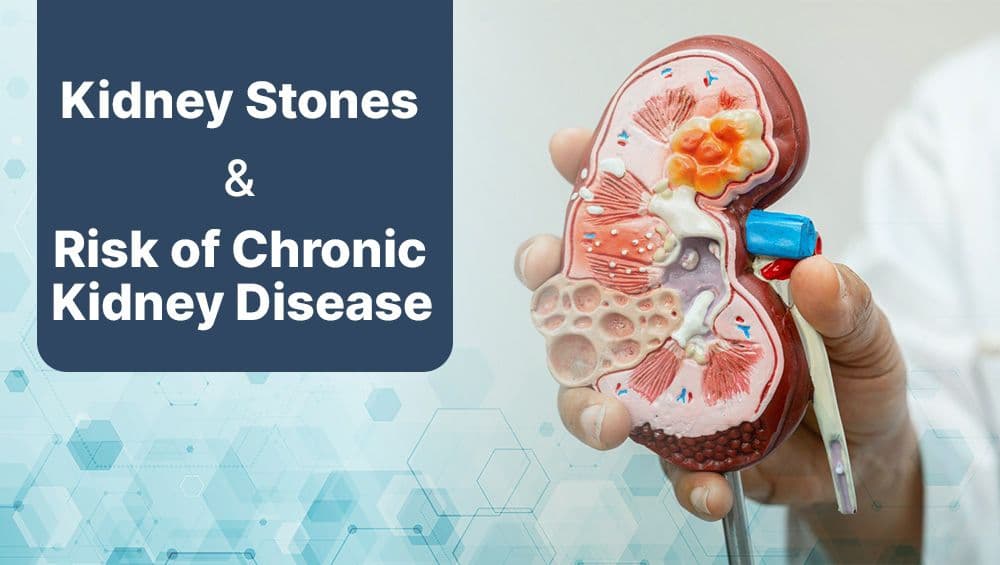
While kidney stones (renal calculi) are often thought of as an acute, sudden health issue characterized by intense pain, clinical evidence reveals that they can have long-term implications for overall renal function.
Repeated stone formation, severe urinary obstructions, and chronic internal inflammation can contribute to progressive kidney tissue damage. Over time, unmanaged stone disease can elevate the risk of developing Chronic Kidney Disease (CKD) and long-term renal impairment.
In this guide, we explore how kidney stones affect renal health over time, key warning signs of kidney strain, and effective strategies to preserve long-term kidney function.
How Kidney Stones Can Impact Long-Term Kidney Function
Not every person with a kidney stone will develop chronic kidney disease, but unaddressed or recurrent stones can damage the kidneys through several distinct pathways:
- Urinary Tract Obstruction: When a stone becomes lodged in the ureter or renal pelvis, urine backs up into the kidney, causing elevated internal pressure (hydronephrosis). Even a few days of complete or severe obstruction can cause irreversible nephron loss and tissue damage.
- Recurrent Infections and Inflammation: Stones, particularly infection-driven struvite stones, act as chronic harbors for bacteria. Recurrent urinary tract infections (UTIs) lead to renal scarring and fibrosis, decreasing the kidney's filtration efficiency over time.
- Chronic Renal Scarring (Fibrosis): Constant friction, mechanical irritation, and localized swelling from large or recurrent stones cause renal tissue scarring, gradually impairing function.
- Cumulative Damage from Recurrent Stones: Patients who experience multiple stone episodes over decades face cumulative microscopic damage to their renal parenchyma if underlying metabolic risk factors are left unmanaged.
High-Risk Conditions That Exacerbate CKD Progression
The risk of progressing from recurrent kidney stones to chronic kidney disease is significantly higher in individuals with co-existing metabolic conditions, including:
- Uncontrolled diabetes mellitus or hypertension.
- Chronic obesity or metabolic syndrome.
- A family history of progressive renal disease or stone disorders.
- Rare genetic metabolic conditions, such as primary hyperoxaluria or cystinuria.
- Monitored solitary kidneys (where preserving remaining nephrons is critical).
Warning Signs of Kidney Strain You Should Not Ignore
If you have a history of kidney stones, monitor for symptoms that may indicate urinary obstruction or compromised renal function:
- Persistent, deep ache in the lower back or flank area.
- Pink, red, or brownish urine (hematuria).
- Painful, burning, or frequent urination (dysuria).
- Noticeable decrease in overall daily urine volume.
- Unexplained fluid retention or swelling (edema) in the ankles, feet, or legs.
- Persistent, unexplained fatigue, lethargy, or nausea.
Preventive Strategies to Safeguard Renal Health
Taking proactive steps reduces both stone recurrence and long-term renal strain:
- Maintain Consistent Hydration: Drink 2.5 to 3 liters of water daily to keep urine diluted and flush out stone-forming minerals before they crystallize.
- Adopt a Kidney-Friendly Diet: Reduce excess sodium intake below 2,300 mg daily to limit calcium excretion. Pair high-oxalate foods with dietary calcium so oxalates bind in the gut rather than filtering into the kidneys. Review detailed dietary guidelines on how to avoid kidney stones recurrence.
- Control Underlying Health Conditions: Effectively managing blood pressure, blood glucose, and body weight mitigates additional strain on the kidney's delicate vascular networks.
- Schedule Routine Medical Monitoring: Regular renal ultrasounds, non-contrast CT scans, blood creatinine tests, and urine evaluations ensure early detection of silent obstructions before permanent damage occurs.
Modern, Incision-Free Surgical Options
When a kidney stone causes obstruction or cannot pass naturally, prompt removal is essential to protect renal tissue. Modern endourology offers safe, 100% incision-free surgical solutions:
- Retrograde Intrarenal Surgery (RIRS): An endoscopic procedure using an ultra-thin, flexible ureteroscope and high-precision laser energy to pulverize stones through natural urinary passages without cuts or scars.
- FANS-RIRS (Suction Laser Surgery): An advanced variant using active vacuum suction to continuously clear stone dust and fluid in real time. This maintains low pressure inside the kidney, drastically reducing post-operative infection risks and fever. Learn more in our detailed guide to FANS-RIRS suction laser surgery.
- Temporary DJ Stent Placement: Internal placement of a DJ stent keeps the ureter open, facilitating urine drainage and protecting tissue health during recovery.
Consult Top Kidney Stone Specialist Dr. Deepanshu Gupta in Gurgaon
Protecting long-term kidney health requires early diagnosis, expert metabolic evaluation, and precision treatment for active stone disease.
Dr. Deepanshu Gupta at Cure Stone is a leading endourologist in Gurgaon and Delhi NCR with extensive clinical experience, having successfully performed over 9,500 endoscopic procedures. Specializing in radiation-free (fluoroscopy-free) RIRS, high-efficiency FANS RIRS suction laser surgery, and Mini-PCNL, Dr. Gupta provides comprehensive endourological care aimed at complete stone clearance and long-term renal preservation.
Don't let recurrent kidney stones compromise your long-term health. Book a consultation with Cure Stone today to evaluate your kidney health!
Frequently Asked Questions (FAQs)
Can a single kidney stone cause permanent kidney damage?
A single small stone that passes quickly rarely causes permanent damage. However, if a stone completely blocks urine flow for weeks without treatment, the resulting pressure can cause permanent localized tissue damage.
How do I know if a kidney stone is blocking my kidney?
Severe, unremitting flank pain, vomiting, a sudden drop in urine output, or high fever with chills are strong indicators of an obstructive kidney stone requiring immediate medical attention.
Is RIRS safe for patients with compromised kidney function?
Yes. RIRS is 100% incision-free, causes minimal tissue trauma, and does not require intravenous contrast dyes, making it an excellent option for preserving delicate kidney tissue.
Have Questions About This Topic?
Get a personalized consultation at Cure Stone Hospital, Sector 52, Gurgaon.
Book Consultation