Best RIRS in Gurgaon: The Ultimate Kidney Stone Removal
Kidney stones are often difficult to endure and can hamper one’s lifestyle and health significantly if not treated properly. Retrograde Intrarenal Surgery (RIRS) is relatively new in the field of medicine but it is a practically effortless and effective method of treating kidney stones.
Kidney stones can cause severe pain, disrupt daily life, and lead to serious kidney complications if left untreated. While traditional surgical approaches involved open cuts or keyhole entries, Retrograde Intrarenal Surgery (RIRS) has revolutionized kidney stone removal.
RIRS is a 100% incision-free, endoscopic procedure that uses high-precision laser technology to fragment kidney stones through natural urinary pathways, offering patients in Gurgaon a fast, safe, and virtually painless path to complete stone clearance.
In this guide, we break down how RIRS works, its key clinical advantages, recovery expectations, and preventive steps to maintain long-term kidney health.
What Is RIRS Treatment?
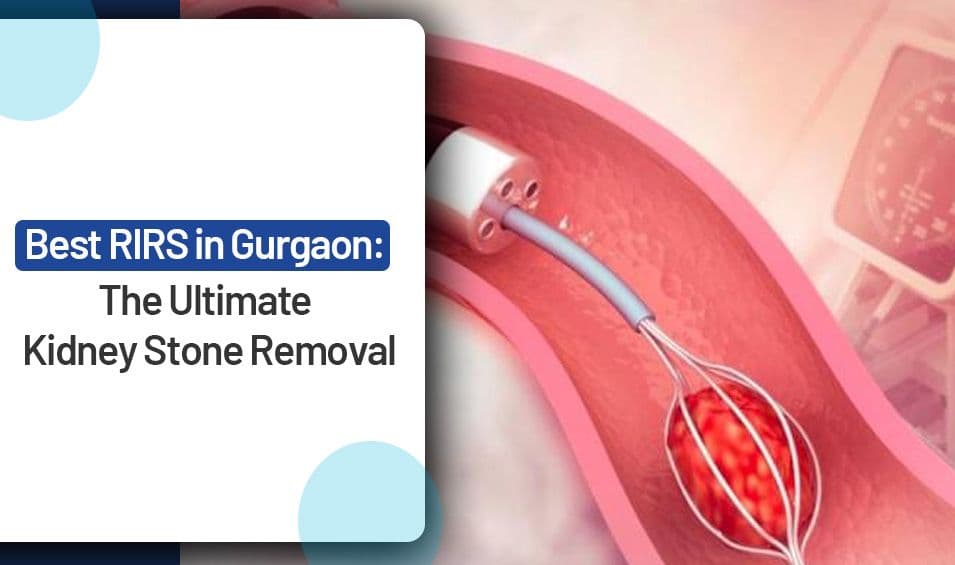
Retrograde Intrarenal Surgery (RIRS) is an advanced endourological technique designed to treat kidney stones located inside the renal pelvis or calyces.
During RIRS, an ultra-thin, flexible ureteroscope equipped with a high-definition video camera is navigated through the urethra and bladder, moving up into the ureter and directly into the kidney. Once the stone is located, a high-power Holmium or Thulium Fiber laser pulverizes it into micro-dust and tiny, passable fragments.
Key Advantages of RIRS
- Zero Incisions or Scars: Done entirely through natural urinary passages—no external cuts, punctures, or stitches required.
- Minimal Post-Operative Pain: Significantly less tissue trauma compared to traditional keyhole PCNL or open surgery.
- Rapid Recovery: Performed as an ambulatory daycare procedure; most patients return home the same day or within 24 hours.
- High Success Rate: Delivers excellent single-session stone clearance for stones up to 2 cm (and up to 2.5 cm with advanced suction technology).
- Safe for High-Risk Patients: Ideal for patients with bleeding disorders, those taking blood thinners, elderly individuals, or patients with solitary kidneys.
Step-by-Step RIRS Procedure Overview
1. Pre-Procedure Diagnostic Evaluation
Before surgery, a non-contrast CT scan (NCCT KUB), blood tests, and urine routine tests are performed to accurately map the stone's size, density, and location, ensuring an optimized surgical strategy.
2. Surgical Execution
Under short general or regional anesthesia, the flexible endoscope is introduced. The high-precision laser breaks the stone down into fine dust. Larger pieces are extracted using microscopic nitinol retrieval baskets, while fine dust is allowed to flush out naturally or is actively vacuumed out.
3. Post-Operative Stent Placement (Optional)
A temporary internal DJ stent may be placed in the ureter to ensure smooth urine flow and prevent localized swelling. The stent is typically removed during a brief, 5-minute outpatient visit within 1 to 2 weeks.
Advanced Evolution: FANS-RIRS (Suction Laser Surgery)
To further enhance standard RIRS, modern endourology utilizes FANS-RIRS (Flexible and Navigable Suction RIRS):
- Active Real-Time Vacuuming: An integrated suction sheath continuously vacuums out fluid, stone dust, and fragments as the laser breaks the stone, leaving zero residual debris behind.
- Low Intrarenal Pressure Control: Active suction maintains safe, low pressure inside the kidney, drastically reducing the risk of post-operative fever and urinary tract infections (UTIs).
- Enhanced Clearance: Allows experienced endourologists to clear larger stone burdens (up to 2.5 cm) without requiring keyhole surgery.
Recovery Guidelines for a Smooth Healing Process
To ensure a fast, complication-free recovery following RIRS:
- Hydrate Aggressively: Drink 2.5 to 3 liters of water daily to maintain pale, clear urine and assist in flushing out residual micro-dust.
- Gradual Physical Activity: Gentle walking around your home is encouraged starting on Day 1 to promote blood flow. Refrain from heavy weightlifting (> 5 kg) or high-impact exercise for 2 to 3 weeks.
- Manage Mild Symptoms: Mild burning during urination (dysuria) or slightly pink-tinted urine (hematuria) are normal during the first 48 to 72 hours and subside quickly.
- Complete Prescribed Medications: Take all prescribed antibiotics and pain relievers as directed by your urologist.
Essential Kidney Stone Prevention Tips
Preventing future stone recurrence relies on simple, long-term lifestyle habits:
- Maintain High Water Intake: Drink sufficient fluids throughout the day to prevent urine from becoming concentrated.
- Incorporate Natural Citrate: Drink fresh lemon water daily—natural citrate binds with urinary calcium, inhibiting new stone crystallization.
- Limit Sodium & Dietary Oxalates: Lower salt intake and balance oxalate-rich foods (spinach, nuts, chocolate) with food-based calcium (yogurt, milk) so they bind in the gut rather than the kidneys.
- Moderate Animal Protein Intake: Excessive red meat consumption elevates urinary uric acid levels, increasing stone formation risks.
Consult Top RIRS Specialist Dr. Deepanshu Gupta in Gurgaon
Achieving complete, pain-free stone clearance requires experienced hands and access to state-of-the-art endourological technology.
Dr. Deepanshu Gupta at Cure Stone is a leading endourologist in Gurgaon with extensive clinical expertise, having successfully performed over 9,500 endoscopic procedures. Specializing in advanced, incision-free techniques including radiation-free (fluoroscopy-free) RIRS, high-efficiency FANS RIRS suction laser surgery, and Mini-PCNL, Dr. Gupta tailors every treatment plan to ensure maximum stone clearance with zero pain and rapid recovery.
Don't let kidney stone pain affect your daily routine. Book a consultation with Cure Stone today for an expert evaluation!
Frequently Asked Questions (FAQs)
How long does it take to recover after RIRS surgery?
Most patients go home the same day or within 24 hours. You can resume light walking immediately and return to regular office work within 2 to 3 days.
Is RIRS better than open or keyhole kidney stone surgery?
For stones up to 2 cm (and up to 2.5 cm with FANS suction), RIRS is superior because it requires zero external incisions, causes significantly less pain, and allows for a much faster recovery compared to open or keyhole PCNL surgery.
How is a DJ stent removed after RIRS?
A temporary DJ stent is removed during a quick, 5-minute outpatient procedure using local anesthesia jelly. It is simple, virtually painless, and requires no hospital admission.
Have Questions About This Topic?
Get a personalized consultation at Cure Stone Hospital, Sector 52, Gurgaon.
Book Consultation