Blood in Urine After RIRS: How Long Is It Normal?
Pink or red urine after RIRS can be part of recovery. Learn how long mild bleeding may last, how a DJ stent affects it, and which warning signs need urgent care.
You have come home after RIRS and the toilet water looks pink or red. It is unsettling, especially when the stone has supposedly been treated. The colour alone does not tell you whether the recovery is going well; the amount of bleeding, whether it is improving, and how you feel matter more.
Short answer: A small amount of blood in urine is common for a few days after RIRS or ureteroscopy. A DJ stent can also cause intermittent pink urine, particularly after activity. Bleeding that becomes heavy, persists instead of improving, forms clots, or comes with fever, severe pain or trouble passing urine needs prompt medical advice. Follow the discharge instructions from your own surgeon if they differ from general guidance.
This guide helps you separate an expected recovery symptom from a reason to call the treating team.
Why does urine look bloody after RIRS?
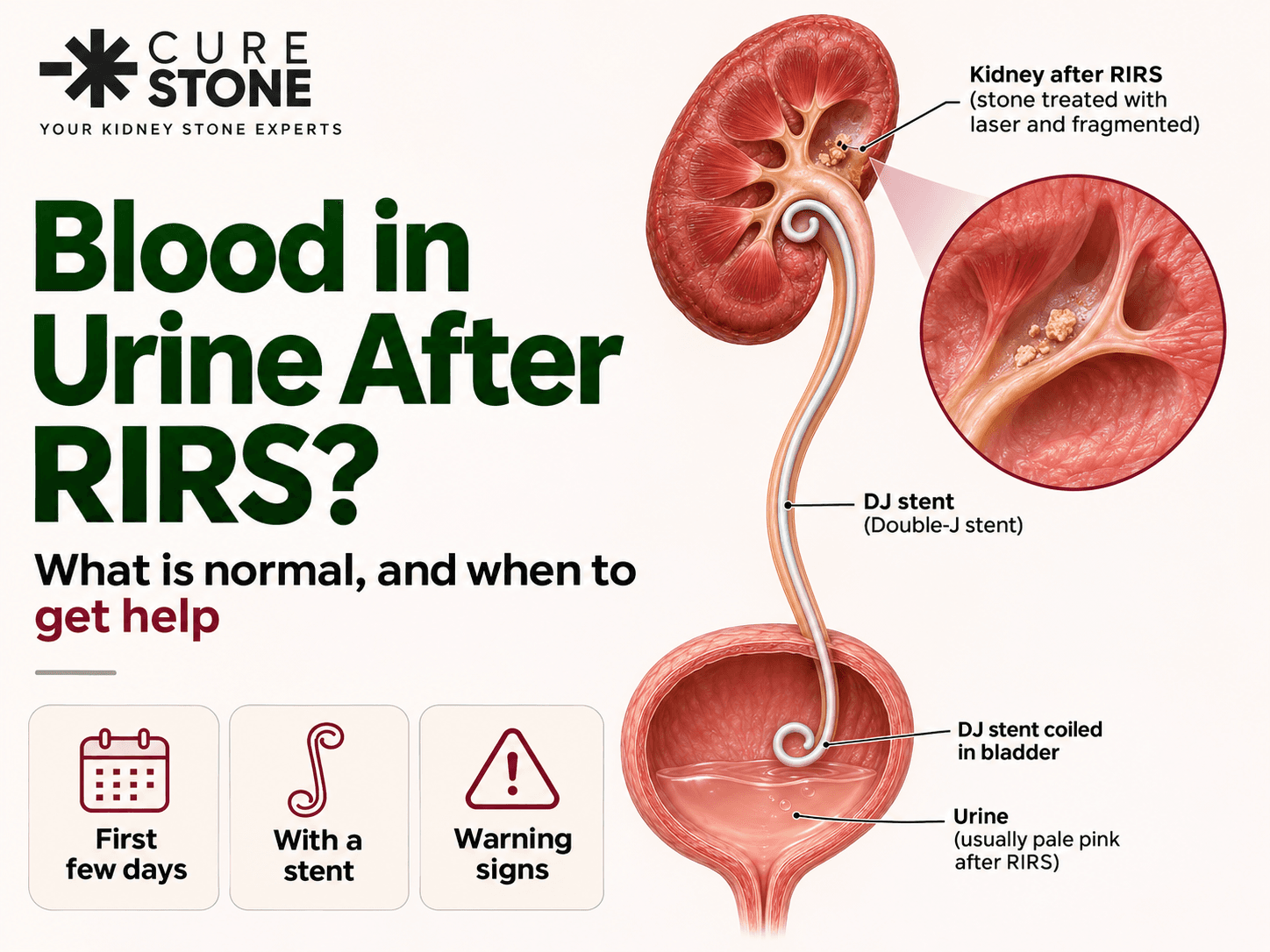
RIRS uses a thin flexible telescope passed through the urinary passage and up to the kidney. Laser treatment breaks the stone, and the instruments can irritate the lining of the kidney, ureter and bladder. Small stone fragments may pass afterwards. These effects can cause temporary bleeding even when there was no external cut. How RIRS is performed explains the procedure.
If a DJ stent was placed, the tube can rub against the urinary tract and cause urgency, discomfort and occasional blood-tinged urine until it is removed. The presence of a stent does not make every episode of bleeding harmless.
How long is blood in urine normal after RIRS?
NHS ureteroscopy guidance describes mild blood in urine for a few days as common. There is no exact day on which every person's urine must become clear. The stone's size, the extent of treatment, a stent, medicines that affect clotting and activity all change the course. What matters is the trend: light bleeding that settles is different from worsening bleeding.
| What you notice | Sensible next step |
|---|---|
| Light pink urine during the first few days, gradually clearing | Follow your discharge advice and monitor the trend. |
| A little pink urine after activity while a stent is in place | Rest, follow your fluid instructions and tell your team if it keeps recurring or worsens. |
| Urine becoming more deeply red or bleeding not improving | Contact the treating urology team promptly. |
| Clots, inability to pass urine, fever or severe pain | Seek urgent medical assessment. |
Do not use a colour chart alone to judge blood loss. A small amount of blood can colour a lot of urine. Your symptoms and whether you can pass urine are more important.
Does a DJ stent make bleeding more likely?
It can. A temporary stent keeps the ureter draining while swelling settles, but it may irritate the bladder and ureter. Some people notice more pink urine after walking or other activity. Symptoms may fluctuate until removal. If the bleeding is clearly increasing, you feel unwell, or you are passing clots, contact the team rather than assuming the stent explains it.
Know the planned removal date. What happens if a stent is left in too long explains why follow-up matters. Our travel guide for people with a DJ stent also covers how to plan care if you will be away.
What should you do at home?
Follow the fluid advice on your discharge papers. Many aftercare leaflets recommend drinking more than usual for a short period, but the right amount differs if you have heart or kidney conditions or a fluid restriction. Do not force large volumes if your clinician has told you to limit fluids.
Take prescribed medicines exactly as directed. If you use aspirin, warfarin, apixaban or another medicine that affects bleeding, follow the specific restart plan given by the surgical team; do not stop or restart it on your own because the urine looks pink. Rest if activity worsens the bleeding and avoid heavy exertion until your team says it is safe. Walking after RIRS covers a gentler return to activity.
Keep the discharge summary and the treating team's number handy. If you need another hospital, tell them when RIRS was done, whether a stent is present, and which medicines you take.
When should you seek help urgently?
Get prompt assessment for fever or chills, worsening or severe flank pain, feeling generally unwell, heavy or increasing bleeding, clots, or inability to pass urine. A blocked urinary tract or infection after a stone procedure needs timely care. If you cannot pass urine or you have severe symptoms, go to an emergency department rather than waiting for a routine appointment.
If bleeding continues beyond the expected recovery period or returns after it had fully settled, contact your urologist. It may still be related to the stent or healing, but other causes of blood in urine sometimes need investigation.
A practical way to judge the change
Ask: Is the urine getting clearer overall? Can I pass urine normally? Is pain controlled, and am I free of fever and chills? If the answer to any of these changes for the worse, speak to your treating team. For an individual review after stone treatment, contact Cure Stone.
Frequently Asked Questions
Is pink urine the day after RIRS normal?
Often yes. Mild blood-tinged urine for a few days is common after ureteroscopy. It should generally improve. Follow your own discharge instructions and ask for advice if bleeding increases or you feel unwell.
Can walking make my urine pink again?
Activity may make stent irritation more noticeable. Rest and follow your clinician's fluid advice. Recurrent or worsening bleeding should be discussed with the treating team.
Are blood clots normal after RIRS?
Do not dismiss clots, especially if they are large or you are struggling to pass urine. Contact your urology team promptly; inability to urinate needs urgent care.
What if blood is accompanied by fever?
Seek urgent medical assessment. Fever or chills after stone surgery can indicate an infection even if there is a stent in place.
Should I stop blood-thinning medication myself?
No. Contact the clinician who manages it and the surgical team. The risk of stopping a medicine may be serious, and the plan depends on why you take it and how much you are bleeding.
References
- Frimley Health NHS Foundation Trust. Ureteroscopy: recovery and red flags. Guidance on expected mild bleeding and when to seek help.
- Dorset County Hospital NHS Foundation Trust. Ureteroscopy for stone removal. Guidance on bleeding after surgery and worsening symptoms.
- Royal United Hospitals Bath NHS Foundation Trust. Ureteroscopic stone removal. Discharge advice on bleeding, pain, fever and stent follow-up.
Have Questions About This Topic?
Get a personalized consultation at Cure Stone Hospital, Sector 52, Gurgaon.
Book Consultation