
How is RIRS Performed? (A detailed Guide)
If you’re among the millions of people suffering from painful kidney stones, then you are likely to be looking for all possible ways to treat them. One the most innovative and efficient treatments used nowadays is Retrograde Intrarenal Surgery (RIRS) – an operation that provides a new approach to the treatment of kidney stones.
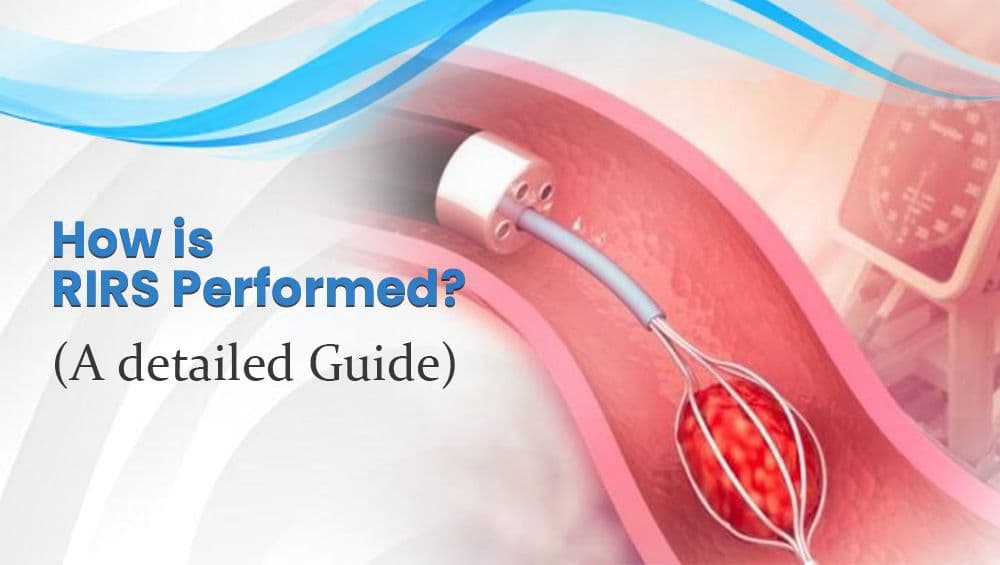
If you are among the millions of people suffering from painful kidney stones, then you are likely to be looking for all possible ways to treat them. One of the most innovative and efficient treatments used nowadays is Retrograde Intrarenal Surgery, an operation that provides a new approach to the treatment of kidney stones.
Unlike traditional methods, RIRS offers a more precise approach with significantly less discomfort and a faster recovery time. No more large incisions or lengthy hospital stays, just a quick and targeted solution to get you back on your feet sooner.
In this comprehensive guide, we will break down exactly how RIRS is performed, what sets it apart from other treatment options, and why it is rapidly becoming the primary procedure for kidney stone removal. If you are seeking a safe and effective treatment with minimal downtime, this could be the answer you have been waiting for. Let us explore how RIRS can offer you a smooth and successful path to relief.
What is RIRS Surgery?
Retrograde Intrarenal Surgery is a minimally invasive procedure used to treat kidney stones. Unlike traditional methods that require large incisions, RIRS is performed through a small tube inserted into the urinary tract, providing doctors with a direct path to the stones in the kidney.
The procedure involves using a specialized flexible scope to navigate through the urethra and bladder to the kidney. Once the stones are located, a laser is used to break them into smaller fragments that can easily be removed or passed naturally. Because of its minimal invasiveness, standard RIRS offers quicker recovery times, less pain, and a lower risk of complications compared to more invasive surgeries. However, modern urologists often prefer FANS RIRS which incorporates a suction sheath to instantly vacuum out the stone dust. It is especially effective for stones located in difficult to reach areas of the kidney.
How is RIRS Performed?
Retrograde Intrarenal Surgery is a precise and minimally invasive procedure designed to remove kidney stones without the need for large incisions. If you are wondering how is RIRS performed a detailed guide can help ease your nerves. Here is a step by step look at how it is performed:
- Preparation and Anesthesia: Before the procedure begins, you will be given general anesthesia to ensure you are completely relaxed and pain free during the surgery. A catheter may be inserted into your bladder to help empty it prior to the procedure.
- Accessing the Kidney: The surgeon will begin by inserting a thin and flexible ureteroscope through the urethra and bladder. The scope is gently guided into the ureter, which is the tube that connects the bladder to the kidney.
- Locating the Stone: Using the camera at the tip of the ureteroscope, the surgeon can view the kidney and identify the stone or stones. This real time imaging allows for precise navigation to the exact location of the stone, even in hard to reach areas.
- Fragmenting the Stone: Once the stone is located, the surgeon will use a laser fiber passed through the ureteroscope to break the stone into smaller fragments. This laser surgery for kidney stones is highly effective in fragmenting the stone into tiny pieces.
- Stone Removal: After the stone is broken down, the smaller fragments are either flushed out with saline or captured with a special tool and removed. In a FANS RIRS procedure, the fragments are actively suctioned out immediately. In some cases, a small stent might be placed temporarily in the ureter to help with drainage and healing.
- Completion and Recovery: After the stones are removed, the ureteroscope is carefully withdrawn. The procedure typically takes 45 minutes to an hour, depending on the size and location of the stones. You will be monitored as the anesthesia wears off, and most patients are able to go home the same day.
Can RIRS Remove All Kidney Stones?
FANS RIRS is a highly effective procedure for treating most types of kidney stones, but it may not be suitable for every case. Whether or not RIRS is the right choice depends on several factors, including the size, type, and location of the stones.
Here are the types of stones treated by RIRS:
- Calcium Oxalate Stones: These are the most common type of kidney stones. RIRS is highly effective at fragmenting and removing these stones, especially when they are located in difficult to reach parts of the kidney.
- Uric Acid Stones: RIRS is effective in treating uric acid stones as the laser can break them into smaller pieces. Additionally, uric acid stones are often more brittle, making them easier to fragment with the laser.
- Struvite Stones: These stones are typically associated with urinary tract infections and can also be treated with RIRS. However, in some cases, they may be larger and more complex, requiring additional methods or follow up procedures.
While RIRS can treat most kidney stones effectively, there are limitations where it may not be the best option:
- Very Large Stones: Stones that are too large, generally over three centimeters, may be difficult to remove using RIRS alone. For very large stones, other procedures like percutaneous nephrolithotomy may be recommended, as it offers more direct access to the massive stone burden.
- Multiple or Complex Stones: If a patient has multiple stones or large stone burdens in both kidneys, RIRS may require more than one session.
- Stones with Hard Mineral Content: Some stones, like cystine stones, can be very hard and resistant to laser fragmentation. In such cases, additional treatments may be necessary.
Trust Cure Stone for Expert FANS RIRS Surgery and Lasting Relief
When it comes to treating kidney stones, choosing the right surgeon can make all the difference. Dr. Deepanshu Gupta is a renowned urologist in Gurgaon known for his expertise in performing advanced FANS RIRS, offering patients a highly safe, incredibly effective, and completely incision free solution for kidney stone removal. With a strict focus on surgical precision and compassionate patient care, Dr. Gupta ensures not only the successful removal of your kidney stones but also provides a comprehensive metabolic plan to reduce your risk of recurrence. His mastery of advanced laser and suction techniques, combined with his in depth knowledge of urinary health, has earned him a trusted reputation for achieving lasting results. Whether you are dealing with stubborn stones or looking for a permanent solution to prevent future attacks, the personalized medical approach at Cure Stone ensures the best possible outcomes for your kidney health. Choose world class expertise and take the first step toward a totally stone free life by booking your consultation with Cure Stone today.
Frequently Asked Questions (FAQs)
Is a stent always needed after a FANS RIRS procedure?
In most cases, a temporary ureteral stent is placed to keep the ureter completely open and prevent any swelling from blocking your urine flow. The stent is usually removed in the clinic a few weeks after your surgery.
How long will I feel pain after an RIRS surgery?
Because FANS RIRS is performed entirely through natural pathways without making any cuts on your body, postoperative pain is extremely minimal. You might feel a mild burning sensation while urinating for the first couple of days, which is easily managed with oral medications.
Can I eat normally before my RIRS surgery?
No, you will be required to fast and avoid eating or drinking anything for at least eight hours before your procedure. This is a standard safety measure required for the general anesthesia.
How soon can I return to work after kidney stone removal?
Thanks to the minimally invasive nature of standard RIRS and FANS RIRS, most patients feel completely fine to return to desk jobs or light duties within two to three days after the procedure.
Have Questions About This Topic?
Get a personalized consultation at Cure Stone Hospital, Sector 52, Gurgaon.
Book Consultation