
Is Cranberry Juice Good for Kidney Stones?
Cranberry juice is a famous home remedy for UTIs, but did you know it can actually cause kidney stones? Learn which juices to avoid and what to drink instead.
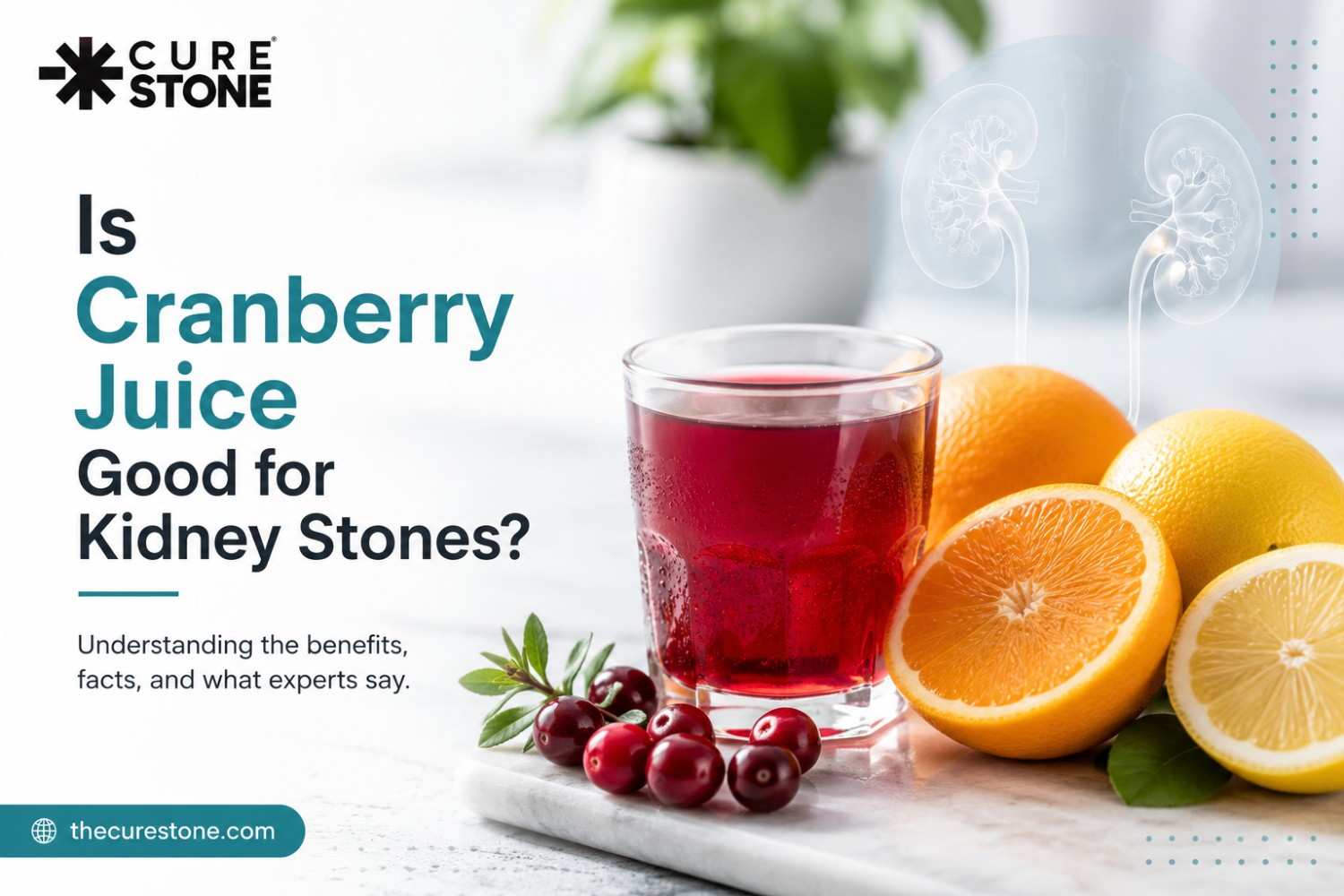
It happens all the time: a patient experiences a sudden, sharp twinge of pain in their lower back, or perhaps a persistent burning sensation while urinating. Assuming they are dealing with a severe urinary tract infection (UTI) or the early stages of a kidney stone, they panic, rush to the nearest grocery store, buy a large bottle of cranberry juice, and start drinking it by the gallon.
While cranberry juice is a fantastic, scientifically-backed home remedy for preventing UTIs, drinking it to flush out a kidney stone is one of the most common and potentially harmful, mistakes patients make. In fact, doing so can actually make your kidney stone situation much worse.
At Cure Stone, our urology experts frequently see patients who inadvertently accelerated their kidney stone growth by relying on the wrong internet remedies. In this comprehensive guide, we are going to break down the "Cranberry Juice Trap," explain the science behind why it happens, and tell you exactly what juices you should actually be drinking to protect your kidneys.
The Science: Why Cranberry Juice is Bad for Kidney Stones
The confusion among patients stems from a fundamental misunderstanding of how the urinary system works and the difference between infections and stones.
Many people believe that because cranberry juice "cleans" the urinary tract (it contains compounds that prevent E. coli bacteria from sticking to the bladder walls), it must also "clean" the kidneys by dissolving stones. This is entirely false. The mechanism of a bacterial infection is completely different from the mechanism of a kidney stone.
The danger of cranberry juice lies in a specific organic compound it contains in very high amounts: oxalates.
Over 80% of all diagnosed kidney stones are calcium oxalate stones. These stones form when there is too much calcium and too much oxalate in your urine, and not enough liquid to dilute them. The calcium and oxalates bind together, crystallize, and form hard deposits. By drinking large quantities of cranberry juice, you are actively flooding your kidneys with the exact building blocks needed to form a stone.
While a small glass of cranberry juice occasionally won't harm a healthy person with no history of urinary issues, a patient who is actively trying to pass a calcium oxalate stone or someone who is prone to recurring kidney stones should strictly avoid it.
Other Juices and Beverages to Avoid for Kidney Stones
Cranberry isn't the only beverage that can cause trouble. If you are prone to kidney stones or currently experiencing kidney stone pain, you should also limit or completely avoid the following:
- Grapefruit Juice: Multiple medical studies have shown that regular consumption of grapefruit juice can significantly increase the risk of kidney stone formation. While the exact chemical mechanism is still being studied, urologists strongly recommend avoiding it.
- Apple Juice: Dark, sugary apple juices (especially the processed, store-bought varieties) can increase the acidity of your urine. Furthermore, they lack the protective citrates found in other fruits, making them a poor choice for stone prevention.
- Tomato Juice: Tomatoes themselves are healthy, but commercial tomato juice is notoriously high in sodium (salt). High sodium intake forces the kidneys to excrete more calcium into the urine, which dramatically increases the risk of stone crystallization.
- Dark Colas and Sodas: While not a fruit juice, dark sodas are packed with phosphoric acid, which is strongly linked to the formation of kidney stones.
The Best Juices for Kidney Stones: Focus on Citrate
If cranberry juice is out, what should you be drinking? The answer lies in a protective compound called citrate.
Citrate is a natural stone inhibitor. When you consume it, it enters your urine and actively binds with free-floating calcium. This prevents the calcium from binding with oxalates to form stones. Furthermore, citrate helps make the urine more alkaline (less acidic), which is absolutely crucial for preventing uric acid stones.
The very best juices for kidney stone prevention are citrus-based:
- Lemon Juice (Nimbu Paani): This is the gold standard for kidney health. Freshly squeezed lemon water provides a massive, highly effective dose of natural citrate. Urologists generally recommend consuming the juice of two fresh lemons mixed in a large pitcher of water throughout the day.
- Orange Juice: Another excellent source of citrate. However, because oranges are naturally much sweeter than lemons, you should be mindful of the natural sugar content, as excess sugar can be counterproductive.
- Mosambi (Sweet Lime) Juice: A fantastic, slightly less-acidic alternative to lemon that is very popular, easy to find, and highly effective for patients in India.
Important Note: Always opt for fresh-squeezed juices made at home. You must avoid adding refined white sugar to your lemon or mosambi juice, as high sugar intake can increase calcium excretion and raise your stone risk.
Don't Forget the Ultimate Liquid: Plain Water
While citrus juices are excellent supplements, plain water remains the absolute foundation of kidney stone management. The goal is to produce at least 2 to 2.5 liters of urine a day, which means you need to drink roughly 3 liters of water daily. Diluted urine is clear or pale yellow; if your urine is dark yellow, you are not drinking enough, and your risk of stone crystallization is high.
When Home Remedies and Juices Aren't Enough
While drinking plenty of water and citrate-rich juices is an excellent strategy for preventing future stones, they will not dissolve a large, already-formed calcium oxalate stone that is blocking your ureter.
If you are experiencing severe flank pain, nausea, vomiting, fever, or blood in your urine, no amount of juice will solve the problem. These are signs of an obstruction or infection, and you need immediate medical intervention, usually starting with an ultrasound or CT scan to locate the stone.
Depending on the exact size, density, and location of the stone, modern urology offers completely minimally invasive, laser-based treatments. Procedures like RIRS (Retrograde Intrarenal Surgery) allow our specialized surgeons to enter the kidney using a flexible, microscopic tube and dust the stone into powder using an advanced laser. This means no cuts, no bleeding, and you can usually go home the very next day.
Don't fall into the Cranberry Juice Trap and accidentally make your condition worse. If you suspect you have a kidney stone, book a consultation with Dr. Deepanshu Gupta today to get an accurate diagnosis and a customized, pain-free treatment plan.
Frequently Asked Questions (FAQs)
Is cranberry juice good for kidney stones?
No. Cranberry juice is exceptionally high in oxalates, which can actually increase your risk of forming calcium oxalate kidney stones. While it is widely recommended for preventing UTIs, it is strictly advised against for kidney stone patients.
What is the fastest way to dissolve a kidney stone?
You cannot quickly dissolve a calcium oxalate stone with diet or juices alone. Very small stones (under 4mm) may pass naturally with heavy hydration (water and lemon juice) and prescribed medications (like Alpha-blockers) that relax the ureter. Larger stones require rapid laser removal procedures like RIRS or URSL.
Can I drink alcohol or beer to pass a kidney stone?
No. This is another highly common myth. Alcohol acts as a diuretic that dehydrates the body. While it makes you urinate more initially, it ultimately makes your urine more concentrated and highly acidic, potentially worsening the stone situation.
How much lemon juice should I drink for kidney stones?
For effective prevention, drinking a half-cup (about 4 ounces) of pure, concentrated lemon juice diluted in water throughout the day is generally recommended by urologists to significantly increase your urine citrate levels.
Will I feel better immediately after drinking lemon juice if I have a stone?
No. Lemon juice prevents new stones from forming by altering the chemical composition of your urine. It is not an immediate pain reliever for a stone attack that is currently happening. If you are in acute pain, you need proper medical pain management and urological evaluation.
Have Questions About This Topic?
Get a personalized consultation at Cure Stone Hospital, Sector 52, Gurgaon.
Book Consultation