Kidney Stones In Pregnant Women: What To Do
Pregnancy is frequently considered a beautiful, transformative experience — but it doesn’t come without its share of challenges. One surprising and agonizing obstacle some women experience during pregnancy is kidney stones. They are rare, but can be quite distressing, and the diagnosis should be handled in a thoughtful manner.
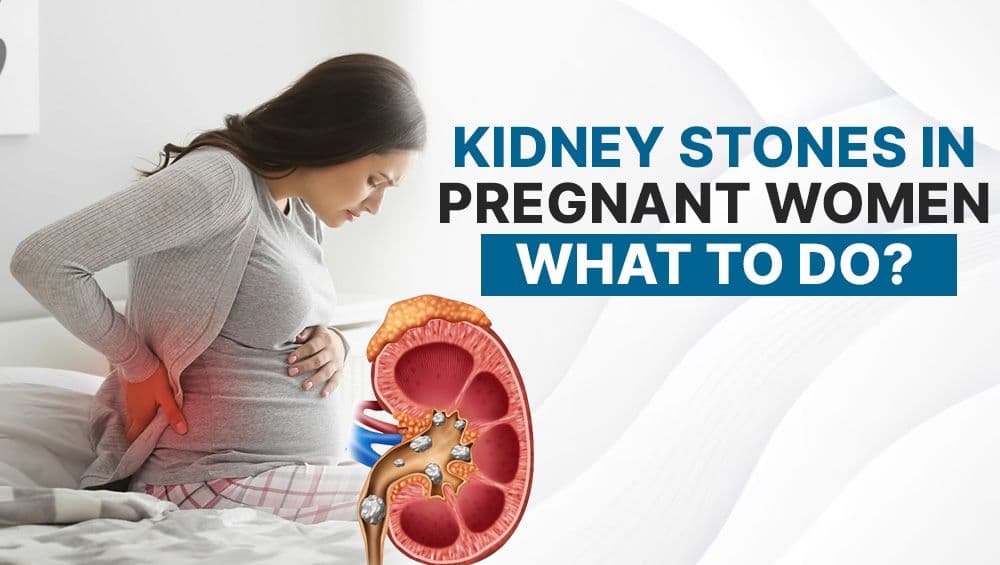
Pregnancy is a transformative journey, but it can present unexpected health challenges. Among these, developing a kidney stone during pregnancy—though relatively uncommon, affecting roughly 1 in 1,500 to 3,000 pregnant women—can cause significant distress and severe pain.
Because managing a kidney stone during pregnancy requires protecting both maternal comfort and fetal well-being, diagnosis and treatment demand specialized, highly coordinated urological and obstetric care.
Why Does Pregnancy Increase Kidney Stone Susceptibility?
Pregnancy brings physiological and anatomical changes that can predispose women to crystal formation and stone development:
- Hormonal Influences (Progesterone): Elevated progesterone levels relax smooth muscle tissue, slowing ureteral peristalsis (movement). This causes urine to flow more slowly, increasing urinary stasis and giving dissolved minerals more time to crystallize.
- Increased Urinary Calcium Excretion: Glomerular filtration rate (GFR) increases during pregnancy, leading to higher calcium excretion in urine, which can react with oxalate or phosphate.
- Mechanical Compression: As the uterus expands, it exerts pressure on the ureters (particularly on the right side), leading to physiological hydronephrosis (swelling of the kidney).
- Dehydration: Morning sickness, nausea, and vomiting during the first trimester can cause rapid fluid loss, leading to hyper-concentrated urine.
Common Symptoms of Kidney Stones in Pregnant Women
Differentiating kidney stone pain from typical pregnancy-related discomfort is vital. Key symptoms include:
- Acute Flank or Lower Back Pain: Sharp, severe pain originating below the ribs and radiating toward the lower abdomen or groin.
- Painful or Burning Urination (Dysuria): Localized irritation in the lower urinary tract.
- Hematuria (Blood in Urine): Pink, reddish, or tea-colored urine caused by stone movement. Read our detailed guide on blood in urine (hematuria).
- Urinary Urgency and Frequency: A persistent need to empty the bladder.
- Nausea and Vomiting: Gastrointestinal distress triggered by severe renal pain.
- Fever and Chills: An urgent warning sign indicating an active kidney or urinary tract infection that requires immediate medical intervention.
Safe Diagnostic Methods During Pregnancy
Standard imaging for kidney stones, such as high-dose non-contrast CT scans, involves ionizing radiation and is generally avoided during pregnancy unless absolutely necessary. Instead, diagnostic mapping relies on radiation-free modalities:
- Renal and Pelvic Ultrasound: The primary, radiation-free diagnostic tool used to visualize stone location, evaluate kidney swelling (hydronephrosis), and check fetal health.
- Non-Contrast MRI: Utilized if ultrasound findings are inconclusive and detailed anatomical visualization is needed without radiation exposure.
- Urinalysis & Culture: Checks for red blood cells, mineral crystals, and bacterial infection.
- Blood Panels: Monitors overall kidney function, inflammatory markers, and serum electrolytes.
Treatment Strategies: Conservative Care vs. Intervention
Managing kidney stones during pregnancy prioritizes conservative management whenever possible, reserving active surgical interventions for complicated cases.
Conservative Management
Over 70% to 80% of small stones in pregnant women pass spontaneously with conservative care:
- Controlled fluid hydration under medical guidance.
- Safe, pregnancy-approved pain relief managed in coordination with an obstetrician.
- Antibiotic coverage if a secondary urinary tract infection is detected.
When Is Intervention Necessary?
If a stone causes intractable pain, persistent vomiting, severe hydronephrosis, or an active infection (which carries a risk of premature labor), active intervention is required:
- Ureteral Stent Placement or Nephrostomy: Placing a temporary double-J (DJ) stent relieves urinary obstruction and pain until post-delivery definitive care.
- Ureteroscopy (URS) with Laser Dusting: A safe, minimally invasive endoscopic procedure performed through natural urinary passages under regional anesthesia, avoiding abdominal incisions and radiation exposure.
Essential Prevention Tips During Pregnancy
- Maintain Adequate Hydration: Drink 8 to 10 glasses (2.5 to 3.0 liters) of water daily to keep urine clear and dilute.
- Balance Sodium and Oxalate: Avoid excess dietary salt and balance high-oxalate foods (like spinach and nuts) with normal dietary calcium.
- Avoid Unsupervised Supplements: Take calcium and vitamin supplements only as prescribed by your obstetrician.
- Promptly Treat UTIs: Report any burning or urinary discomfort immediately to prevent ascending kidney infections.
Expert Urological Care with Dr. Deepanshu Gupta in Gurgaon
Managing urological issues during pregnancy requires specialized expertise, precise diagnostic judgment, and close collaboration with your obstetric team.
Dr. Deepanshu Gupta at CureStone is a trusted endourologist in Gurgaon and Delhi NCR, holding an MCh in Urology (Rank 1) with over 12 years of clinical experience across 9,500+ successful endoscopic procedures. Dr. Gupta provides tailored, ultra-safe urological management for complex cases, focusing on:
- Radiation-Free Diagnostic Protocols: Utilizing advanced, radiation-free ultrasound and MRI-guided diagnostic pathways.
- Precision Laser Ureteroscopy (URS): Minimally invasive, incision-free stone management when urgent intervention is necessary. Learn about advanced laser approaches in our guide on FANS RIRS suction laser surgery.
- Multidisciplinary Coordination: Working closely alongside your obstetrician and anesthesiologist to prioritize maternal comfort and fetal safety.
- Post-Delivery Recurrence Prevention: Complete 24-hour urine metabolic evaluation and personalized dietary guidance following delivery. Read our guide on how to avoid kidney stone recurrence.
Ensure safe, expert urological care during your pregnancy—book a consultation with Dr. Deepanshu Gupta today!
Frequently Asked Questions (FAQs)
Can a kidney stone during pregnancy harm the baby?
A kidney stone itself does not directly harm the baby. However, unmanaged severe pain, dehydration, or an untreated kidney infection can trigger uterine contractions or premature labor. Timely medical care prevents these complications.
Is ultrasound completely safe for diagnosing kidney stones in pregnancy?
Yes. Ultrasound uses acoustic sound waves rather than ionizing radiation, making it completely safe for both mother and developing fetus throughout all trimesters.
Are ESWL or PCNL procedures safe during pregnancy?
No. Extracorporeal Shock Wave Lithotripsy (ESWL) and Percutaneous Nephrolithotomy (PCNL) are strictly contraindicated during pregnancy due to shockwave and radiation risks. Minimally invasive Ureteroscopy (URS) or temporary stent placement are the preferred, safe interventions when treatment cannot wait until after delivery.
Have Questions About This Topic?
Get a personalized consultation at Cure Stone Hospital, Sector 52, Gurgaon.
Book Consultation