What Is the Last Stage of Passing a Kidney Stone?
No doubt, kidney stones are among the most common medical conditions. The formation of these stones in the kidney is highly painful and can happen to a large number of people globally. The deposits may take the form of minute grains or may develop into larger pebble-like stones in addition to varying in size.
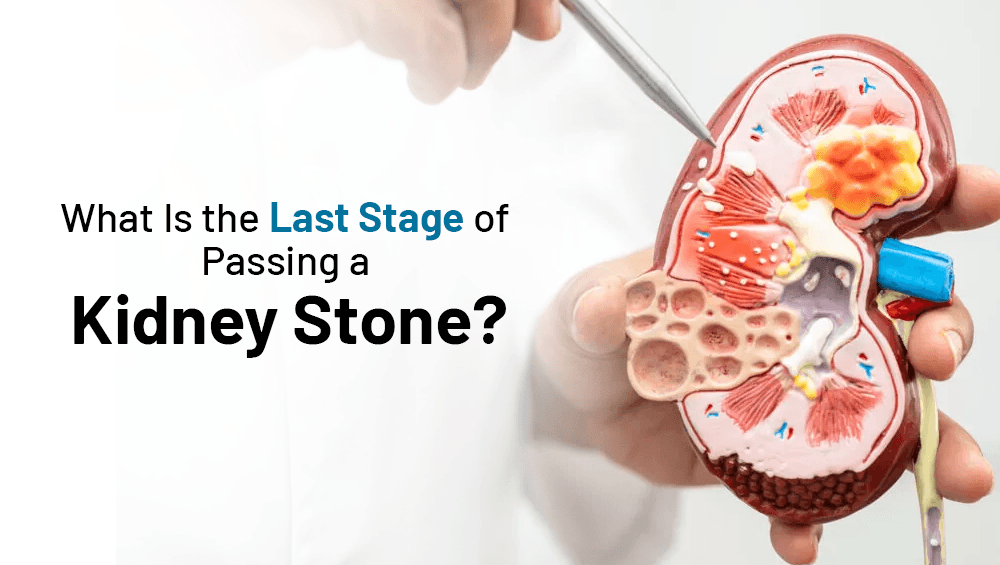
Kidney stones are among the most common and painful urological conditions worldwide. Formed when minerals like calcium, oxalate, and uric acid become overly concentrated in urine, these hard deposits vary in size from microscopic grains to large pebbles.
When a kidney stone travels through the urinary system, it moves through four distinct stages. The fourth and final stage when the stone passes from the bladder through the urethra and out of the body is the ultimate sign that relief is near.
Understanding the symptoms of this final stage, how to manage discomfort, and when to seek medical evaluation can help ensure a smooth, safe outcome.
Understanding the 4 Stages of Passing a Kidney Stone
- Formation in the Kidney: Concentrated minerals crystallize and coalesce into a stone inside the kidney.
- Movement Into the Ureter: The stone leaves the kidney and travels down the ureter. This stage typically causes severe, sharp flank pain (renal colic).
- Entry Into the Bladder: Once the stone enters the bladder, the sharp flank pain usually subsides significantly as the blockage clears.
- Final Passage Through the Urethra: The stone moves from the bladder through the urethra during urination to exit the body.
Symptoms of the Final Stage of Passing a Stone
While moving a stone through the urethra produces much less pain than passing through the ureter, mild to moderate symptoms are still normal:
- Burning Sensation During Urination: Irritation caused by the stone contacting urethral tissue can create a mild burning feeling (dysuria).
- Frequent or Urgent Need to Urinate: As the stone settles near the bladder neck or moves through the urethra, it stimulates nerve endings, prompting frequent urges to pee.
- Mild Pelvic Pressure or Soreness: Patients often feel localized pressure or a dull ache in the lower abdomen or groin area.
- Tinged or Cloudy Urine: Minor mucosal scratches may cause a light pink tint in the urine (hematuria).
- Immediate, Complete Relief: The moment the stone exits the urethra, painful symptoms instantly disappear.
How to Ease Discomfort During the Final Stage
- Maintain High Hydration: Drink 2.5 to 3 liters of water daily (at least 8 to 10 large glasses). High fluid velocity creates the pressure needed to sweep the stone out smoothly.
- Never Hold Your Urine: Urinate immediately when you feel the urge to maintain steady flow and prevent urinary backpressure.
- Use a Urine Strainer: Catching the stone using a mesh strainer allows your urologist to analyze its chemical composition and prescribe specific dietary changes to prevent recurrence.
- Apply Local Heat: Placing a heating pad over your lower abdomen relaxes pelvic floor muscles, alleviating local spasms and pressure.
- Take Prescribed Medication: Use short-term oral pain relievers or alpha-blockers as recommended by your physician to relax the urinary passage.
When to Seek Immediate Medical Attention
While small stones (under 4 mm) often pass on their own, larger stones can stall or cause dangerous blockages. Consult a urologist promptly if you experience:
- Unbearable or worsening pain unresponsive to medication.
- High fever or chills, which signal a severe urinary infection.
- Complete inability to pass urine (acute urinary retention).
- Persistent nausea or vomiting that prevents liquid intake.
Modern Advanced Options for Stuck or Large Stones
If a kidney stone is too large to pass naturally (greater than 6 mm) or remains stuck in the urinary tract, advanced, 100% incision-free treatments offer safe, rapid removal:
- Retrograde Intrarenal Surgery (RIRS): A flexible fiber-optic camera (ureteroscope) is guided through natural pathways to pulverize the stone with high-precision lasers, leaving zero surgical cuts.
- FANS RIRS (Suction RIRS): An upgraded laser technique featuring an integrated suction sheath that instantly vacuums out stone dust during the surgery, delivering higher stone clearance rates and lower infection risks.
Consult Top Kidney Stone Specialist Dr. Deepanshu Gupta
For expert, personalized kidney stone care, consulting an experienced specialist ensures a safe recovery.
Dr. Deepanshu Gupta at Cure Stone is a leading endourologist in Gurgaon with extensive clinical expertise in advanced stone treatments. Utilizing state-of-the-art procedures like RIRS laser surgery and FANS RIRS suction techniques, Dr. Gupta provides compassionate, high-precision care designed for rapid recovery and long-term stone prevention.
Don't let persistent kidney stone pain disrupt your quality of life. Book a consultation with Cure Stone today to evaluate your treatment options!
Frequently Asked Questions (FAQs)
How long does it take for a stone to pass out of the bladder?
Once a small stone enters the bladder, it typically passes out through the urethra within 1 to 2 days, provided fluid intake remains high.
Can you feel a kidney stone coming out of the urethra?
Yes. Most patients feel a slight pinch, tickle, or sudden brief pressure at the tip of the urethra, followed by instant relief once the stone exits.
What happens if a stone gets stuck in the urethra?
If a stone becomes lodged in the urethra, urine flow will be obstructed, causing severe pain and difficulty peeing. This requires prompt evaluation by a urologist to safely dislodge or break down the stone using endoscopic tools.
Have Questions About This Topic?
Get a personalized consultation at Cure Stone Hospital, Sector 52, Gurgaon.
Book Consultation