Kidney Stones in the Toilet: What to Do After You Pass One
You finally passed your kidney stone, but what should you do next? Learn why you should save the stone, what symptoms to watch for, and how to prevent recurrence.
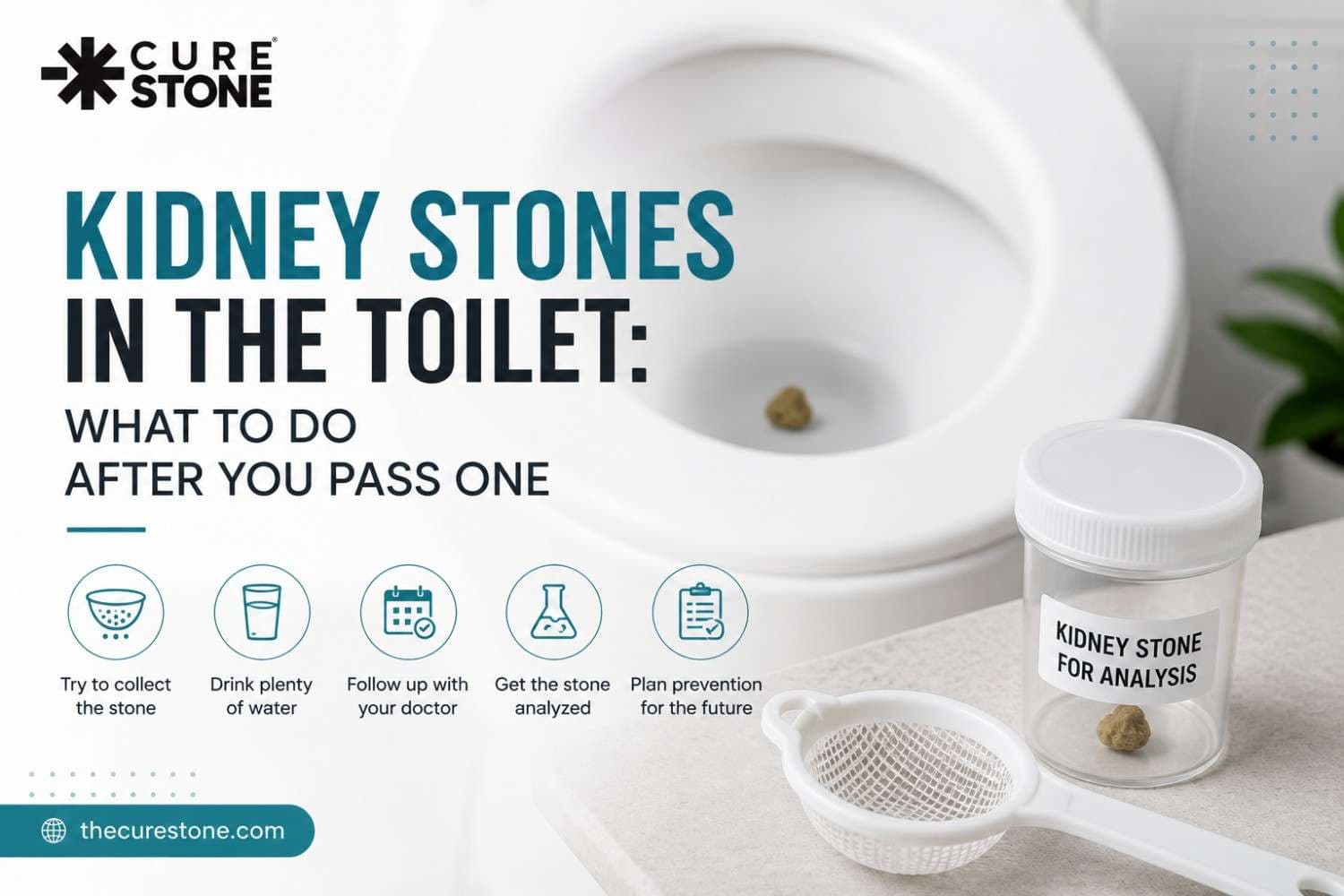
You just heard a small clink in the toilet bowl. After days or even weeks of excruciating back pain, you finally passed the kidney stone. The relief is immediate, but your journey is not entirely over.
Seeing a kidney stone in the toilet brings up a lot of questions. Do you need to save it? Should you call your doctor? Are you completely out of danger? At Cure Stone, we want to make sure you know exactly what steps to take next to protect your kidney health and prevent this painful experience from happening again. Many patients mistakenly assume that once the stone is out, they are permanently cured. However, passing a stone is a major warning sign from your body that your urinary system needs attention.
Step 1: Try to Retrieve the Stone
It might sound unpleasant, but if you can safely retrieve the stone from the toilet, you absolutely should do it. Knowing the exact chemical composition of your stone is the secret to preventing future stones.
Over 80 percent of stones are calcium oxalate, but yours could be uric acid, struvite, or cystine. You can learn more about the 4 different types of kidney stones to understand how they form. Place the stone in a dry container or a small plastic zip bag. Bring it to Dr. Deepanshu Gupta for a proper laboratory analysis. Based on what the stone is made of, our medical team can tell you exactly which foods to eat and which to avoid in your kidney stone diet. If you know you are prone to stones, we highly recommend urinating through a fine mesh strainer at home so you do not lose the next one.
Step 2: Monitor Your Symptoms Closely
Passing one stone does not guarantee your urinary tract is completely clear. Sometimes stones break into smaller fragments on their way out, or you might have multiple stones still resting in your kidney.
Pay close attention to your body over the next 24 to 48 hours. If you still feel sharp back pain, experience a fever, or notice persistent blood in your urine, you must seek medical attention. These symptoms could indicate that another stone is blocking your ureter or that a urinary tract infection (UTI) is developing. A blocked ureter can lead to a dangerous swelling of the kidney known as hydronephrosis, which requires immediate medical care. Always be aware of where you feel kidney stone pain to track if a new stone is currently moving.
Step 3: Focus on Heavy Hydration
Your urinary tract has just been through a significant amount of trauma. The stone likely scraped the sensitive lining of your ureter and urethra on its way out.
Drinking plenty of water helps flush out any lingering microscopic crystals and keeps your urine diluted. Proper hydration is necessary for kidney health and helps your urinary tract heal much faster. You can add fresh lemon juice to your water for extra protection, as the natural citrate helps stop new stones from forming. Aim to drink enough water so that your urine is clear or very pale yellow. Dark urine is a major warning sign that you are dehydrated and at a high risk for forming new stones.
Step 4: Schedule a Follow Up Ultrasound
Even if you feel perfectly fine, booking a follow up consultation is highly recommended. Dr. Deepanshu Gupta can perform a quick checkup at Cure Stone to ensure there are no remaining blockages. Understanding the role of ultrasound and CT scans in diagnosing kidney stones is important because these imaging tests reveal hidden stones you cannot feel yet.
If we do find more stones that are too large to pass naturally, we can treat them early using painless, minimally invasive methods like RIRS Laser Surgery or Mini PCNL Surgery before they cause another severe pain attack. Taking action now is the best way to ensure kidney stone recurrence does not ruin your future plans.
Step 5: Review Your Diet and Lifestyle
Once the immediate threat has passed, it is time to look at your daily habits. Your diet plays a massive role in stone formation. If you passed a calcium stone, you might need to limit foods high in oxalates, like spinach and certain nuts. If it was a uric acid stone, you will need to watch your intake of animal proteins. Knowing exactly what to eat if you have kidney stones is the most effective long term strategy. Dr. Deepanshu Gupta can guide you through these lifestyle changes to keep your kidneys stone free.
Frequently Asked Questions (FAQs)
What should I do if the kidney stone fell in the toilet and I cannot get it?
Do not panic. If you flushed the stone or cannot safely retrieve it, just focus on hydrating and monitoring your symptoms. Book an appointment with your urologist for a basic blood and urine test, which can still provide excellent clues about your stone risk factors. We can also run imaging tests to give you a clear picture of your kidney health.
Is it normal to still have pain after passing a kidney stone?
Mild soreness or a slight burning sensation while urinating is normal for a day or two after passing a stone. However, severe pain means another stone might still be stuck. You should visit Cure Stone immediately for a scan. You can read more about how to know when a kidney stone is serious to stay informed.
How do doctors test a passed kidney stone?
Once you bring the stone to Dr. Deepanshu Gupta, it is sent to a specialized laboratory. The lab uses chemical analysis to determine its exact makeup, whether it is calcium, uric acid, or something else. This helps us create a highly targeted diet plan for you and answer why kidney stones keep coming back.
How can I make passing a kidney stone less painful?
If you know a stone is currently moving, drink plenty of water, take prescribed medications like alpha blockers to relax your ureter, and use a heating pad on your back. If the pain becomes unbearable, book a consultation to discuss quick laser removal options. Modern techniques ensure that kidney stone surgery is safe and highly effective.
Have Questions About This Topic?
Get a personalized consultation at Cure Stone Hospital, Sector 52, Gurgaon.
Book Consultation