
Robotic surgery in prostate cancer – Is it better?
Prostate cancer is one of the most common cancers among men, and over the years, treatment methods have become more advanced.
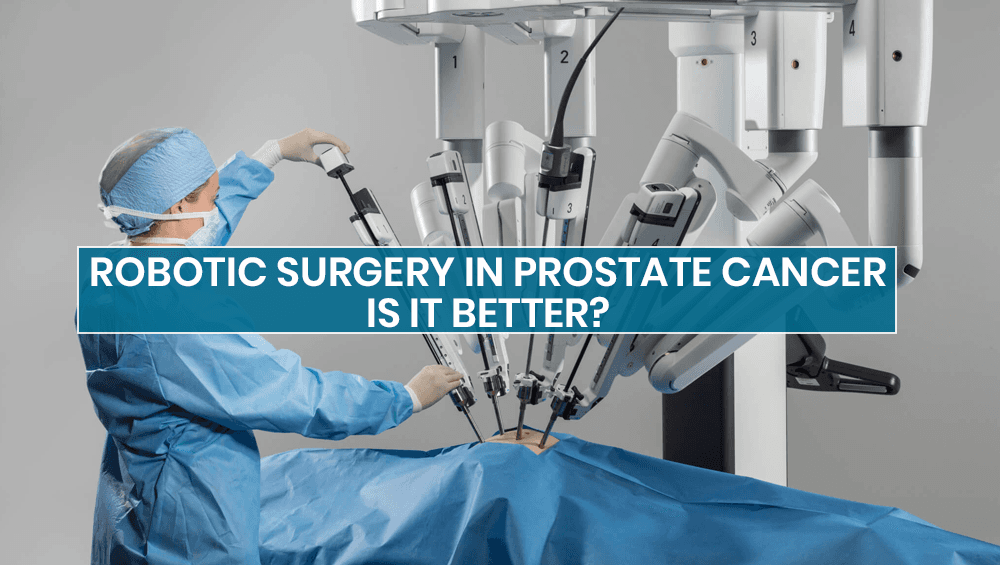
Prostate cancer is one of the most common cancers among men, and treatment methods have advanced significantly over the years. Among these options, robotic-assisted laparoscopic radical prostatectomy (robotic prostatectomy) has become increasingly popular due to its high surgical precision and faster recovery timeline. Is robotic surgery truly better than traditional open surgery? Understanding how robotic prostate surgery works, its key advantages, potential limitations, and candidate suitability helps patients and their families make an informed treatment choice.
What Is Prostate Cancer?
The prostate is a walnut-sized gland located directly under the urinary bladder that surrounds the urethra and produces seminal fluid. Prostate cancer occurs when prostatic cells mutate and grow uncontrollably, forming a malignant tumor. Prostate cancer typically progresses slowly in its early stages and may remain asymptomatic until it reaches an advanced phase. Early diagnostic screening—including serum Prostate-Specific Antigen (PSA) testing and digital rectal examinations—is vital for early detection, significantly improving long-term survival outcomes.
Primary Risk Factors and Causes
- Age: Risk increases dramatically after age 50.
- Family History: Men with a first-degree relative (father or brother) diagnosed with prostate cancer face a higher risk.
- Genetics: Inherited gene mutations, such as BRCA1 and BRCA2, contribute to increased risk.
- Hormones: Elevated circulating androgen levels (testosterone) can accelerate tumor progression.
- Diet and Lifestyle: High consumption of red meat and saturated fats combined with low vegetable intake is associated with higher incidence rates.
- Obesity: Linked to more aggressive, high-grade prostate malignancies.
How Does Robotic Prostate Surgery Work?
Robotic-assisted radical prostatectomy is a minimally invasive endourological procedure. The surgeon sits at a computer console near the operating table to control robotic arms equipped with specialized surgical instruments. The robotic platform features:
- 3D High-Definition Vision: Provides a magnified, high-resolution view of the deep pelvic cavity.
- Wristed Micro-Instruments: Articulate with greater flexibility and range of motion than human hands.
- Tremor Filtration: Eliminates natural hand tremors, allowing precise dissection near delicate neurovascular bundles.
Key Benefits of Robotic Surgery
Compared to traditional open radical prostatectomy, robotic surgery offers significant clinical benefits:
- Smaller Incisions and Minimal Scarring: Requires 5 to 6 keyhole entries instead of a single large abdominal incision.
- Reduced Blood Loss: Maginified visual clarity and controlled intra-abdominal pressure minimize intraoperative bleeding, drastically reducing the need for blood transfusions.
- Shorter Hospital Stay: Most patients are discharged within 24 to 48 hours.
- Faster Overall Recovery: Patients return to daily activities within 2 to 4 weeks compared to 6 to 8 weeks for open surgery.
- Better Nerve Preservation: Precision dissection preserves the neurovascular bundles responsible for urinary continence and erectile function.
Is Robotic Surgery Always the Better Option?
For many men, robotic prostatectomy offers faster physical recovery, lower complication rates, and improved quality of life. However, it is not universally required or suitable for every patient. The optimal treatment choice depends on:
- Cancer Stage and Grade: Early-stage, localized tumors respond exceptionally well to robotic removal, whereas advanced, metastatic disease may require radiation therapy, hormone therapy, or systemic treatment.
- Surgeon Expertise: Surgical outcomes—including nerve preservation and cancer margin clearance—depend heavily on the operating urologist's skill and experience.
- Cost Considerations: Robotic procedures carry higher equipment and facility costs than traditional open surgery.
Risks and Limitations
- Higher Financial Cost: Equipment maintenance and specialized drapes make robotic surgery more expensive.
- Learning Curve: Successful nerve-sparing outcomes require an experienced robotic urologic surgeon.
- Not Suitable for All Advanced Cases: Patients with extensive prior pelvic surgeries, severe scarring, or widespread metastatic disease may not be candidates.
Expert Care in Gurgaon
Choosing the right approach for prostate cancer depends on a thorough evaluation of tumor stage, baseline health, and personal goals. For specialized urological and endourological care in Gurgaon and Delhi NCR, consult Dr. Deepanshu Gupta. With over 15 years of surgical experience and thousands of successful procedures, Dr. Gupta provides accurate diagnostic evaluations and advanced, patient-centered treatment plans for prostate conditions.
Frequently Asked Questions
What is the recovery time after robotic prostate surgery?
Most patients are discharged from the hospital within 1 to 2 days after surgery and can resume light daily activities and desk work within 2 to 4 weeks.
Is robotic surgery safer than traditional open surgery?
Robotic surgery involves smaller keyhole incisions, less blood loss, and a lower risk of post-operative wound infections. However, overall safety depends on the experience of the operating surgeon.
Does robotic surgery better preserve urinary and sexual function?
Yes. The 3D magnified view allows surgeons to meticulously preserve the delicate cavernous nerves and urinary sphincter muscles, leading to higher rates of urinary continence and erectile function recovery.
Who is not a candidate for robotic prostate surgery?
Men with severe cardiopulmonary disease who cannot tolerate general anesthesia or abdominal gas insufflation, or those with widespread metastatic cancer, may be advised against surgery in favor of non-surgical therapies.
Have Questions About This Topic?
Get a personalized consultation at Cure Stone Hospital, Sector 52, Gurgaon.
Book Consultation