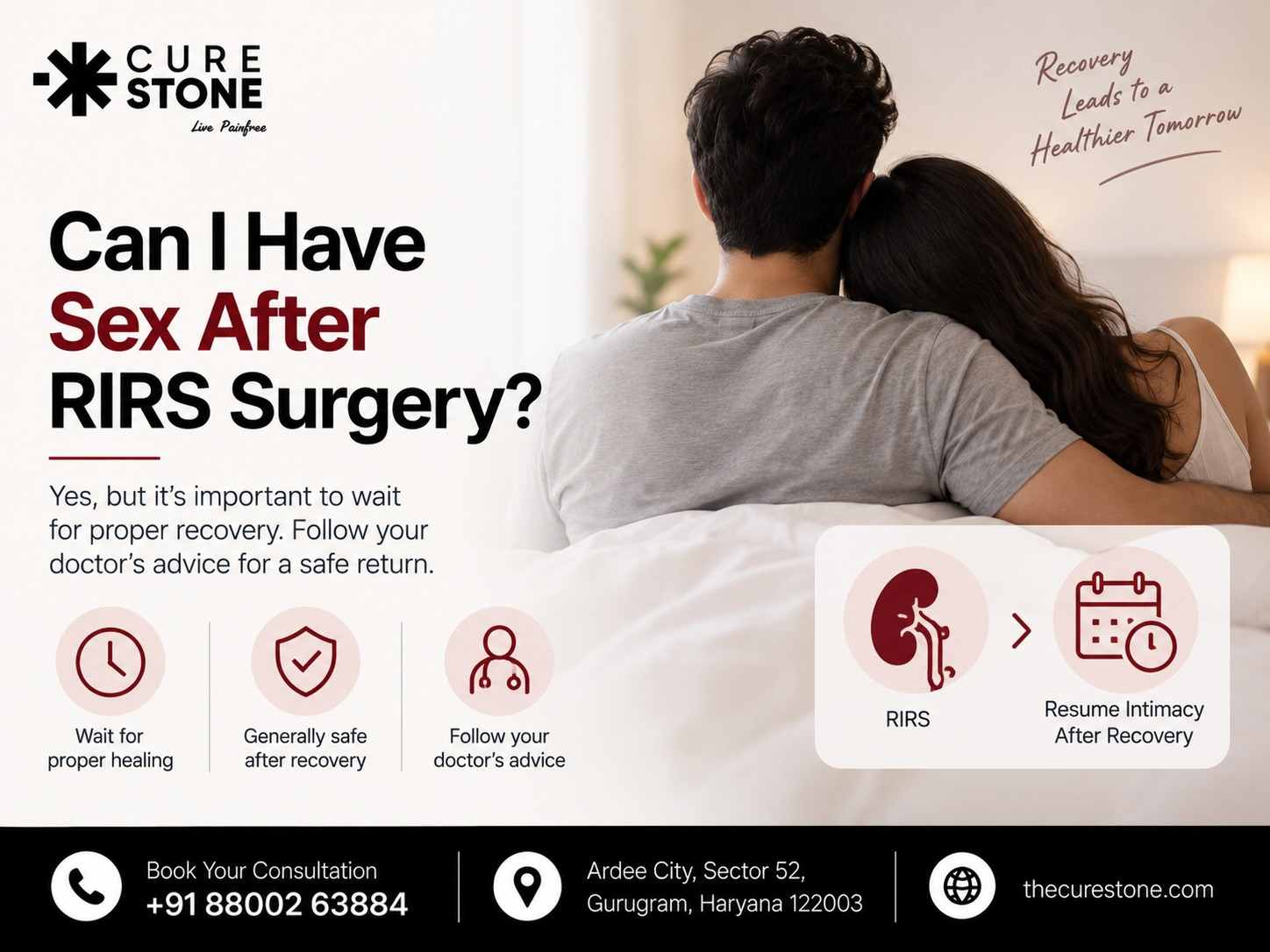
Can I Have Sex After RIRS Surgery?
Wondering when you can have sex after RIRS surgery? Learn when sexual activity is generally safe, how a DJ stent may affect comfort, and what precautions to follow during recovery.
This is one of the most common questions patients want to ask after stone surgery and one of the least often asked out loud. Many people leave the hospital with detailed instructions about diet, medication, and lifting, and nothing at all about intimacy.
So here is a straight answer. Sex after RIRS is safe. There is no risk of damaging the kidney, dislodging anything important, or undoing the surgery. The real question is not whether it is dangerous but when it becomes comfortable, and that depends almost entirely on whether you have a DJ stent in place.
The Short Answer
Without a stent: most patients can resume sexual activity once bleeding has settled and they feel comfortable, typically within one to two weeks.
With a stent in place: there is no absolute medical prohibition, but many patients find it uncomfortable. It is reasonable to wait until the stent is removed, which is usually one to three weeks after surgery. If you do resume earlier, discomfort is a reason to stop, not a sign of harm.
In all cases: wait until any catheter has been removed, urinary bleeding has largely settled, and you are off strong painkillers.
The single most useful thing to understand is why the stent changes the answer.
Why the Stent Makes the Difference
A DJ stent runs from the kidney down to the bladder, with a coil at each end. The lower coil sits in the bladder against the trigone, which is the most sensitive part of the bladder wall.
That produces three effects relevant here.
Pelvic sensitivity. The area is already irritated, so activity involving the pelvis can provoke discomfort, urgency, or a dragging ache in the flank on the operated side.
Reflux. When the bladder contracts, a small amount of urine can travel back up the stent toward the kidney, briefly raising pressure. This can cause a flank ache during or shortly after activity.
Bleeding. The stent rubs against the bladder lining with movement, and increased physical activity of any kind commonly produces a temporary increase in blood in the urine afterwards. This is expected and settles, but it can be alarming if nobody warned you.
None of this represents damage. The stent cannot be knocked out of position by sexual activity, and it cannot be pushed into the kidney. It is held in place by the coils at both ends.
Our guides on DJ stents explained and whether a DJ stent is necessary after RIRS cover how the stent works and why it is placed.
Does RIRS Affect Sexual Function?
This worries men in particular, and the reassurance is straightforward.
RIRS works entirely through the urinary passage. It does not go anywhere near the nerves and blood vessels responsible for erection, which run alongside the prostate. This is the key difference between stone surgery and prostate surgery, and it is why RIRS does not cause erectile dysfunction.
If erection problems appear after stone surgery, the cause is almost always something else. Anxiety about the surgery and about the kidney is common and genuinely affects sexual function. So do the conditions that often travel with stone disease, including diabetes, high blood pressure, obesity, and cardiovascular disease, all of which independently cause erectile dysfunction. Pain and disturbed sleep during recovery contribute too.
If the problem persists after recovery, it is worth investigating properly rather than assuming it is permanent or surgical. See erectile dysfunction, causes and treatment.
Fertility is not affected by RIRS in either men or women. The procedure does not touch the reproductive tract.
Ejaculation may feel uncomfortable in the first few days after surgery, particularly if a catheter was used, because the urethra has been instrumented. This settles quickly. Occasionally a small amount of blood may be noticed. If it persists beyond a couple of weeks, get it checked.
For Women
The considerations are slightly different. The urethra is shorter and instrumentation during the procedure can leave it sore for a few days, making initial discomfort more likely.
Women also have a higher baseline risk of urinary tract infection after sexual activity, and this matters more than usual after stone surgery, when the urinary tract is already irritated and a stent may be in place. See how to avoid getting a UTI after sex.
Reducing the Risk of Infection
This is the one genuine medical consideration, as opposed to a comfort issue.
After RIRS the urinary tract is more vulnerable than usual. A stent provides a surface bacteria can adhere to, and any infection at this stage matters more because the kidney has recently been instrumented.
Sensible precautions:
- Pass urine soon after sexual activity to flush the urethra
- Maintain good hydration throughout recovery
- Attend to basic hygiene before and after
- Complete any prescribed antibiotic course fully rather than stopping when you feel better
- Do not ignore new burning, urgency, cloudy urine, or a strong odour
If you develop fever or chills, that is not a urinary infection to manage at home. It needs same-day assessment, because infection in a recently operated urinary tract can progress quickly. See UTI versus kidney infection and urinary tract infection, diagnosis and treatment.
When to Wait
Hold off, and speak to your urologist, if you have:
- Fever or chills. Needs assessment before anything else.
- Heavy bleeding or clots in the urine, as opposed to a pink tinge.
- Pain that is worsening rather than improving as the days pass.
- A catheter still in place.
- Difficulty passing urine.
- A complicated procedure, such as a ureteric injury or bilateral surgery, where your surgeon has given specific instructions. Those instructions take precedence over general advice.
Practical Points
Most of this is common sense, but patients rarely hear it said.
Discomfort is information, not danger. If something hurts, stop. You are not going to cause harm by continuing, but there is no reason to push through pain during recovery.
Expect a temporary increase in blood in the urine afterwards if a stent is in place. It settles within a day.
Take it gently at first rather than resuming at your previous level of activity, in the same way you would with exercise. Our guides on how much rest is needed after kidney stone surgery, can I walk after RIRS surgery, and the recovery after kidney stone surgery cover the wider activity timeline.
Talk to your partner about what is going on. Most of the difficulty in this period is uncertainty rather than physical limitation, and a partner who knows there is a stent in place and what it does will be considerably more understanding.
And ask your urologist directly. This is a routine question and you will not be the first person that week to raise it. A surgeon who cannot discuss recovery in full is not giving you complete aftercare.
Life After Recovery
Once the stent is out and recovery is complete, there are no restrictions. Sexual function, fertility, and physical capacity all return to your baseline. See can you have a normal life after kidney stone surgery and life after kidney stone surgery.
Two things still need doing, and both are frequently skipped. Confirm you are genuinely stone free with follow-up imaging, since being told the operation went well is not the same as being checked. And find out why you formed the stone in the first place, through composition analysis and, for anyone with more than one episode, a metabolic evaluation. Roughly half of stone formers develop another stone within five to ten years when the underlying cause is never identified. See why aftercare and follow up are important and how to avoid kidney stone recurrence.
For any question about your recovery after RIRS, including the ones that feel awkward to ask, book a consultation with Dr. Deepanshu Gupta. Our kidney stone treatment page sets out the full range of options.
Frequently Asked Questions
How long after RIRS surgery can I have sex?
Without a stent, most patients resume within one to two weeks, once bleeding has settled and they feel comfortable. With a stent in place, many prefer to wait until it is removed, usually one to three weeks after surgery.
Is it safe to have sex with a DJ stent in place?
Yes. There is no risk of dislodging the stent or damaging the kidney, since the coils at each end hold it in position. The limitation is comfort rather than safety, and discomfort or a temporary increase in blood in the urine afterwards is common.
Can RIRS surgery cause erectile dysfunction?
No. RIRS works through the urinary passage and does not involve the nerves responsible for erection. Erection problems after stone surgery are usually caused by anxiety, pain, disturbed sleep, or coexisting conditions such as diabetes and high blood pressure.
Does RIRS affect fertility?
No. The procedure does not involve the reproductive organs in either men or women and has no effect on fertility.
Is it normal to see more blood in the urine after sex with a stent?
Yes. Physical activity of any kind commonly increases blood in the urine while a stent is in place, because the stent moves against the bladder lining. It usually settles within a day. Heavy bleeding with clots is not normal and needs assessment.
Can ejaculation be painful after RIRS?
It can be uncomfortable for the first few days, particularly if a catheter was used, because the urethra has been instrumented. This settles quickly. Persistent pain or blood beyond a couple of weeks should be checked.
Can sex cause a urinary infection after stone surgery?
It can increase the risk, especially in women and especially with a stent in place. Passing urine afterwards, staying well hydrated, and attending to hygiene reduce that risk. Fever or chills at any point needs same-day medical assessment.
Should I wait until the stent is removed?
There is no medical requirement to, but many patients find it simpler and more comfortable. If you resume earlier and it is uncomfortable, stop and wait. You will not cause harm either way.
Have Questions About This Topic?
Get a personalized consultation at Cure Stone Hospital, Sector 52, Gurgaon.
Book Consultation