Does ejaculating help pass kidney stones?
A very common question that may arise when you failed all the other solutions is: does ejaculating get rid of kidney stones? The answer is yes, in some cases.
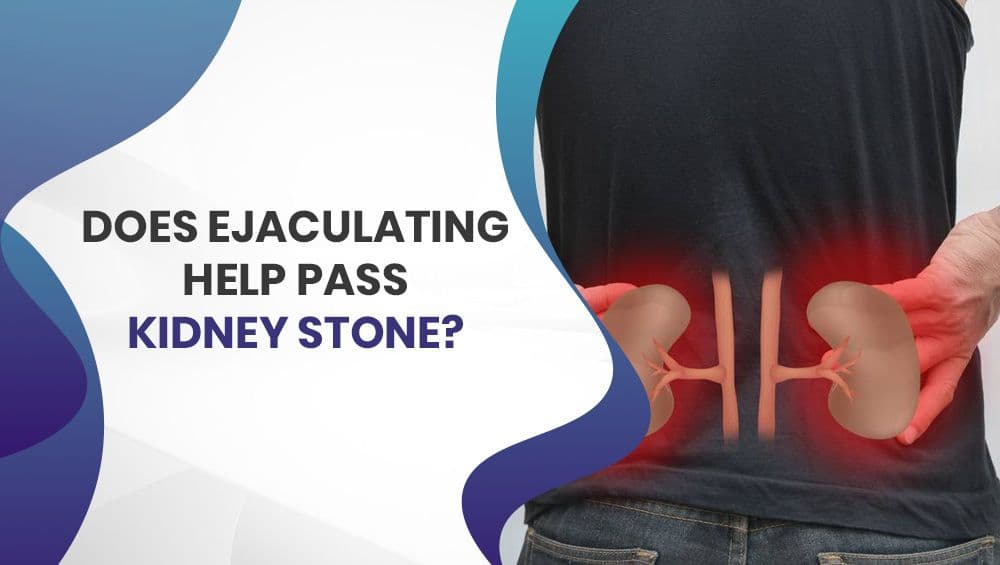
A very common question that may arise when you are trying to pass a kidney stone is: Does ejaculating help get rid of kidney stones? The answer is yes, in specific cases. Scientific studies indicate that sexual activity—and by association, ejaculation through intercourse or masturbation—has a modest effect on increasing the likelihood that small distal ureteral stones (stones lodged in the lower section of the ureter near the bladder) will pass. While it is not a complete cure, it can act as a helpful natural addition to conventional medical expulsive therapy (MET).
Why Sexual Activity May Assist
During sexual arousal and climax, the body releases nitric oxide (NO). Nitric oxide is a signaling molecule that relaxes smooth muscle tissues throughout the body. Because the lower ureter is largely composed of smooth muscle, the release of nitric oxide during orgasm can temporarily reduce ureteral spasms, ease tissue swelling (edema), and slightly widen the ureteric lumen. This muscle relaxation helps small stone fragments glide down into the bladder more easily—a biological process similar to how certain medical expulsive drugs work.
What Research Studies Demonstrate
- Increased Spontaneous Passage: Studies on men with small distal ureteral stones (under 6 mm) found that engaging in sexual intercourse 3 to 4 times per week significantly increased the rate of spontaneous stone passage compared to conservative observation alone.
- Reduced Pain Episodes: Systematic reviews show that sexual activity can help reduce acute colic pain attacks and decrease the need for heavy pain medications during the passage window.
- Similar Mechanisms: Ongoing clinical evaluations suggest that both sexual intercourse and masturbation offer similar smooth-muscle relaxation benefits for distal and intramural ureteric stones.
Important Note: These findings apply exclusively to small stones in the lower ureter. Sexual activity does not help pass large stones or stones that are still sitting inside the kidney.
How Ejaculation Compares to Medical Expulsive Therapy (MET)
When patients present with small ureteral stones, urologists frequently prescribe medications to relax the urinary tract:
- Alpha-Blockers (e.g., Tamsulosin): Recommended by international urological guidelines for distal ureteral stones over 5 mm. Tamsulosin relaxes ureteral smooth muscle to allow smoother stone passage.
- PDE-5 Inhibitors (e.g., Tadalafil): These medications enhance nitric oxide signaling pathways. Clinical studies show that PDE-5 inhibitors can be effective as an adjunct therapy to relieve ureteral spasms and accelerate expulsion.
Sexual activity acts as a low-risk, natural supplement to prescribed medical expulsive therapy. It should complement—never replace—proper medical evaluation, hydration, and prescribed medications.
Who May Benefit vs. Who Should Avoid It
Who May Consider It
- Stable adults with diagnosed small distal ureteral stones (6 mm or smaller).
- Patients with well-managed pain and no signs of urinary infection.
- Individuals already taking prescribed MET (such as tamsulosin) who want an additional non-pharmacological strategy.
Who Must Avoid It and Seek Urgent Care
Do not rely on home management or sexual activity—seek immediate emergency medical care if you experience:
- High fever, chills, or rigors (indicating an infected, blocked kidney)
- Severe, unmanaged pain or continuous vomiting preventing fluid retention
- Being pregnant, having a solitary kidney, or having underlying kidney failure
- An inability to pass urine or severe dizziness
These warning signs indicate acute obstruction or infection, requiring urgent decompression or procedure-based stone removal. Read more on how do you know when a kidney stone is serious.
Evidence-Based Action Plan for Passing a Small Stone
- Confirm Stone Size and Location: An ultrasound or non-contrast CT scan (CT KUB) is necessary to confirm if the stone is in the distal ureter and small enough to pass safely. Learn about the role of ultrasound and CT scan in diagnosing kidney stones.
- Maintain Sensible Hydration: Sip water steadily throughout the day (2 to 3 liters daily) to keep urine pale and flowing. Discover why hydration is necessary for kidney health.
- Manage Pain and Inflammation: Use doctor-prescribed non-steroidal anti-inflammatory drugs (NSAIDs) to ease ureteral swelling and pain.
- Use Medical Expulsive Therapy: Take alpha-blockers like tamsulosin as directed by your physician to relax ureteral muscles.
- Strain Your Urine: Strain your urine during every bathroom visit to capture the stone. Having it analyzed helps tailor a personalized plan for kidney stone recurrence prevention. Read our guide on what to do after you pass a kidney stone.
- Know When to Intervene: If a stone fails to pass after 4 to 6 weeks, or if symptoms worsen, schedule an evaluation for minimally invasive procedures such as scarless RIRS or ESWL lithotripsy.
Expert Kidney Stone Specialist in Gurgaon
While sexual activity and ejaculation can assist in passing small, lower-ureter stones by relaxing smooth muscles, it is a secondary aid to proper medical care. Getting an accurate diagnosis and treatment plan ensures you avoid severe complications like kidney blockage. For expert urological care in Gurgaon and Delhi NCR, consult Dr. Deepanshu Gupta. With over 15 years of experience and thousands of successful endourological procedures, Dr. Gupta provides accurate diagnostic evaluations, tailored medical expulsive therapies, and advanced laser stone removal options.
Frequently Asked Questions
Can ejaculation help pass a kidney stone that is still inside the kidney?
No. Ejaculation only releases nitric oxide to relax smooth muscle in the lower ureter and bladder neck. It has no effect on stones that are resting inside the renal calyces of the kidney.
How long should I wait for a small kidney stone to pass before seeking surgery?
Most small stones (under 5 mm) pass within 2 to 4 weeks with proper hydration and medical expulsive therapy. If the stone remains stuck past 4 to 6 weeks, or if you develop severe pain or infection, your urologist will recommend procedures like laser RIRS or ESWL.
What is the most painful stage of passing a kidney stone?
The most painful stage occurs as the stone moves through the upper and middle sections of the narrow ureter, causing severe muscular spasms and back pressure in the kidney. Read our guide on what is the most painful stage of kidney stones.
Have Questions About This Topic?
Get a personalized consultation at Cure Stone Hospital, Sector 52, Gurgaon.
Book Consultation