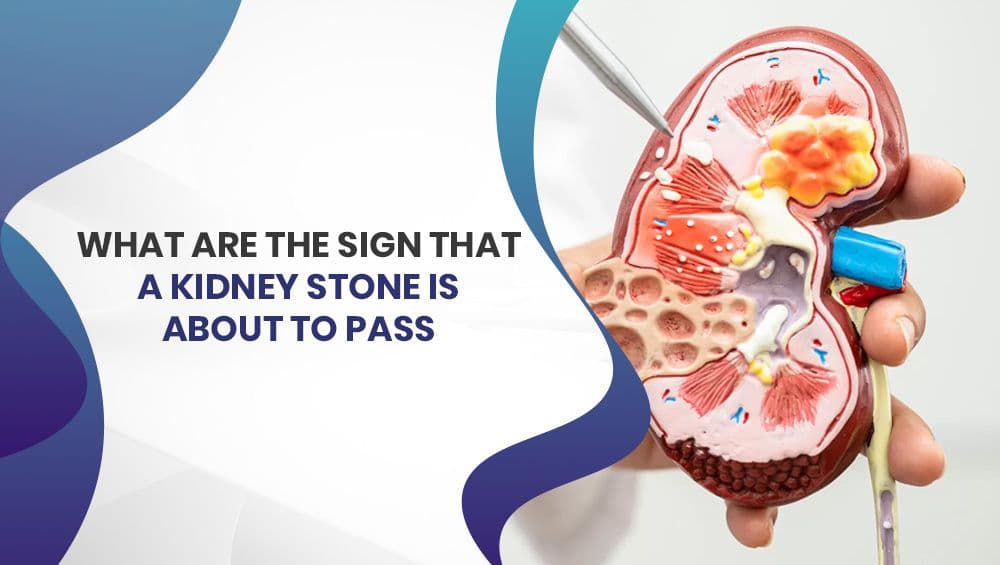
What Are the Signs That a Kidney Stone Is About to Pass?
You already know that kidney stones are more than simply discomfort; they’re a journey. Kidney stones have their own course, from the initial dull back pain to the intense, breath-taking twinges.
You already know that kidney stones are more than simple discomfort; they are a journey. Kidney stones have their own course, from the initial dull back pain to intense, breath-taking twinges. One question remains in your mind throughout all of that suffering: "Is it almost over? Will the stone soon pass?" Understanding the symptoms to look out for, indicators that a kidney stone is about to pass, and when to consult a doctor can help you navigate this process safely.
Indications of an Emerging Kidney Stone
The size, position, and capacity of your body to eliminate the stone all affect how easily it passes. Here are key indicators that your kidney stone may be about to pass:
1. A Shift in the Pattern of Pain
The pain of kidney stones (renal colic) typically originates in the side or back, just under the ribs. As the stone travels through the urinary tract, the pain shifts toward your lower abdomen, groin, or pelvic region. This movement in location signifies that the stone has departed the kidney, traveled down the ureter, and is progressing toward the bladder.
2. A Greater Need to Urinate
If you feel the urge to urinate constantly, even if only a tiny amount comes out each time, it often means the stone has reached the lower junction of the bladder. The stone's irritation of the bladder wall causes frequent, intense urges to urinate.
3. A Burning Sensation or Pain When Urinating
A sharp, burning feeling during urination frequently occurs as the stone approaches the urethra and prepares to leave the body. This indicates the stone is getting close to exiting.
4. Visible Blood in Urine
Small amounts of blood occur when a kidney stone rubs against the sensitive lining of your urinary tract. It is common to see pink, red, or brownish urine (hematuria), which signals that the stone is actively moving.
5. Pain Relief Between Waves
Pain from kidney stones frequently occurs in waves. Noticing longer intervals between painful episodes or feeling the pain lessen overall suggests the stone is entering the bladder or getting ready to be passed.
At What Point Is Passing a Kidney Stone Most Painful?
The passage of a kidney stone is usually most severe as the stone moves through the ureter—the narrow tube positioned between the kidney and the bladder. This stage is agonizing because the ureter's inner diameter is very small compared to the size of the stone. As the ureter spasms to push the stone through, it triggers sharp, stabbing pains in the lower back, side, and abdomen. This stage can also be accompanied by nausea, vomiting, or temporary urine obstruction. Once the stone enters the bladder, pain decreases significantly, though mild stinging may remain as it exits through the urethra. Read our detailed guide on what is the most painful stage of kidney stones.
What Happens Just Before the Stone Passes?
In the final stage, the stone enters the bladder and prepares to leave the body:
- A sharp, brief prickling sensation just before or during urination.
- A sudden feeling of relief once the stone exits.
- Seeing a hard, grainy particle or stone in the toilet bowl.
Catching the stone allows your urologist to analyze its composition (whether calcium oxalate, uric acid, or struvite) to build an effective plan for kidney stone recurrence prevention. Read our guide on what to do after you pass a kidney stone.
When Is the Right Time to See a Doctor?
Not every stone passes on its own. Seek medical attention immediately if you experience:
- Unbearable, unmanaged pain
- Chills and high fever (signs of an infected kidney)
- Persistent nausea or vomiting preventing fluid retention
- Inability to urinate or signs of a severe blockage
- Worsening or heavy blood in urine
Stones larger than 6 mm frequently require medical procedures such as scarless RIRS, PCNL, or ESWL lithotripsy. Explore options for the best treatment for 6mm kidney stones or best treatment for 7mm kidney stones.
Tips to Help Pass a Stone Faster
- Drink Plenty of Water: High fluid intake generates steady urine flow to push the stone downward. Learn why hydration is necessary for kidney health.
- Take Prescribed Medications: Alpha-blockers (like tamsulosin) help relax ureteral muscles to facilitate easier passage.
- Stay Active: Short walks and light movements use gravity to help guide the stone downward. Read more on does more walking help pass kidney stones.
- Strain Your Urine: Use a urine strainer during every bathroom visit to catch the stone for laboratory evaluation.
Trusted Kidney Stone Specialist in Gurgaon
Waiting for a stone to pass can feel unpredictable, but professional medical guidance ensures you recover safely without organ strain. For expert urological care in Gurgaon and Delhi NCR, consult Dr. Deepanshu Gupta. With over 15 years of experience and thousands of successful endourological procedures, Dr. Gupta provides accurate diagnoses, advanced laser stone removal, and comprehensive long-term prevention plans.
Frequently Asked Questions
How long does a kidney stone take to pass once it reaches the bladder?
Once a small stone enters the bladder, it typically passes out through the urethra during urination within a few hours to a couple of days. Read more on how to know when a kidney stone is close to passing.
Can pushing or straining help pass a kidney stone faster?
No. Straining engages abdominal muscles used for bowel movements and has no effect on the urinary tract. Pushing can worsen abdominal pain and stress the body without moving the stone. Read our guide on does pushing help pass kidney stones.
What is the final stage of passing a kidney stone?
The final stage occurs as the stone travels out through the urethra. Patients often experience pelvic pressure, increased urgency, and a brief burning sensation during urination right before the stone drops into the toilet. Read more on what is the final stage of a kidney stone.
Have Questions About This Topic?
Get a personalized consultation at Cure Stone Hospital, Sector 52, Gurgaon.
Book Consultation