Is PCNL A Major Surgery?
In cases where the size or the number of kidney stones is big, there is no better solution than Percutaneous Nephrolithotomy (PCNL). However, the word ‘surgery’ can understandably affect patients to ask questions such as “How invasive is this procedure?” or “Will it require a long recovery period?”.
In cases where the size or the number of kidney stones is big, there is no better solution than Percutaneous Nephrolithotomy (PCNL). However, the word surgery can understandably cause patients to ask questions about the invasiveness and the recovery period. In case you want to know is PCNL a major surgery and what actually entails the surgical process, let us begin exploring this topic.
PCNL can be described as an outpatient and less invasive but highly advanced procedure meant to target those large and dense kidney stones that cannot be treated through shock wave therapy or ureteroscopy. The endoscopic technique is used because it causes a very little cut but is specifically designed and implemented to offer the least pain and time in the hospital, as well as ensuring that all the stones are completely removed.
In today's post, we will discuss PCNL in further detail in terms of its differences from traditional surgeries, a description of the procedure, and whether it can be considered a major surgery. In the end, you will be able to determine what to expect in terms of your kidney health and make choices that are well informed. Let us get started!
What Happens in a PCNL Surgery?
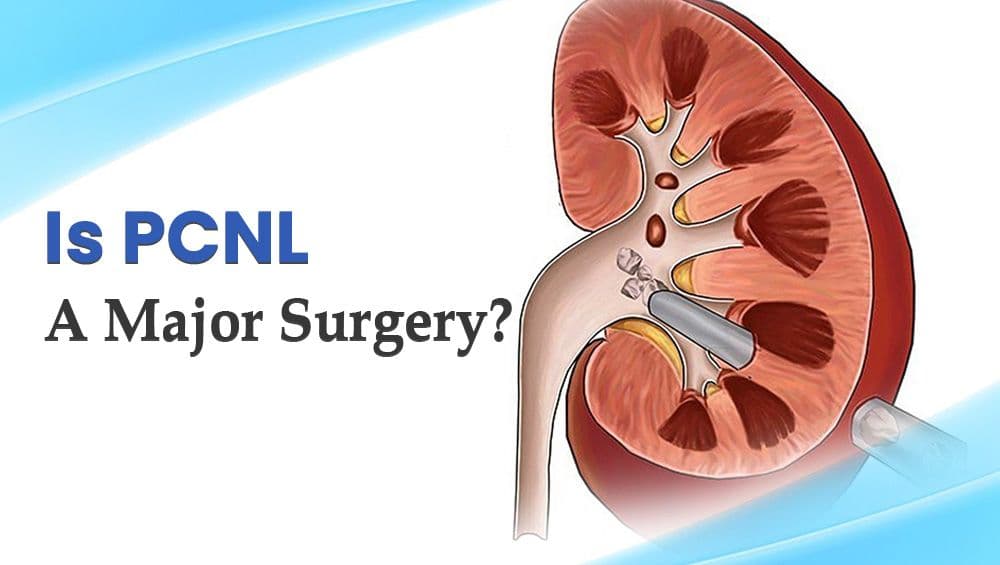
PCNL, or Percutaneous Nephrolithotomy, is a procedure designed to remove large kidney stones in a way that is highly effective and minimally invasive. Here is what happens step by step:
- Preparing You for Surgery: Before the procedure, you will receive anesthesia to ensure you are completely comfortable and pain free during the surgery.
- Accessing the Kidney: The surgeon makes a tiny incision, usually in your back, to create a pathway to the kidney. This small cut is key to reaching the stone without causing unnecessary trauma to the surrounding tissues.
- Removing the Stones: Using a special tube and surgical instruments, the doctor carefully breaks the stone into smaller pieces. If needed, they may use a laser or ultrasonic tool to ensure every fragment is removed.
- Cleaning Up: Once the stone is completely cleared, the surgeon might place a small drainage tube to help the kidney heal and drain any leftover fluids.
- Post Surgery Recovery: After the procedure, you will spend some time in recovery to ensure everything is fine before heading home. Most patients are up and about within a few days, with minimal discomfort.
PCNL sounds technical, but it is a highly targeted way to remove stubborn kidney stones safely and with less recovery time compared to traditional surgeries. You are in expert hands, and the results can significantly improve your kidney health and overall well being.
Is PCNL Surgery Painful After the Procedure?
It is natural to wonder are there any risks of PCNL surgery and if there will be any pain after you wake up. The good news is that most people find the discomfort manageable, thanks to amazing advancements in surgical techniques and pain management.
Right after the procedure, you might feel some soreness around the small incision in your back. This is completely normal and usually feels like mild to moderate discomfort rather than intense pain. The healthcare team will ensure you are comfortable by providing pain relief medications if needed.
You might also feel a little tender in the kidney area as it heals, especially if a drainage tube was placed. However, this discomfort typically improves within a few days, and most patients report feeling much better as they recover.
The important thing is to follow your doctor's post surgery instructions carefully. Whether it is taking prescribed medications, drinking plenty of water, or avoiding strenuous activities for a short period, these steps will help you recover faster and with minimal pain.
While the idea of surgery can sound intimidating, PCNL is designed to minimize discomfort and speed up recovery. With proper care and guidance, most patients bounce back quickly and enjoy the relief of being free from painful kidney stones.
Which Kidney Stones Are Removed with PCNL?
Understanding exactly who is the right candidate for PCNL kidney stone removal is essential for peace of mind. PCNL is typically used for kidney stones that are:
- Large in Size: Stones larger than two centimeters, about the size of a marble, are often too big to be treated effectively with other methods like shock wave lithotripsy or standard ureteroscopy.
- Hard or Dense: Some kidney stones, such as calcium oxalate or cystine stones, are exceptionally hard and may not break apart easily with noninvasive treatments. PCNL is ideal for removing such stubborn stones.
- Located in Complex Areas: Stones that are located deep within the kidney or in challenging positions, like the lower pole of the kidney, can be better accessed and removed using PCNL.
- Staghorn Calculi: These are massive, branched stones that fill the collecting system of the kidney and resemble the shape of antlers. PCNL is almost always the first choice for treating such complex stones.
- Stones Resistant to Other Treatments: If previous attempts at breaking or removing the stones using other methods have not been successful, PCNL offers a reliable alternative to clear the stones completely.
PCNL is designed to handle complex and challenging kidney stones efficiently, making it an excellent option for patients dealing with large or difficult to treat stones.
Contact Dr. Deepanshu Gupta at Cure Stone for Expert Care
When it comes to treating massive and highly complex kidney stones, having an experienced and brilliantly skilled urologist makes all the difference in the world. Dr. Deepanshu Gupta, the leading urological specialist at Cure Stone, is renowned for his extraordinary expertise in advanced kidney stone removal techniques, including both PCNL and FANS RIRS. Whether you are dealing with a massive staghorn calculus or stones highly resistant to other treatments, the incredible precision and patient centered approach of Dr. Gupta ensure safe and highly effective outcomes every single time.
At Cure Stone, every single treatment plan is meticulously tailored to meet your individual medical needs, ensuring a smooth recovery and long term stone free results. Dr. Gupta and his elite medical team prioritize your absolute comfort above all else, utilizing state of the art technology to deliver the safest and best possible care in the region. With a proven track record of helping thousands of patients regain a pain free life, Cure Stone is your ultimate destination for conquering urological issues. Do not let kidney stones disrupt your life for another day. Book your consultation with Cure Stone today and take the very first step toward lasting relief and total peace of mind.
Frequently Asked Questions (FAQs)
Is PCNL considered a major surgery?
Yes, PCNL is technically classified as a major surgery because it requires a small incision in the back to access the kidney directly, and it is performed under general anesthesia. However, because it is minimally invasive compared to traditional open surgery, the recovery time is drastically shorter and much safer.
How long will I stay in the hospital after PCNL?
Most patients are required to stay in the hospital for one to two days following a PCNL procedure. This allows the medical team to carefully monitor the small drainage tube in your back and ensure your kidney is healing properly before you go home.
Can FANS RIRS be used instead of PCNL?
It depends entirely on the exact size of the stone. For stones under two centimeters, FANS RIRS is highly preferred because it requires absolutely zero cuts and vacuums out the stone dust instantly. However, for massive staghorn stones that fill the entire kidney, PCNL remains the absolute gold standard for swift and efficient removal.
Will I have a large scar after a PCNL surgery?
No, the incision made during a PCNL procedure is incredibly small, usually only about one centimeter wide. Once fully healed, the resulting scar is barely noticeable and fades significantly over time.
Have Questions About This Topic?
Get a personalized consultation at Cure Stone Hospital, Sector 52, Gurgaon.
Book Consultation