
Why is RIRS best for kidney stones?
Kidney stones are the most common urological problem. These hard stones, if not treated immediately, can cause severe pain and difficulty urinating. They may also lead to infection. Larger stones, however, may need medical treatment. RIRS Retrograde Intrarenal Surgery is one of the most trusted and effective procedures for removing kidney stones.
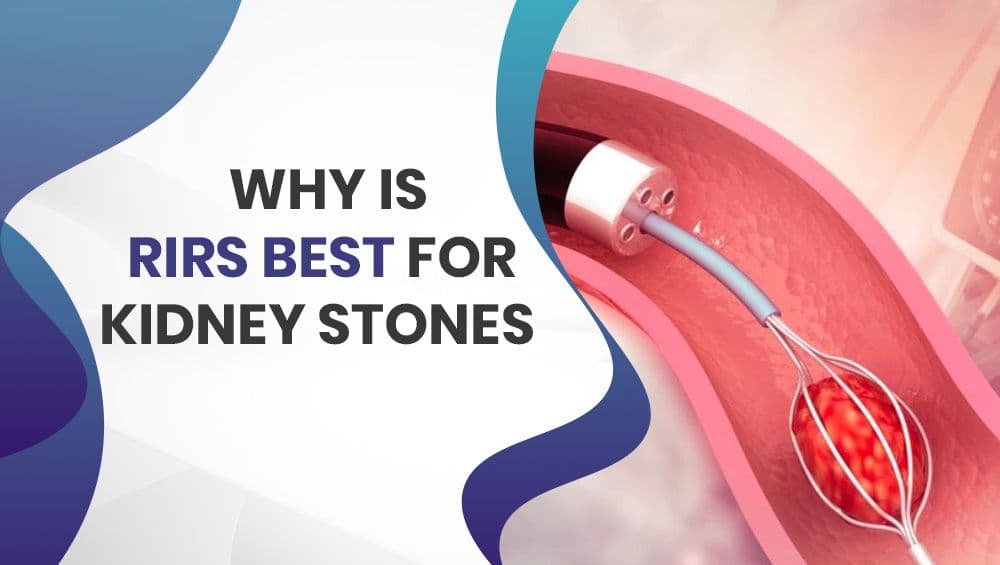
Kidney stones are among the most common urological problems. These hard deposits, if not treated promptly, can cause severe pain, difficulty urinating, and recurrent urinary tract infections. While smaller stones may pass naturally, larger or lodged stones require medical intervention. Retrograde Intrarenal Surgery (RIRS) has emerged as one of the most trusted, precise, and advanced procedures for kidney stone removal. It offers high safety, zero external cuts, and a significantly faster recovery compared to traditional surgical methods.
What is RIRS?
Retrograde Intrarenal Surgery (RIRS) is a modern, minimally invasive procedure used to treat kidney stones. It is performed using a thin, flexible endoscope (ureteroscope) passed through the natural urinary tract directly into the kidney's internal chambers. Once the surgeon locates the stone using high-definition imaging, a specialized urological laser (such as a Holmium or Thulium laser) is used to fragment the stone into fine, dust-like particles. These particles are either retrieved using a tiny basket or left to pass naturally out of the body through urine. To learn more about the procedure, read our detailed guide on how RIRS is performed.
Advantages of RIRS Over Traditional Methods
Modern endourology has transformed stone management. RIRS offers distinct benefits compared to older surgical methods:
- No Cuts or Scars: Performed entirely through the natural urinary opening.
- Minimal Blood Loss: Far safer than open surgery or traditional PCNL.
- Short Hospitalization: Often performed as a day-care procedure with discharge within 24 hours.
- Rapid Recovery: Patients return to light routines much quicker.
Key Reasons Why RIRS Is the Best Option for Kidney Stones
1. Completely Scarless and Stitch-Free
Unlike open surgery or traditional percutaneous procedures, RIRS leaves no external scars. Because there are no abdominal or back incisions, post-operative tissue trauma and wound complications are virtually eliminated.
2. High Precision and Safety
Using advanced laser fiber technology, RIRS can pulverize hard stones into fine dust, ensuring exceptional stone-clearance rates. It allows urologists to reach stones located in hard-to-access areas, such as the lower pole of the kidney.
3. Rapid Healing and Quick Return to Work
Most patients are discharged within 24 to 48 hours following the procedure. You can usually return to light daily activities within a few days. Read more on can I walk after RIRS surgery and post-surgery recovery.
4. Reduced Post-Operative Pain
Because there are no external incisions or muscle disruptions, post-operative pain is minimal compared to PCNL or open operations, requiring significantly fewer strong painkillers during recovery.
5. High Success and Clearance Rate
RIRS provides a high stone-free rate in a single session, reducing the need for repeat interventions and lowering the risk of stone recurrence. Learn more about RIRS success rate in complex kidney stones.
Who Should Choose RIRS?
RIRS is an ideal treatment choice for:
- Patients with stones ranging from 7 mm to 20 mm
- Individuals with multiple stones or stones located in complex renal calyces
- Patients with bleeding disorders or those taking blood thinners (under medical supervision)
- Elderly patients or children where safety and minimal invasiveness are paramount
- Patients who have experienced unsuccessful shock wave lithotripsy (ESWL) sessions
How RIRS Is Performed: Step-by-Step
- Anesthesia: The patient is placed comfortably under general or spinal anesthesia.
- Endoscope Insertion: A thin, flexible ureteroscope is gently guided through the urethra and bladder into the ureter and kidney.
- Stone Localization: The surgeon uses high-definition camera optics to pinpoint the stone's exact position.
- Laser Dusting: A laser fiber delivers precise energy pulses to break the stone down into microscopic fragments.
- Fragment Retrieval: Larger pieces are caught using a specialized stone basket, while fine stone dust passes out naturally with urine.
- Stent Placement (If Needed): A temporary DJ stent may be placed to ensure smooth urine flow while the ureter heals. Read is DJ stent necessary after RIRS.
Comparing RIRS to Other Treatment Options
- RIRS vs. PCNL: PCNL involves a keyhole incision in the back and is best suited for stones over 2 cm. RIRS is completely incision-free and less invasive for stones under 2 cm. Read our comparison on RIRS vs PCNL.
- RIRS vs. ESWL (Shock Wave Therapy): ESWL relies on external sound waves and can fail on hard or lower-pole stones. RIRS provides direct visual confirmation and laser pulverization. Read RIRS vs ESWL.
- RIRS vs. Open Surgery: Open surgery is rarely needed today due to high complication risks and long recovery times. RIRS offers a modern, scar-free alternative. Read more on open surgery vs RIRS.
Expert RIRS Specialist in Gurgaon
Retrograde Intrarenal Surgery represents one of the safest, most effective, and patient-friendly advancements in modern urology. By eliminating external incisions, RIRS minimizes pain, drastically reduces hospital stays, and delivers high stone-clearance rates. If you are seeking advanced kidney stone removal in Gurgaon or Delhi NCR, consult Dr. Deepanshu Gupta. With extensive surgical experience and thousands of successful endourological procedures, Dr. Gupta provides specialized, patient-focused care tailored for quick recovery. Explore details on best RIRS in Gurgaon kidney stone treatment or review how much does RIRS cost.
Frequently Asked Questions
Is RIRS considered a major surgery?
No. RIRS is considered a minimally invasive endourological procedure rather than a major open surgery because it is performed entirely through the natural urinary tract without any skin cuts. Read more on is RIRS a major surgery.
Is anesthesia required during an RIRS procedure?
Yes. RIRS is typically performed under general or spinal anesthesia to ensure complete patient comfort, relax the urinary tract muscles, and allow the urologist to perform laser dusting with high precision. Read more on do patients need to be given anesthesia during RIRS procedure.
Are there any disadvantages or risks with RIRS?
While RIRS is very safe, temporary side effects can include mild blood in the urine, minor burning during urination, or stent discomfort. Rare risks include urinary tract infection or ureteral injury. Learn more about are there any disadvantages of RIRS.
Have Questions About This Topic?
Get a personalized consultation at Cure Stone Hospital, Sector 52, Gurgaon.
Book Consultation