
Can Protein Supplements Increase Kidney Stone Risk?
Can protein supplements increase the risk of kidney stones? Learn how high protein intake, hydration, supplement use, and individual risk factors may affect kidney stone formation.
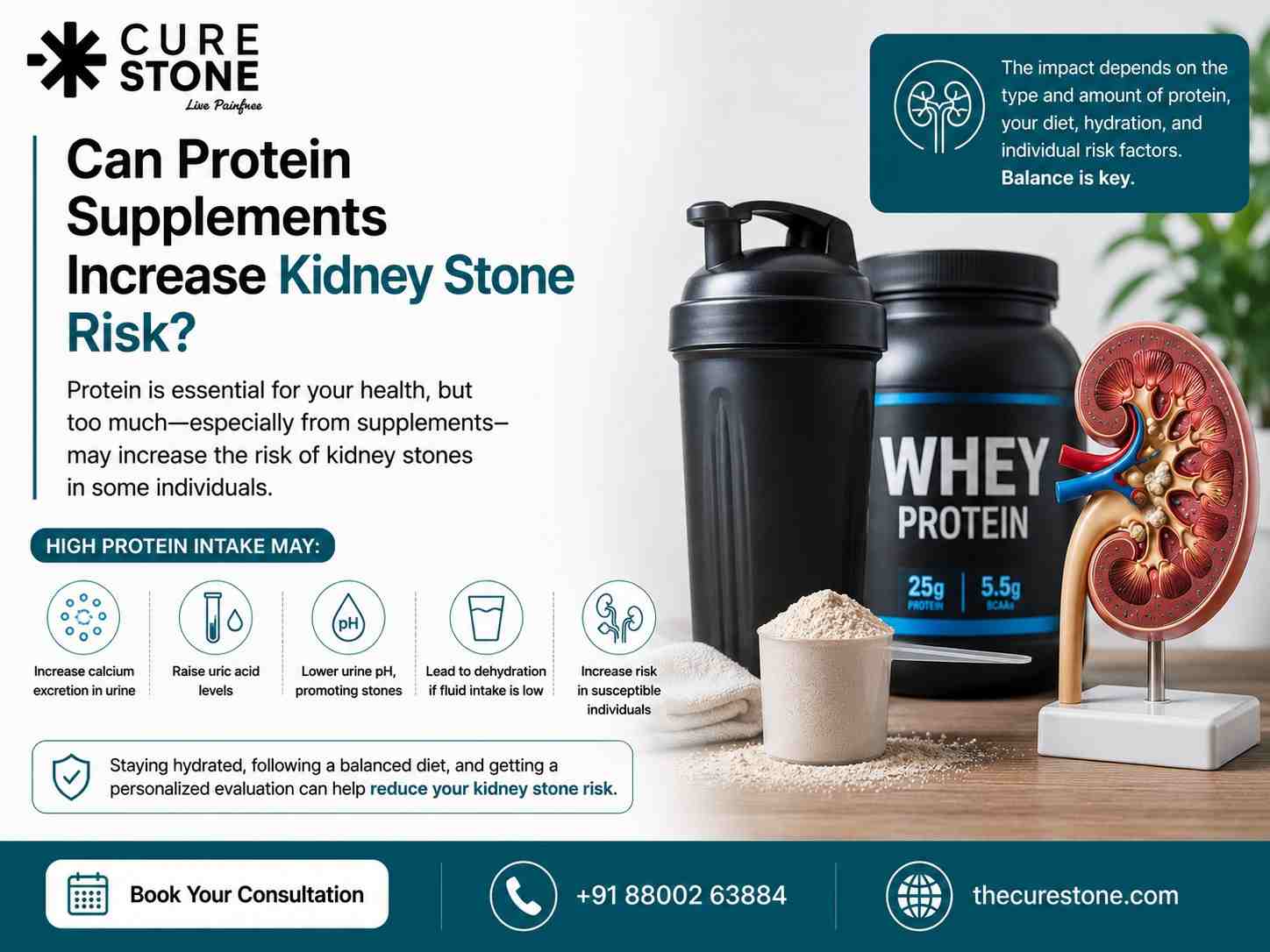
Walk into any gym in Gurgaon and you will find a shelf of whey tubs and a room full of people drinking two or three scoops a day. Most of them have no idea that protein intake is one of the strongest dietary drivers of kidney stone formation, and that the way protein supplements are typically used stacks several stone risk factors on top of each other at once.
The honest answer is not that protein powder causes kidney stones. It is that high animal protein intake changes your urine chemistry in three separate ways that all favour stone formation, and supplements make it very easy to reach intakes you would struggle to hit from food alone.
This article explains the actual mechanism, who is genuinely at risk, and how to keep training hard without building stones.
The Three Ways Protein Changes Your Urine
Animal protein, whether from chicken, eggs, whey, or casein, is rich in sulphur containing amino acids. When your body metabolises them it produces an acid load that the kidneys must clear. That single fact drives everything below.
1. It Raises Urinary Calcium
To buffer the acid load, the body draws on bone and reduces calcium reabsorption in the kidney. More calcium ends up in the urine, and more urinary calcium means more raw material for calcium oxalate and calcium phosphate stones. Our guide on calcium stones, symptoms and treatments covers how those form.
2. It Lowers Urinary Citrate
Citrate is your kidney's built in stone inhibitor. It binds calcium in the urine so it cannot bind oxalate. An acid load causes the kidney to reabsorb citrate rather than excrete it, so exactly when you need more protection you get less. Low citrate is one of the most common abnormalities found in stone formers, and it shows up clearly on a metabolic workup. Our article on the 24 hour urine test explains where this is measured.
3. It Lowers Urine pH and Raises Uric Acid
Animal protein, particularly red meat and organ meats, is high in purines, which break down into uric acid. Combined with a more acidic urine, this creates ideal conditions for uric acid stones. Read uric acid stones, complications and treatment for the detail.
So a high protein diet simultaneously increases the stone building material, removes the natural inhibitor, and shifts urine pH into a stone friendly range. That is a genuine three way problem, not a myth. Our overview of which factors mainly cause kidney stones puts it in context alongside the other causes.
Is Whey Protein Specifically the Problem?
Whey is a dairy protein, so it carries the same acid load as other animal proteins. But it is not uniquely dangerous, and a few points work in its favour.
Whey contains calcium, and dietary calcium taken with meals binds oxalate in the gut so it never reaches the kidney. That is protective, which is why cutting calcium out of your diet backfires. See can kidney stone patients consume milk.
Whey is also lower in purines than red meat, so its contribution to uric acid is smaller than an equivalent amount of mutton or organ meat.
The real problem with whey is dose and context. Two scoops adds roughly 45 to 50 grams of protein on top of a diet that already contains eggs, chicken, paneer, and dal. Total intake is what matters, not the source, and supplements are simply the easiest way to push the total high without noticing.
The Other Supplements Worth Knowing About
Creatine. Creatine does not cause kidney stones, and the evidence in people with healthy kidneys is reassuring. But it does raise your blood creatinine level, which is the marker doctors use to estimate kidney function. Plenty of gym goers have been told their kidneys are failing when the only thing failing was the interpretation. If you take creatine, tell your doctor before any kidney blood test.
Collagen peptides. These are high in hydroxyproline, which the body converts directly into oxalate. For someone who already forms calcium oxalate stones, collagen supplements are a more direct risk than whey and are worth discussing with your urologist.
Soy protein isolate. A common choice for those avoiding dairy, but soy is genuinely high in oxalate. Swapping whey for soy to protect your kidneys can backfire. Our guide on the 10 foods that cause kidney stones lists the other high oxalate items.
Pre workouts and fat burners. Many are heavily caffeinated and mildly diuretic. The issue is not the ingredient itself but the fluid deficit it creates in someone who is already sweating hard and not drinking enough.
The Real Risk Is the Combination, Not the Powder
Here is what actually drives stones in gym goers, and protein is only one part of it.
You train in a hot climate and lose a large volume in sweat. Sweat losses do not produce urine, so your urine volume drops sharply. You then take a high protein load, which raises calcium and uric acid and lowers citrate, into a much smaller volume of urine. Many people add sodium heavy foods and salted snacks, and sodium pushes even more calcium into the urine. Some cut dairy to stay lean, removing the calcium that would have bound oxalate in the gut.
Every one of those factors alone is manageable. Stacked together, they produce concentrated, acidic, calcium rich, citrate poor urine, which is precisely the environment stones form in. This is a large part of why kidney stones are more common in men in the age group that trains hardest.
Exercise itself is not the villain. It is protective for weight, insulin resistance, and general kidney health, as covered in can exercise help in treating kidney stones and what exercise is good for kidney stones. The problem is the fluid and dietary pattern that often surrounds it.
How Much Protein Is Actually Too Much?
General health guidance sits around 0.8 to 1.0 grams per kilogram of body weight per day. Strength athletes benefit from more, typically 1.2 to 1.6 grams per kilogram, and there is little evidence of additional muscle benefit beyond about 1.6.
For an 80kg man, that upper end is around 128 grams a day. Many gym goers are consuming 200 grams or more, which is well past the point of any training benefit and firmly into the range where urine chemistry shifts measurably.
If you have already formed a stone, most urologists advise staying nearer 1.0 to 1.2 grams per kilogram and keeping the animal protein share of that moderate. That is not a ban on protein powder. It is a ceiling.
How to Use Protein Supplements Without Building Stones
- Fix your fluid intake first. Target a urine output of at least 2 to 2.5 litres a day, which in Indian summers means drinking considerably more, plus replacing what you sweat during training. Pale urine is your working indicator. See how much water you should drink to prevent kidney stones and why hydration is necessary for kidney health.
- Count total protein, not scoops. Add up food and supplements together. Most people are surprised by the total once they actually do it.
- Do not cut dairy to compensate. Keep normal dietary calcium and take it with meals so it binds oxalate in the gut rather than leaving it free.
- Cut salt before you cut protein. Sodium reduction lowers urinary calcium quickly and costs you nothing in training terms. Packaged snacks, pickles, and restaurant food are usually the bigger offenders.
- Add citrate. Lemon or lime in water provides citrate, the natural inhibitor that high protein intake depletes.
- Watch the flavoured and mass gainer products. Some contain significant added sodium and sugar, and chocolate flavourings can add oxalate.
- Get tested if you have already had a stone. Guessing is not a strategy. A stone analysis and a 24 hour urine study tell you exactly which lever to pull, as explained in what to expect during your kidney stone tests.
Our guides on the right diet for kidney stones, what to eat if you have kidney stones, and the role of diet in kidney stone formation and prevention go into the full dietary plan.
Who Should Be Most Careful
- Anyone who has already had a kidney stone, since recurrence risk is high. See recurring kidney stones.
- Anyone with a family history, covered in hereditary causes of kidney stones.
- Anyone with gout or raised uric acid.
- Anyone with reduced kidney function, a single kidney, or a transplant. In this group high protein loads need medical supervision, not gym advice.
- Anyone working outdoors or in a hot environment on top of training.
If you already know you have a stone, our kidney stone checker gives a quick indication of what your size and location usually require, and our kidney stone treatment page explains the options. For stones that need removing, RIRS treats them through the natural urinary passage with no cut and no scar, and most patients are back to light training within a short recovery window.
If you train seriously and have had a stone, book a consultation with Dr. Deepanshu Gupta to build a plan that protects your kidneys without wrecking your nutrition.
Frequently Asked Questions
Does whey protein cause kidney stones?
Whey does not cause stones by itself. High total animal protein intake raises urinary calcium and uric acid while lowering citrate, all of which favour stone formation. Whey contributes to that total, and supplements make it easy to overshoot without realising.
How much protein powder is safe per day?
There is no fixed scoop limit, because what matters is your total daily protein from all sources. Most people training seriously do not need more than about 1.6 grams per kilogram of body weight, and stone formers are usually advised to stay nearer 1.0 to 1.2.
Can I take whey protein if I have already had a kidney stone?
Usually yes, at a controlled total intake and with proper hydration. The decision is better made after a stone analysis and a 24 hour urine test, since the right advice differs completely between a calcium oxalate former and a uric acid former.
Does creatine cause kidney stones?
There is no good evidence that creatine causes stones in people with healthy kidneys. It does raise blood creatinine, which can be misread as kidney damage, so always tell your doctor you take it before a kidney function test.
Is plant protein safer for kidney stones than whey?
Not automatically. Plant proteins produce a lower acid load, which is helpful, but soy in particular is high in oxalate and can raise calcium oxalate stone risk. Pea and rice proteins are generally lower in oxalate than soy.
Are collagen supplements bad for kidney stones?
Collagen is high in hydroxyproline, which the body converts into oxalate. For known calcium oxalate stone formers it is a more direct concern than whey and worth discussing with your urologist.
How much water should I drink if I take protein supplements and train?
Enough to keep urine pale and produce at least 2 to 2.5 litres a day, plus additional fluid to replace sweat losses during training. In hot weather this often means three to four litres of intake in total.
Will stopping protein powder make an existing stone go away?
No. Dietary changes reduce the risk of new stones forming but do not dissolve a stone that already exists, with the partial exception of uric acid stones, which can sometimes be dissolved medically. An existing stone still needs proper assessment.
Have Questions About This Topic?
Get a personalized consultation at Cure Stone Hospital, Sector 52, Gurgaon.
Book Consultation